DBS And Climate Bonds Initiative Launch Framework To Mobilise Climate Resilience Finance Across Asia-Pacific
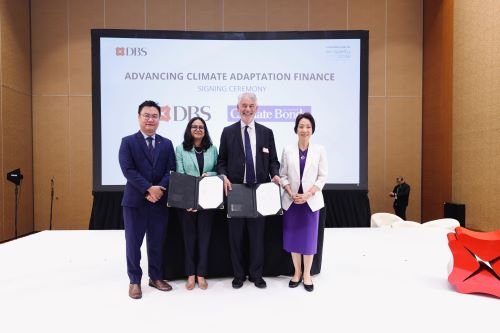
New Delhi, July 4, 2026: In response to the intensifying threat of physical climate risks, DBS and the Climate Bonds Initiative (CBI) have released a joint report aimed at creating a structured framework for banks and businesses to identify, assess, and finance credible adaptation and resilience (A&R) investments, DBS said in a press release.
Titled “Adaptation and Resilience: Exploring Investable Opportunities in Asia-Pacific,” the publication marks a significant effort toward advancing climate adaptation financing by deepening institutional knowledge as the financial impacts of climate change grow increasingly material. The urgency of the framework is underscored by projections showing that annual costs tied to physical climate risks for companies with major operations in Asia could reach USD 336 billion by the 2030s. Currently, less than 10 per cent of global climate finance targets A&R, with less than 11 per cent of that portion originating from the private sector. This has left a massive funding gap, particularly in Asia, which accounts for roughly 69 per cent of global adaptation financing needs and 75 per cent of the global financing gap by 2030.
To address this deficit, the report provides practical guidance on establishing credible climate resilience investments, offering a standardized approach to balance localized risk factors with market-wide confidence. The methodology guides investors and corporates on identifying financing opportunities, evaluating credible investments, and tracking outcomes through specific impact indicators and metrics. The research explores how rising temperatures, water stress, extreme weather, and flooding impact infrastructure across the real economy by focusing on four initial pilot sectors: heat stress mitigation in India’s commercial real estate, water stress management for data centres in Singapore and Malaysia, typhoon resilience for coastal power networks in China, and flood mitigation for transit corridors in Taiwan. Additionally, the findings point to emerging frameworks like the Climate Bonds Resilience Taxonomy to bring greater clarity to market participants.
The report places a sharp focus on India’s commercial real estate sector, which faces escalating heat risks across major urban centers. Data indicates that close to 60 per cent of Indian districts, home to 76 per cent of the population, are currently subject to high to very high heat risk. The report outlines actionable resilience measures to safeguard business continuity and protect asset valuation, including the installation of cool roofs with high solar reflectance, external shading systems, enhanced insulation, green roofs, and smart-controlled, high-efficiency heating, ventilation, and air conditioning (HVAC) systems. These investments are designed to maintain asset functionality and tenant comfort during severe heatwaves, and DBS noted that several of its real estate clients are already deploying these measures.

Commenting on the launch, Kelvin Wong, Chief Sustainability Officer, DBS, said: “We believe the transition to a low-carbon economy must go hand-in-hand with adaptation, and finance can be a lever that accelerates both. As climate change increasingly shapes how businesses grow in the decades ahead, organisations need to better understand not only their exposure to climate risks, but also the investments required to strengthen resilience. This report marks an important step forward in helping us better support clients and scale adaptation solutions to support sustainable economic development across the region.”

Shilpa Gulrajani, Head of Sustainable Finance, Institutional Banking Group, DBS, said: “Across Asia-Pacific, the impacts of physical climate risks are becoming increasingly visible, yet A&R finance remains nascent. Through our partnership with Climate Bonds Initiative, we hope this report contributes to the development of a more transparent and investable market across the region. Effective A&R solutions must be grounded in local conditions, while commercial banks need greater clarity and consistency in how A&R investments are assessed.”

Sean Kidney, CEO of the Climate Bonds Initiative, said: “We’re already feeling the effects of climate change, with more intense heat, floods and weather patterns across Asia and around the world. But these aren’t just climate risks, they are financial risks. That’s why adaptation and resilience is moving from the margins into the core of banking strategy and risk management. DBS’ leadership demonstrates that forward-looking financial institutions are beginning to address adaptation and resilience as a core business and risk management challenge. This report sends a strong signal that mainstream finance is ready to act to build the resilient societies, economies and businesses of the future.”
The publication marks the latest milestone in a broader strategic partnership between DBS and the Climate Bonds Initiative established in May 2026 to scale climate adaptation financing across the Asia-Pacific region. Moving forward into the next phase of the collaboration, DBS plans to implement an internal capacity-building programme to embed adaptation and resilience criteria across its primary business lines. This internal rollout will feature targeted training sessions designed to equip relationship managers with the technical expertise required to guide corporate clients through climate change adaptation as the next frontier of climate finance.