Real Estate Appears Set to Retain Its Role as a Key Long-Term Investment in India
Mumbai, July 27, 2026: India’s real estate market has reaffirmed its standing as one of the country’s most reliable long-term investment avenues, driven by a combination of capital appreciation, recurring rental income, and a natural hedge against inflation. Amid global market volatility, property continues to offer a tangible asset backed by real demand, rising household incomes, and structural urban expansion, say some prominent real estate developers.
The resilience of the sector rests on straightforward fundamentals: rapid urban growth, rising household incomes, and extensive infrastructure spending that is unlocking new corridors. Policy reforms like the Real Estate (Regulation and Development) Act (RERA) alongside an influx of institutional capital have significantly enhanced transparency and market confidence. According to Cushman & Wakefield’s India Outlook 2026, luxury housing remains a primary driver of demand, while commercial markets continue to benefit from steady occupier demand.
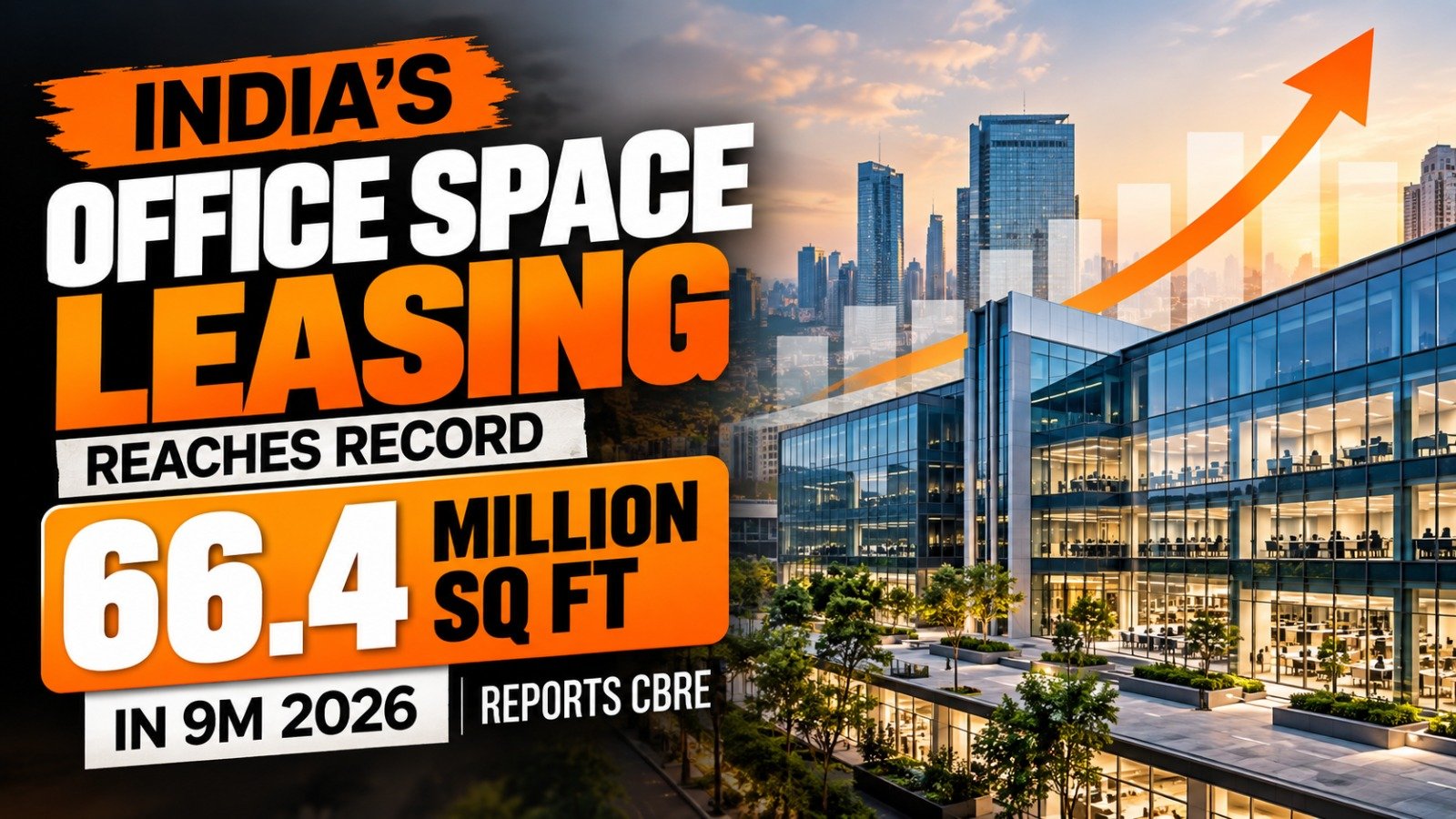
Demand across the real estate spectrum remains broad-based. Residential properties continue to draw end-users and investors, while commercial assets, particularly Grade A offices, are attracting institutional capital due to predictable rental yields. Cushman & Wakefield estimates that absorption across the top eight office markets will exceed 59 million square feet, with warehousing and industrial leasing expected to cross 50 million square feet for the third consecutive year.
Luxury housing has emerged as a key value-creation engine, with high-net-worth individuals, non-resident Indians (NRIs), and entrepreneurs utilizing high-end residences as long-term stores of value. The luxury segment has seen notable momentum in the Delhi-National Capital Region (NCR), propelled by wealth accumulation in Gurugram and regional infrastructure enhancements.

Commenting on the shift in buyer preferences, Amit Modi, Director, County Group, said, “Luxury housing has evolved from being an aspirational purchase to becoming a strategic investment decision. Today’s buyers are looking at luxury homes not only for lifestyle enhancement but also for long-term capital appreciation and wealth preservation. Gurugram and Noida continue to attract this demand because they combine world-class infrastructure, strong economic activity and a growing ecosystem of premium developments.”
Institutional investment metrics further highlight market strength. Industry experts indicate that infrastructure-led corridors will continue to lead institutional real estate investments in the first half of 2026, totaling almost USD 4.3 billion—up 23% year-on-year across a record 54 transactions, according to an industry analysis report. Office assets accounted for a 54% share of total investments, signaling a continued preference among large capital allocators for income-generating properties.

Ashwani Kumar, Pyramid Infratech, said, “Infrastructure has become the biggest catalyst for real estate appreciation. Corridors such as the Southern Peripheral Road and Dwarka Expressway are witnessing sustained demand because they bring together residential, commercial and retail development in a well-connected ecosystem.”
Market performance varies across major urban centers. Mumbai continues to command the highest price points due to acute land scarcity. Bengaluru remains supported by technology-driven wealth creation and Global Capability Center (GCC) expansions, while Hyderabad benefits from ongoing infrastructure upgrades and IT sector growth. Pune offers a balanced combination of industrial expansion and end-user demand.

Mitul Jain, MD, SPJ Group, said, “If there is one thing that has remained consistent across market cycles, it is that real estate rewards patience. Short-term fluctuations are inevitable, whether they come from interest rates, policy changes or broader economic conditions, but the long-term fundamentals remain strong. Urbanisation is expanding, infrastructure is opening up entirely new growth corridors, and the aspiration for a better lifestyle is much stronger than it was a decade ago. At the same time, buyers today are far more informed, so projects backed by sound planning, construction quality and timely delivery naturally command greater confidence. That is why quality real estate continues to stand out as one of India’s most resilient long-term investment opportunities.”
The Delhi-NCR market warrants specific attention due to its synthesis of luxury residential demand and infrastructure expansion. Gurugram leads the high-end residential space, while Noida and Greater Noida continue to attract buyers seeking value and larger living spaces.

Prateek Tiwari, MD, Prateek Group, said, “Today’s homebuyers are evaluating not just the project, but the long-term growth potential of the location, planned infrastructure and overall quality of life. Micro-markets such as Sector 150 in Noida and Siddharth Vihar in Ghaziabad have emerged as compelling destinations because they offer planned urban development, excellent connectivity and abundant open spaces. As metro expansion, expressways and regional infrastructure projects continue to improve accessibility, we believe these locations will deliver sustainable capital appreciation while remaining highly attractive for both end-users and long-term investors.”
Metro extensions, expressways, and new commercial clusters are widening investable boundaries across the region and enhancing long-term liveability, thereby strengthening pricing power in key micro-markets. Consequently, real estate remains a preferred hedge against broader economic volatility, leveraging rental income and capital gains to protect wealth over extended horizons.
Moving forward, the strongest long-term prospects are expected to center on Mumbai, Bengaluru, Hyderabad, Pune, and Delhi-NCR, particularly within premium housing, Grade A commercial spaces, and infrastructure-linked micro-markets. Industry analysts view Indian real estate less as a short-term speculative vehicle and more as a structured, multi-year strategy for long-term wealth building.