India’s Infrastructure Push Can Catalyse Long-Term Private Investment, Says CEA
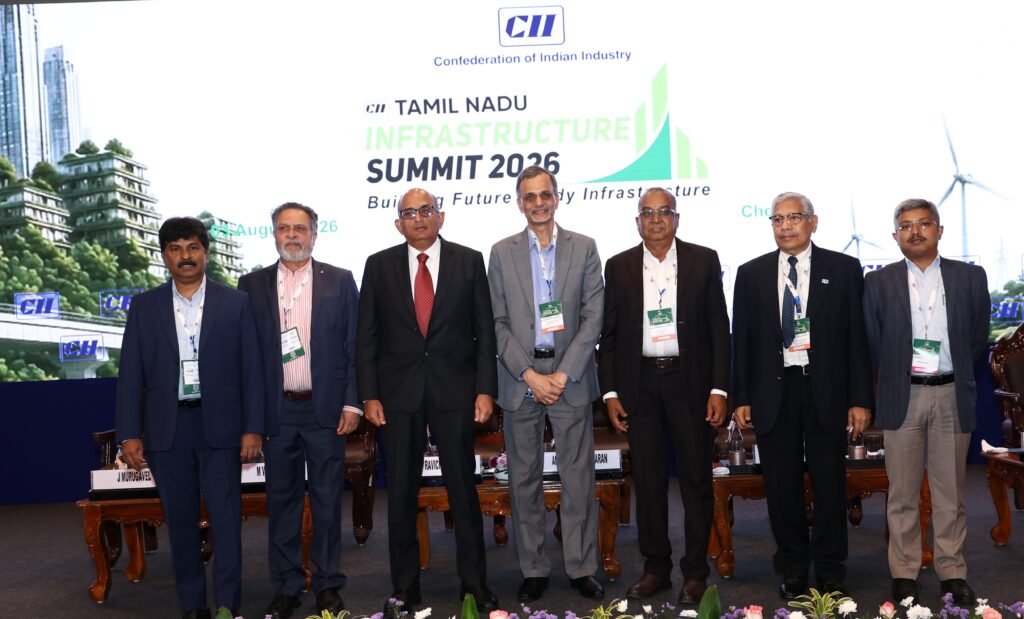
Chennai, August 4, 2026: Sound assets, contract and policy certainty, and fair pricing are key to attracting patient capital into India’s infrastructure ecosystem, Chief Economic Advisor (CEA) Dr Anantha Nageswaran said today at the CII-organized Tamil Nadu Infrastructure Summit 2026.
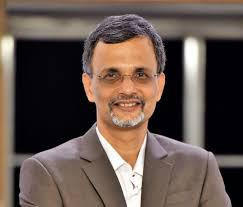
Opening the session, Dr Nageswaran emphasized that public spending alone is insufficient for the nation’s long-term goals. “India’s infrastructure financing requirements are far beyond what government budgets can carry, making long-term private capital indispensable to building assets that can support the country’s economic growth over the next two to three decades. The Union Government’s capital expenditure had increased from around ₹2.5 lakh crore seven to eight years ago to over ₹12 lakh crore in the current Budget. Including grants that created assets in the States, the effective figure was close to ₹17 lakh crore,” he stated.
Highlighting how public investment has reinforced India’s financial stability, Dr Nageswaran noted that targeted spending on roads, railways, ports, power infrastructure, and digital networks has actively supported economic activity when private investment hesitated and exports faced headwinds, while simultaneously expanding productive capacity. He affirmed that public capital has not crowded out private investment, but has instead helped crowd it in.
Looking ahead, Dr Nageswaran outlined the necessary conditions for mobilizing future funding. “The next phase of infrastructure creation, however, would require private capital, particularly patient capital capable of earning steady returns over 20 to 30 years. Such capital would not enter merely because it was invited or provided a guarantee; it would follow projects whose underlying assets and returns were sound,” he observed.
Addressing economic sustainability and public utility pricing, the CEA issued a strong reminder to policymakers. “Free is the most expensive word in public policy,” he cautioned, pointing out that somebody ultimately pays the cost—either the user through a fair charge, the taxpayer through a hidden subsidy, or the asset itself through deterioration caused by inadequate maintenance. Placing water security at the center of the national agenda, he added that climate volatility now causes the same State to experience floods and droughts within a single year, meaning water must be treated with the same seriousness accorded to roads, ports, and power infrastructure.
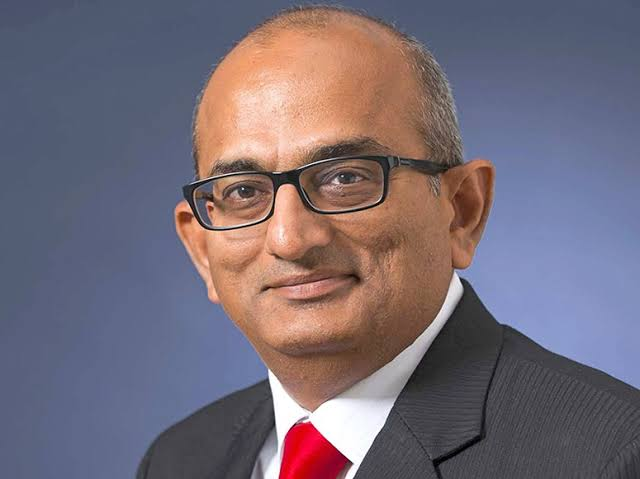
Despite an increasingly difficult global environment marked by geopolitical conflict, tariff uncertainty, volatile energy prices, and currency pressures, Dr Nageswaran highlighted India’s underlying strength, noting that the economy grew by 7.7 per cent in the previous financial year while manufacturing expanded by more than 10 per cent.
Industry leaders at the summit echoed the need for commercially viable, regionally integrated project planning. P Ravichandran, Chairman, CII Southern Region and President, Danfoss India, pointed out that while significant capital is available, the scale and number of bankable projects remain inadequate. He advocated for planning around viable revenue and cash-flow models rather than Detailed Project Reports prepared primarily to secure budgetary allocations, adding that developing projects at a Southern Region scale could improve commercial viability in renewable energy, logistics, ports, and multimodal connectivity.
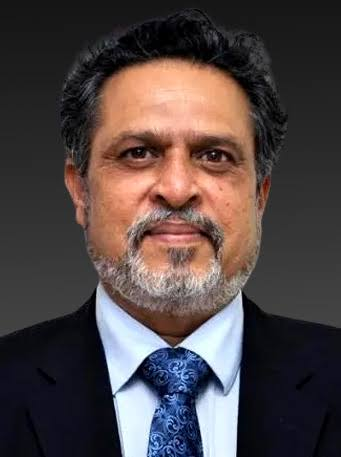
Addressing regional strategy, M V Satish, Advisor to Chairman & Managing Director, Larsen & Toubro Ltd, presented a collaborative vision for Tamil Nadu’s industrial footprint. “Future-ready infrastructure would have to be integrated, resilient, sustainable and technology-enabled. Tamil Nadu’s next growth gateway need not be confined to one project or location but could comprise a connected network of economic centres. Chennai could be a global business and aviation gateway, Hosur as an advanced manufacturing centre, Coimbatore and Tirupur as engineering and innovation hubs, Tiruchirappalli and Madurai as regional knowledge economies, and Thoothukudi as a port, logistics and renewable-energy gateway,” he said.
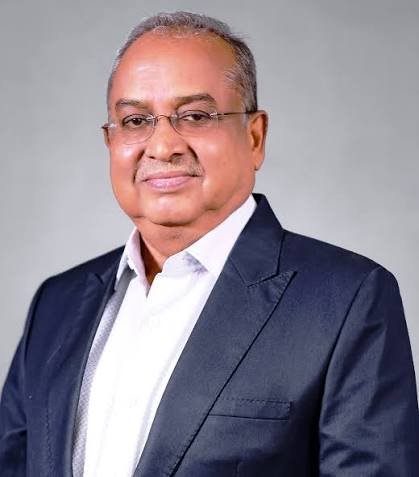
Further outlining state priorities, C Devarajan, Chairman, CII Tamil Nadu and Managing Director, URC Construction (P) Ltd, called for a connectivity reset linking Chennai, Coimbatore, Hosur, Madurai, and Thoothukudi as complementary industrial hubs rather than isolated locations.
Adding to the discussion on long-term value, Mohan Ramanathan, Convenor, TN Infrastructure Panel and Managing Director, Advanced Construction Technologies P Ltd, emphasized that infrastructure remains central to economic competitiveness, logistical efficiency, investment attractiveness, job creation, urban quality of life, and climate resilience. “Every bridge, building, highway, port, railway, Metro and water project had to serve future generations with safety, sustainability and resilience. Quality could not be compromised, while innovation and integrity had to remain central to infrastructure development,” he stressed.
The plenary session concluded with closing remarks delivered by J Murugavel, Vice Chairman, CII Tamil Nadu and Founder & CEO, Matrimony.com Ltd.