Why Sector 150 Noida Development Is Gaining Attention in 2026
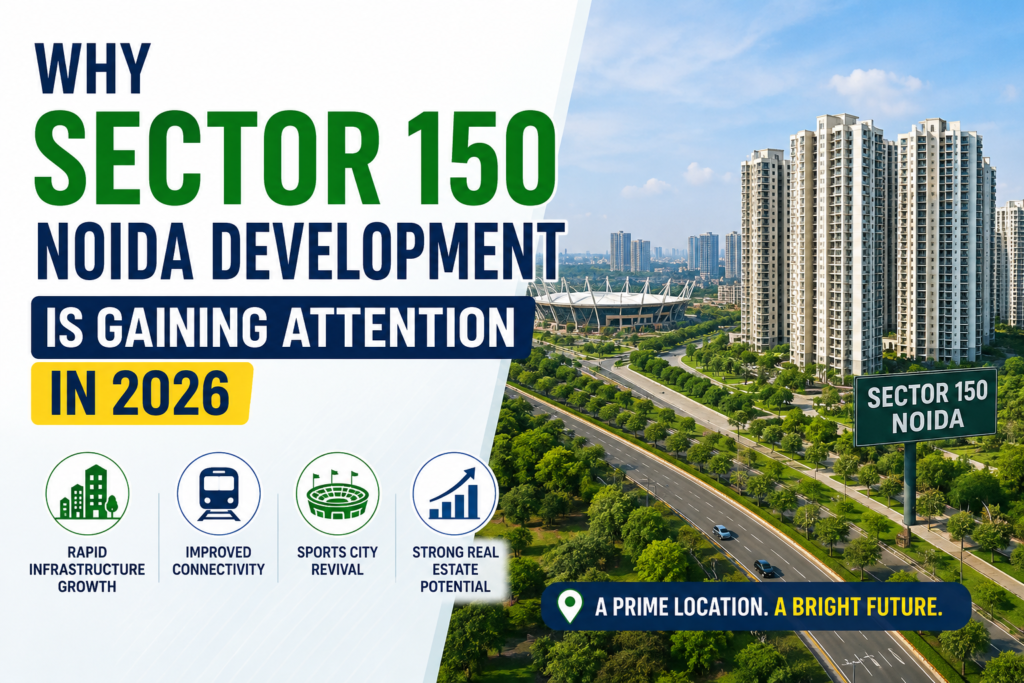
What was once considered a relatively peripheral residential location along the Noida-Greater Noida Expressway is increasingly becoming an important part of Noida’s real estate story. Sector 150 Noida development is being shaped by residential projects, infrastructure upgrades, improved regional connectivity and the revival of the long-stalled Sports City developments.
The sector is also benefiting from the broader transformation taking place across the Noida-Greater Noida region, including better links towards Greater Noida, the upcoming Noida International Airport and expansion of the city’s metro network.
The change is particularly significant in 2026 because the Noida Authority has moved ahead with the revised Sports City framework, while infrastructure projects around the wider expressway corridor are progressing.
For homebuyers and investors, however, development should not be judged only by future announcements. Actual construction, possession timelines, connectivity, amenities and regulatory approvals remain equally important.
What Is Driving Sector 150 Noida Development?
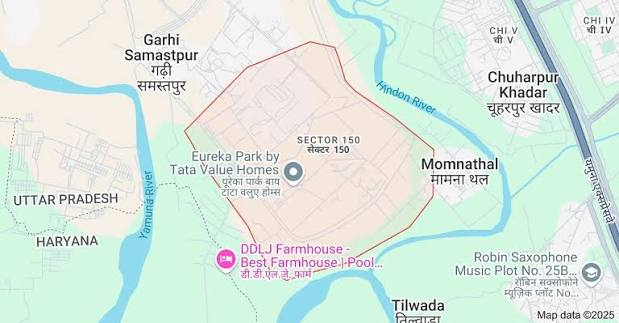
Sector 150 is located along the Noida-Greater Noida Expressway and has traditionally been positioned as a relatively green, low-density residential area. Its location gives it access to both Noida and Greater Noida while placing it within the larger growth corridor towards the Yamuna Expressway.
The Sector 150 Noida real estate market has gradually evolved from primarily being an emerging market to one with established residential communities and premium housing options.
Several factors are now working together to accelerate its development.
Strategic location along the Noida-Greater Noida Expressway
The expressway remains one of the area’s biggest advantages. It provides road connectivity towards central Noida, Greater Noida and the wider NCR.
The sector also sits close to other important residential and employment zones along the expressway corridor. As surrounding areas develop, Sector 150’s location becomes increasingly relevant for both end-users and investors.
Green and low-density positioning
Sector 150 has developed a reputation for relatively open surroundings compared with some densely built-up parts of Noida.
This has helped attract buyers looking for larger homes, landscaped developments and a lifestyle-oriented residential environment rather than simply proximity to commercial districts.
Revival of Sports City
Perhaps the biggest recent development is the revival of the Sports City projects.
The Noida Authority had frozen several approvals related to Sports City projects in 2021. Following the Supreme Court’s intervention and a revised framework, the Authority approved a revised layout for the Lotus Green Sports City project in April 2026. The move is expected to help unlock stalled handovers and registrations and provide relief to thousands of homebuyers.
The wider Sports City scheme was envisioned as a large integrated development with sports infrastructure and residential components. The revival therefore has implications beyond individual housing projects—it could influence the pace of urbanisation in the surrounding area.
Key Infrastructure Shaping Sector 150
Infrastructure is one of the most important reasons why the Sector 150 Noida infrastructure story is attracting attention.
1. Noida-Greater Noida Expressway
The existing expressway provides the backbone for connectivity between Noida and Greater Noida. Sector 150’s location directly along this corridor gives residents road access to employment centres and established urban areas.
As traffic volumes rise, however, congestion management will become increasingly important.
2. Proposed parallel connectivity
Noida has also explored a new parallel route along the Yamuna Pushta to reduce pressure on the Noida-Greater Noida Expressway. An earlier plan proposed a roughly 32-km route connecting the Delhi side near Kalindi Kunj towards Sector 150, with a link towards the Yamuna Expressway.
More recently, proposals have discussed extending the connectivity corridor towards Pari Chowk and linking it with major regional routes. These projects remain different from existing operational roads and should therefore be treated as proposed infrastructure rather than completed facilities.
3. Metro connectivity in the wider corridor
Sector 150 does not currently have its own metro station. However, the surrounding Noida-Greater Noida Expressway corridor is served by the Aqua Line, including stations in nearby sectors.
More importantly, the Union Cabinet approved an 11.56-km Aqua Line extension between Sector 142 and Botanical Garden, with eight elevated stations and an estimated cost of ₹2,254 crore. The project will create an interchange at Botanical Garden with Delhi Metro’s Blue and Magenta lines.
This is significant for the broader Sector 150 Noida connectivity story because improved access between the expressway corridor, central Noida and Delhi can strengthen the area’s appeal to daily commuters.
The government project database lists the corridor as under development, with implementation beginning in 2026 and a scheduled completion period extending into 2030.
How the Sports City Revival Could Change Sector 150
The Sports City issue has been one of the biggest uncertainties surrounding Sector 150.
The earlier regulatory freeze affected construction-related approvals, occupancy certificates and registrations in projects connected with the Sports City scheme. The revised framework has now created a pathway for projects to move forward.
The Indian Express reported that the lifting of restrictions could benefit nearly 20,000 homebuyers associated with Sports City projects in Sector 150, with the overall development representing investment of more than ₹50,000 crore.
For the locality, the potential impact goes beyond property possession.
A functioning township generally creates demand for:
- Retail and neighbourhood shopping
- Schools and educational facilities
- Healthcare services
- Restaurants and cafés
- Daily convenience stores
- Fitness and recreational facilities
- Transport and last-mile services
- Maintenance and property management businesses
If the planned components are delivered as intended, Sector 150 could gradually move from a predominantly residential destination towards a more complete urban neighbourhood.
Sector 150 Noida Property Prices and Market Direction
Property prices are another indicator of how the market is changing.
Market portals show that asking prices in Sector 150 have moved upward over recent years, although the exact rate varies by project, property type, floor, size, construction status and source.
MagicBricks’ July 2026 data puts the average asking price for multistorey apartments in Sector 150 at around ₹12,961 per sq ft, while its historical data shows the average rising from about ₹8,205 per sq ft in 2023 to ₹11,968 per sq ft in 2025.
Housing.com’s 2026 data also indicates an average price around ₹12,950 per sq ft, although its methodology and listings differ from other property portals.
These figures should be treated as indicative asking-price data, not guaranteed transaction values.
At the broader Noida level, residential prices have also recorded substantial growth. An ANAROCK Research report cited by the Economic Times found that Noida home prices increased by 125% between 2019 and Q2 2026.
This broader appreciation provides context for Sector 150’s growth, but buyers should still compare individual projects rather than assuming that every property will appreciate at the same rate.
Benefits and Challenges for Homebuyers
Why buyers are considering Sector 150
The area’s development offers several potential advantages:
1. Strategic location:
The sector sits on an important NCR expressway corridor with access to Noida and Greater Noida.
2. Residential environment:
Its relatively open character appeals to buyers seeking a less congested setting.
3. Infrastructure potential:
Road and metro improvements across the wider region could strengthen connectivity.
4. Sports City revival:
Resolution of the long-standing Sports City issue could improve confidence in affected projects.
5. Long-term regional growth:
Noida, Greater Noida and the Yamuna Expressway region are benefiting from large infrastructure and economic-development initiatives.
Challenges buyers should consider
Development does not mean every part of the locality is already fully mature.
Potential buyers should consider:
- Construction and possession timelines
- Traffic conditions during peak hours
- Availability of nearby schools and healthcare
- Last-mile connectivity
- Project-specific approvals
- Maintenance costs
- Builder track record
- Resale liquidity
- Actual rental demand
- Distance from operational metro stations
- Status of promised amenities
Future infrastructure can improve a location, but its impact depends on timely execution.
What Should You Check Before Buying Property in Sector 150?
If you are considering Sector 150 Noida property, follow a project-specific due-diligence process.
1. Verify the RERA registration
Check the project’s registration, approved plans, promoter details, completion timeline and available disclosures on the relevant RERA portal.
2. Check the project’s current status
Do not rely only on brochures or sales presentations. Visit the site and assess actual construction progress.
3. Understand the Sports City connection
If the project falls within the Sports City framework, buyers should specifically check the latest approvals, revised layout, construction status and registration/OC position.
The recent regulatory developments are positive, but individual projects may have different timelines and circumstances.
4. Compare prices with nearby sectors
Compare Sector 150 with nearby locations such as Sectors 148, 149, 151, 152 and 153.
A higher quoted price does not automatically mean better investment potential.
5. Calculate the complete purchase cost
Include:
- Basic property price
- Floor-rise charges
- Parking
- Club charges
- Maintenance deposits
- Stamp duty
- Registration
- GST, where applicable
- Other developer charges
6. Evaluate your holding period
Sector 150’s development story is more relevant to buyers with a medium- to long-term horizon than someone looking for a quick resale.
Sector 150 in the Larger Noida Real Estate Story
Sector 150’s development cannot be viewed in isolation.
Noida and Greater Noida are increasingly being shaped by infrastructure, manufacturing, logistics, technology, commercial development and the upcoming Noida International Airport ecosystem. Recent reporting shows that Noida and Ghaziabad accounted for 61% of Uttar Pradesh’s real estate investment in the first half of 2026, according to UP-RERA data cited by the Times of India.
The airport-led growth story is also expanding across the wider region, with new transport and industrial projects being planned around Jewar and the Yamuna Expressway.
At the same time, the region is seeing significant infrastructure investment. A newly approved ₹8,586-crore project will connect Jewar Airport with the Ganga Expressway through a six-lane corridor that can be expanded to eight lanes.
For Sector 150, the significance is indirect but important: better regional connectivity can strengthen the overall Noida-Greater Noida-Yamuna Expressway economic corridor.
What Could Sector 150 Look Like in the Coming Years?
The next phase of development is likely to focus less on simply adding housing and more on creating a complete urban ecosystem.
The major factors to watch are:
- Execution of Sports City projects
- Delivery of residential developments
- Expansion of supporting retail and social infrastructure
- Progress of metro connectivity
- Road and expressway improvements
- Growth of employment centres across the wider NCR corridor
- Impact of Noida International Airport and Yamuna-region development
The key difference between Sector 150 today and its earlier phase is that the area is increasingly connected to several larger regional growth stories.
Conclusion
Sector 150 Noida development is entering an important phase in 2026. The revival of Sports City projects, continuing residential development, existing expressway connectivity and wider infrastructure expansion are reshaping the sector’s real estate outlook.
However, development announcements should not be confused with completed infrastructure. Buyers should assess each project individually, verify RERA and local approvals, examine construction progress and compare the property’s price with comparable projects.
For end-users, Sector 150 can offer a combination of relatively open surroundings and access to the larger Noida-Greater Noida growth corridor. For investors, the opportunity comes with the need for a longer-term perspective and careful project selection.
Disclaimer: This article is intended for informational purposes only and should not be considered financial, investment, legal or property-buying advice. Property prices, project approvals, construction timelines and infrastructure plans can change. Readers should independently verify information with relevant authorities, developers and qualified professionals before making any property decision.
Stay updated with the latest real estate news on RealtyNMore.