Andhra Pradesh Accelerates Green Buildings and Net Zero Development at 2nd IGBC Green Andhra Summit 2026
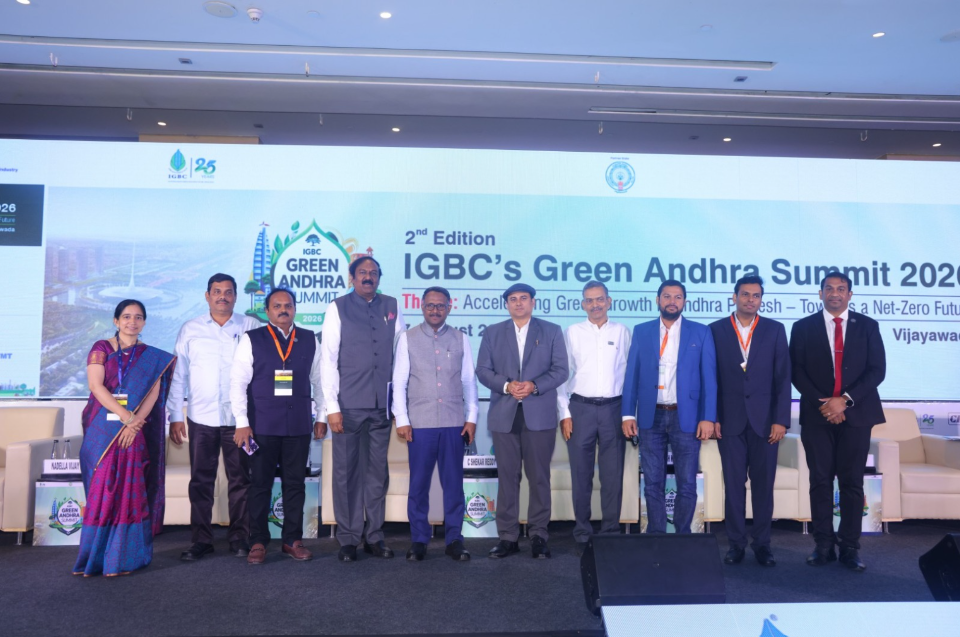
Vijayawada, August 9, 2026: The Confederation of Indian Industry’s Indian Green Building Council (CII-IGBC) hosted the second edition of the IGBC Green Andhra Summit 2026 in Vijayawada under the theme “Accelerating Green Growth in Andhra Pradesh – Towards a Net-Zero Future.” The summit brought together senior policymakers, government officials, urban planners, developers, and sustainability experts to advance the state’s transition toward a climate-resilient and Net Zero built environment.
Andhra Pradesh has emerged as one of India’s fastest-growing green building markets, recording 638 IGBC-registered projects encompassing a total green footprint of 627.58 million sq. ft. Out of these, 300 projects covering 479.60 million sq. ft. have already secured IGBC certification across commercial, residential, industrial, transit, and Net Zero developments. To maintain this momentum, the Government of Andhra Pradesh announced enhanced policy incentives during the summit, offering fee concessions on Development Charges for IGBC-rated green buildings. Under the revised policy, projects achieving IGBC Silver, Gold, and Platinum ratings will receive discounts of 5%, 10%, and 15% respectively on Development Charges, supplementing existing reductions on Impact and AP RERA fees.
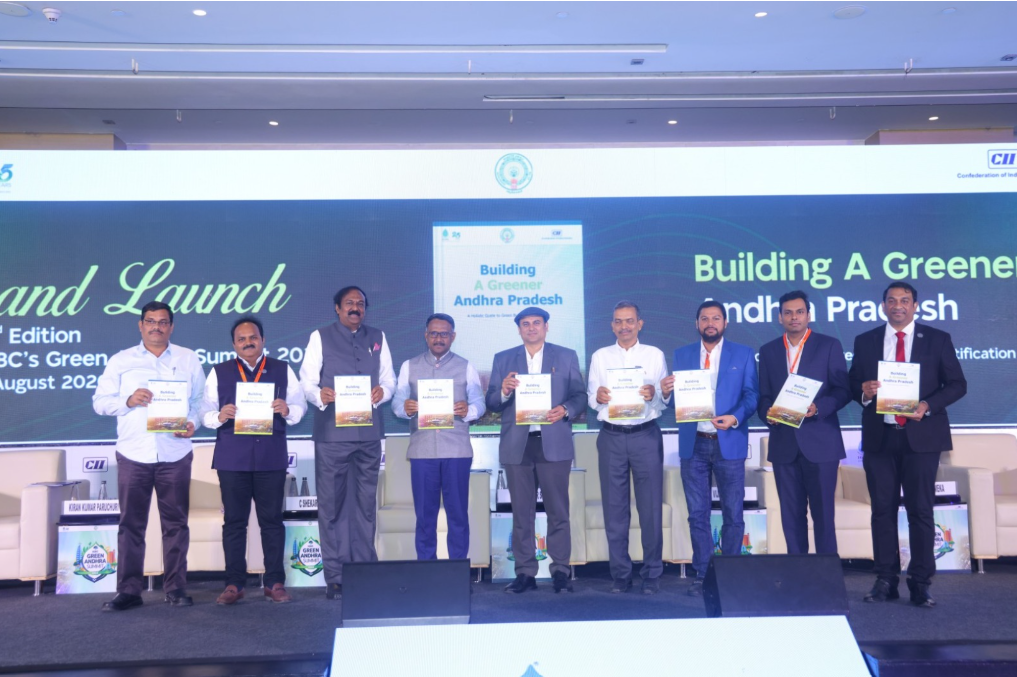
The event also featured the release of the “Guide for Green Buildings in Andhra Pradesh,” a practical handbook designed by the IGBC to support developers, architects, and urban local bodies in adopting sustainable building practices. Furthermore, the summit celebrated key institutional milestones, including Amaravati receiving the IGBC Green Cities Platinum Certification (by design) and the APCRDA Project Office achieving the IGBC Net Zero Energy Certification (By Design). Over 40 new projects covering more than 1 crore sq. ft. of built-up area were registered under the IGBC Green Crusaders initiative during the event.

Speaking in his inaugural video message, Dr Ponguru Narayana, Minister, Municipal Administration & Urban Development, Government of Andhra Pradesh, said, “Andhra Pradesh is building a development model where economic growth and environmental stewardship go hand in hand. As we pursue the vision of Swarna Andhra 2047, every new city, township, public and private infrastructure project must embed sustainability as a fundamental principle from planning through operations. Amaravati is being developed as a future-ready green capital that reflects the highest standards of climate resilience, resource efficiency and smart urban planning. We welcome IGBC’s continued partnership in helping Andhra Pradesh become one of India’s foremost leaders in green buildings and Net Zero development.”

Addressing the economic rationale behind sustainable construction, Suresh Kumar S, IAS, Principal Secretary, MA&UD, Government of Andhra Pradesh, said, “Resources are finite, and the building and construction sector has a significant environmental footprint. As a State, we believe growth and sustainability must go hand in hand. We must attract investments while ensuring that development remains green and future-ready. Under the Swarna Andhra 2047 vision, our goal is to create a globally benchmarked, sustainable Andhra Pradesh through a holistic agenda, system-based transformation, fiscal resilience, and responsible private sector participation. Green buildings are now gaining widespread market acceptance, and our next objective is to make them the new normal. The Government of Andhra Pradesh has therefore introduced a first-of-its-kind incentive in India by offering development fee concessions for IGBC-rated green buildings to encourage wider adoption. While green buildings may require an additional investment of just 2–3% during construction, the savings in energy, water, and operational costs typically recover this investment within just a few years, with the benefits continuing throughout the building’s life cycle. Sustainable construction is not an added cost—it is a long-term investment in our future.”

Detailing the urban vision for the state capital, Vijay Rama Raju V, IAS, Commissioner, APCRDA, Government of Andhra Pradesh, said, “Amaravati represents one of the most exciting opportunities to build a truly sustainable capital city from the ground up. Through integrated planning, Net Zero buildings, renewable energy, smart infrastructure, and resilient urban design, we are creating a city prepared for future generations. I am particularly happy to see the vision of Amaravati’s master plan reaching the common people, especially through greater public awareness and engagement on social media. The continued recognition of Amaravati under the IGBC Green Cities Rating is an important milestone, but it is only the beginning. Today’s discussions are about taking this vision beyond Amaravati and working together to make Andhra Pradesh an even greener and more sustainable state. APCRDA remains committed to partnering with IGBC through capacity-building and, awareness programmes, technical sessions, and events, while collaborating with industry stakeholders to make Amaravati a global benchmark for sustainable urban development.”
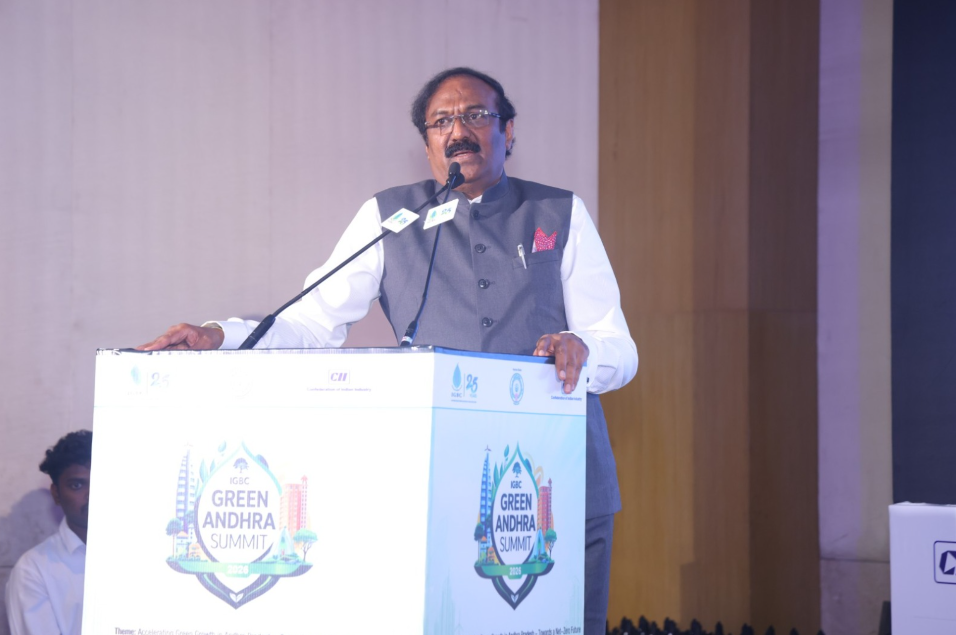
Placing the state’s progress within a national framework, C Shekar Reddy, National Chairman, Indian Green Building Council (IGBC), said, “As of today, 17 state government providing incentives for IGBC-certified green buildings, which has amplified the green building movement through 20,012 IGBC-registered projects accounting to over 16.33 billion sq. ft. of registered green building footprint. This makes India the second largest green building footprint in the world. Andhra Pradesh is demonstrating how progressive policies and strong collaboration between the Government and industry can accelerate the green building movement. Today, the State has over 638 IGBC-registered projects with 627.58 million sq. ft., reflecting the growing confidence of developers and institutions in sustainable development. As green buildings become increasingly mainstream, we should also begin exploring the idea of making green building certification and sustainability standards an integral part of the development process. Just as quality certifications and standardization have enhanced credibility and accelerated adoption across industries, mainstreaming green building standards can significantly improve environmental performance while creating healthier, more efficient, and future-ready developments. IGBC remains committed to supporting Andhra Pradesh in this journey through its 33 Green and Net Zero Rating Systems, technical expertise, and capacity-building initiatives.”