The AI Revolution in Real Estate: From Valuation to Asset Management
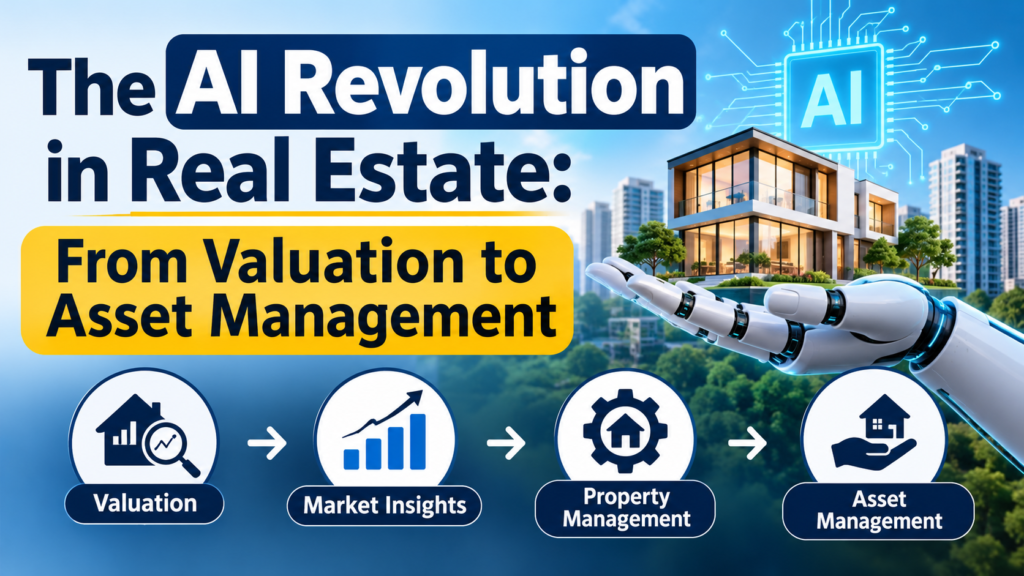
The real estate industry is undergoing a significant transformation as Artificial Intelligence (AI) becomes an integral part of property transactions, investment decisions and asset management. Traditionally, real estate operations have relied heavily on manual processes, historical data, physical inspections and individual expertise. However, the growing adoption of AI-powered technologies is changing how properties are valued, marketed, managed and maintained.
From predicting property prices to automating building operations, AI is helping developers, investors, brokers and property managers make faster and more informed decisions. In India, where the real estate sector is expanding across residential, commercial, retail and industrial segments, the integration of AI presents opportunities to improve efficiency, transparency and long-term asset performance.
How AI Is Transforming the Real Estate Industry
Artificial Intelligence uses technologies such as machine learning, predictive analytics, natural language processing and computer vision to analyse large volumes of information and identify patterns. In real estate, these capabilities can support activities ranging from property research and market analysis to facility management and investment planning.
AI is no longer limited to customer-facing applications such as chatbots and virtual assistants. It is increasingly influencing core business functions, helping real estate companies optimise costs, understand market behaviour and improve operational performance.
1. AI-Powered Property Valuation: Making Pricing More Accurate
Property valuation is one of the most important aspects of real estate transactions. Conventional valuation methods often depend on comparable property prices, location assessments, physical inspections and market expertise. While these methods remain important, AI can strengthen the process by analysing significantly larger datasets.
AI-powered valuation models can evaluate several factors, including:
- Historical property transaction prices.
- Location and neighbourhood development.
- Connectivity and infrastructure projects.
- Property size, age and configuration.
- Nearby amenities and commercial developments.
- Local demand and supply patterns.
- Rental trends and market fluctuations.
By processing these variables, AI-based Automated Valuation Models (AVMs) can generate indicative property valuations and identify emerging pricing trends.
For developers and investors, this can support better pricing strategies and investment assessments. For buyers, it can offer an additional reference point when comparing properties.
However, AI-generated valuations should not be treated as definitive. Physical property conditions, legal complications, construction quality and unique location characteristics may require professional assessment.
2. Predictive Analytics: Understanding Market Trends Before They Emerge
Real estate investment decisions are closely linked to market conditions, economic activity and infrastructure development. Predicting these changes has traditionally required extensive research and industry experience.
AI-powered predictive analytics can examine historical market data, demographic patterns, interest rates, rental movements and infrastructure developments to identify possible future trends.
For example, developers can use predictive models to understand which locations may experience increased housing demand, while investors can assess areas with potential for rental growth or capital appreciation.
These insights can help stakeholders:
- Identify emerging investment destinations.
- Estimate future housing demand.
- Evaluate potential rental income.
- Understand changing consumer preferences.
- Assess risks associated with market fluctuations.
- Plan development projects more effectively.
In rapidly developing markets such as Delhi-NCR, Bengaluru, Mumbai, Hyderabad and Pune, predictive analytics can support more informed decisions around location selection and project planning.
3. Smarter Property Search and Customer Experience
The property discovery process is also evolving with AI. Traditional property searches often involve browsing multiple listings, comparing specifications and contacting several brokers or developers.
AI-powered property platforms can simplify this experience by analysing buyer preferences, budgets, preferred locations, property configurations and lifestyle requirements.
These platforms can recommend properties based on individual search behaviour rather than relying entirely on broad filters.
AI chatbots and virtual assistants can also handle routine customer queries, schedule site visits, share project information and provide updates throughout the buying journey.
For real estate developers and brokers, this can improve lead management and reduce response times. It can also help sales teams prioritise prospective buyers based on their requirements and level of interest.
4. AI in Construction and Project Development
The influence of AI extends beyond property transactions into the construction and development process.
Developers can use AI-powered tools to analyse construction schedules, estimate material requirements, monitor project progress and identify potential delays.
When integrated with Building Information Modelling (BIM), AI can help analyse design alternatives, detect inconsistencies and improve coordination between different project teams.
Computer vision and drone-based monitoring can also assist in tracking construction progress by comparing site images with planned project milestones.
Some key applications include:
- Construction schedule optimisation.
- Material and resource planning.
- Site monitoring and progress tracking.
- Identification of design conflicts.
- Predictive maintenance of construction equipment.
- Safety monitoring and risk identification.
These applications can help reduce inefficiencies, improve project coordination and support timely delivery. However, their effectiveness depends on reliable data, proper implementation and human supervision.
5. Intelligent Asset Management: Improving Long-Term Property Performance
Asset management is one of the areas where AI can deliver substantial long-term value.
Once a property is developed, its performance depends on several factors, including occupancy, maintenance, operating expenses, tenant satisfaction, rental income and asset utilisation.
Traditional asset management often involves periodic inspections, manual reporting and reactive maintenance. AI can introduce a more data-driven approach by continuously analysing building performance and operational information.
For commercial properties, office buildings, shopping malls and large residential developments, AI-powered systems can help with:
Predictive Maintenance: AI can analyse information from sensors and building equipment to identify unusual performance patterns and flag potential failures before they result in major breakdowns.
Energy Management: Intelligent building systems can monitor electricity consumption, optimise heating, ventilation and air conditioning (HVAC) operations and identify opportunities to reduce energy usage.
Occupancy Management: AI can analyse space utilisation and occupancy trends, helping property managers make better decisions about space allocation and facility planning.
Tenant Management: Automated systems can streamline maintenance requests, communication, service updates and routine tenant interactions.
Operational Cost Optimisation: By analysing utility consumption, maintenance records and facility expenses, AI can help identify areas
Disclaimer: The information provided in this article is for general informational and educational purposes only and does not constitute professional real estate, financial, investment, legal, or technical advice. While Artificial Intelligence (AI) tools, automated valuation models, and predictive analytics can assist in data analysis and market assessment, they are not infallible and should not be relied upon as a substitute for independent due diligence, physical property inspections, or consultation with qualified real estate, legal, and financial professionals. Market conditions, property valuations, and technological outcomes are subject to change and carry inherent risks. Neither the author nor the publisher assumes any responsibility or liability for any errors, omissions, or decisions made based on the content of this article.