News
Able and Stable: Real Estate Sector Welcomes RBI Move to Keep Repo Rate Unchanged
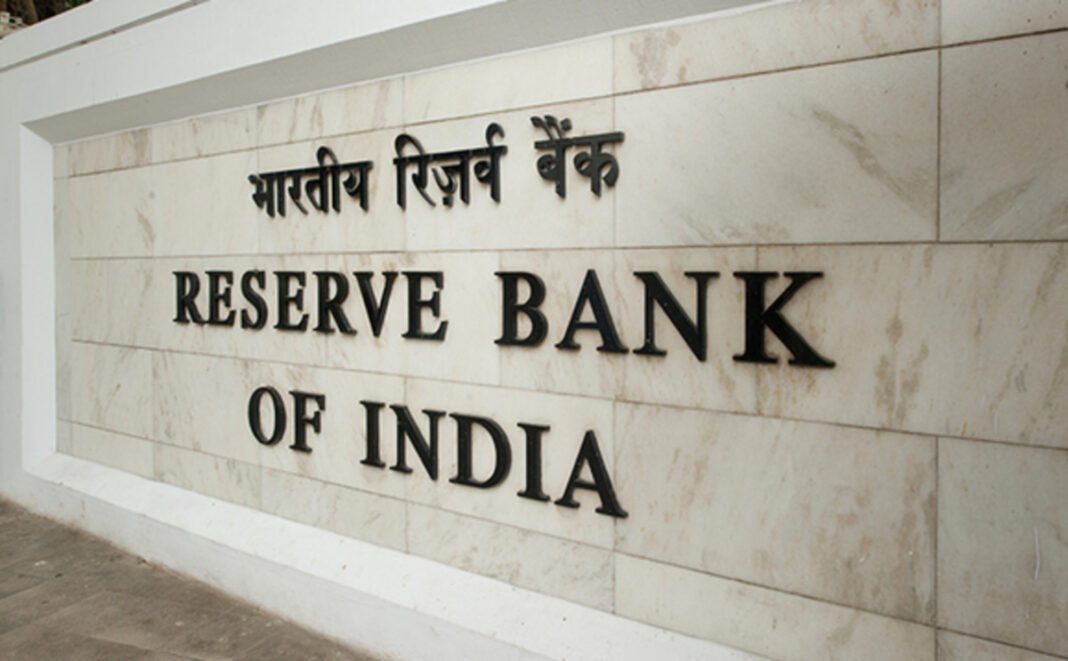
Mumbai, February 7, 2026: In its first major policy decision following the Union Budget for the next financial year, the Reserve Bank of India has announced that its key lending rate – the repo rate – would remain unchanged at 5.25 per cent. The real estate sector welcomed the stability and predictability implied in the decision, announced by RBI Governor Sanjay Malhotra after a three-day meeting of the central bank’s Monetary Policy Committee (MPC). The MPC meets every two months.
The MPC also made a significant concession for the real estate sector, saying that banks would be allowed to lend to real estate investment trusts under prudential safeguards. This facility was earlier available to infrastructure investment trusts.
REITs have recently been reclassified as equity instruments by the Securities and Exchange Board of India, opening the door to mutual fund investments.
The RBI decision was on expected lines, given continued strong economic growth – the Economic Survey says India will grow by 7.4 per cent this financial year. Low inflation levels and the recent free trade agreement with the EU as well as the announcement of a tariff deal with the US are other positive factors behind the central bank keeping the repo rate unchanged. The neutral stance of the RBI also points to rates staying low for some time to come, adding predictability
The Indian economy is in a good spot amid global uncertainty, Malhotra said, adding that underlying data points to sustained growth momentum. In his bi-monthly policy address, Malhotra also said that a framework will be proposed to compensate customers up to Rs 25,000 for losses in small-value digital transaction frauds. He said that draft guidelines will also be issued on the misselling by lenders, recovery of loans. and the use of recovery agents.
Upon review and considering the presence of strong regulatory and governance framework for listed REITs, it is proposed to permit commercial banks to extend finance to REITs, subject to appropriate prudential safeguards,” the RBI said in a statement. The existing guidelines are being aligned to match “prudential safeguards” proposed for lending to REITs, it added. This could boost funding into property and add to the growth of the sector.
The revised norms will apply to loans sanctioned or renewed from April 1, 2026.
Here’s a snapshot of how the movers and shakers of the real estate sector reacted:

Manoj Gaur, CMD, Gaurs Group: “The RBI’s decision to maintain the status quo was on expected lines, and we welcome the move. Given the global economic context, Indo–EU and Indo–US trade deals, the budget’s thrust on infrastructural development, and the easing retail inflation which has remained below 4 per cent mark since February 2024, this will go a long way in ensuring India’s growth and create demand for asset creation benefitting the real estate sector will no doubt be a major beneficiary in this scheme of things.”

Deepak Kapoor, Director, Gulshan Group: “Following the budget’s emphasis on infrastructural development and the two trade deals, the RBI’s decision to keep the repo rate unchanged comes as further good news. It speaks of India’s solid economic foundations, easing inflationary pressures and positive growth outlook. Together, they create an effective backdrop for real estate growth. We are confident that 2026 will be another growth-oriented year for the sector.”

Amit Modi, Director, County Group: “Seen in the context of GDP growth projected at 7.4 per cent and the retail inflation less than 4 per cent, the news of RBI keeping the repo rate unchanged at 5.25 per cent will provide tailwinds to real estate growth. More so, India’s current trade deals between the EU and the USA will lead to, among others, higher foreign investment in India, which will further boost the country’s economy. Coming on the heels of the setting up of the Infrastructure Risk Guarantee Fund and City Economic Regions with INR 5,000 crore allocation per region over five years, including temple towns, as well as a focus on Tier II and III cities in the budget, the country’s real estate sector is poised for growth.”

Yash Miglani, Managing Director, Migsun Group: “With the repo rate standing at 5.25 per cent, maintaining the status quo will preserve stability in borrowing costs and help keep home loan EMIs largely unchanged, which is essential for steady real estate demand. From a financing standpoint, clarity in monetary policy aids banks and developers in planning credit deployment, managing balance sheets, and ensuring smoother project execution. We view this policy decision as a key determinant of market confidence and are prepared to respond constructively to the direction the RBI chooses at this juncture.”

Gurpal Singh Chawla, Managing Director, TREVOC Group: “After reducing the repo rate by 25 bps in December, the RBI’s decision to keep the repo rate unchanged at 5.25 per cent will continue the benefits of reduced EMI to the homebuyers, both new and existing. Seen in the context of low retail inflation, this will increase liquidity in the market and encourage new homebuyers to go for their dream homes. This will be especially true for the Tier II and III cities, where the prices are still affordable, and this reduction matters more when compared to the luxury segment. The country’s high projected GDP growth and higher FDI due to recent trade deal will further add to the positive sentiments.”

Salil Kumar, Director – Marketing and Business Management, CRC Group: “The decision to hold the repo rate at 5.25 per cent comes at a time when India’s global standing is strengthening, supported by recent Indo-US and Indo-EU trade agreements and a strong infrastructure-led Union Budget. For housing, this macro stability is critical. Predictable interest rates allow buyers to plan EMIs with confidence and enable developers to structure projects with financial clarity. Looking ahead, we expect a calibrated rate cut in the coming policies, which would further boost housing affordability and sentiment. Together, policy stability and global confidence create a conducive environment for long-term residential demand.
“The MPC’s decision to hold the repo rate provides both stability and predictability for the real estate sector. With inflation being comfortably low and progress on the India-US trade agreement, stable policy rates are likely to support organic growth in the sector, offering long-term visibility to developers and investors. Moreover, the government’s continued push on capex-led infrastructure growth and the recent Budget’s emphasis on fiscal discipline, prudent expenditure management and a controlled fiscal deficit together strengthen the medium-term outlook for the sector.”

Kushagr Ansal, Director, Ansal Housing: “The RBI’s decision on the repo rate comes at a critical time for the real estate sector, where stability and visibility in borrowing costs are key to sustaining demand. A steady rate environment supports affordability by keeping home loan EMIs predictable and encourages buyers who were previously on the fence to move forward. From a developer’s perspective, clarity in monetary policy also helps in better financial planning and smoother project execution. Overall, this policy stance strengthens market confidence and provides a supportive backdrop for long-term growth in residential real estate.”

Neeraj Gulati, Managing Director, Assotech Realty: “The MPC keeping the polic repo rate unchanged at 5.25 per cent reflects the strength of domestic growth and a well- managed inflation environment. For the real estate sector, this continuity provides critical visibility on capital costs, encouraging investment deployment across housing and mixed-use developments that require long-term funding commitment. Couple with the Union Budget’s strong infrastructure thrust across Tier-II cities, this stability is expected to unlock fresh development and institutional interest beyond metro markets. As macro uncertainties recede and financing costs remain predictable, developers and investors are better positioned to close capital allocations, support new project pipelines, and strengthen asset valuations across primary and secondary markets.

Anurag Mathur, CEO, Savills India: “Anchoring macroeconomic stability at the outset of the year, the RBI’s Monetary Policy has opted for policy continuity, with retaining the repo rate unchanged at 5.25 per cent continuing a neutral stance, signalling a calibrated and data-dependent approach. The decision comes as external tailwinds strengthen, led by progress on the India-EU Free Trade Agreement and selective tariff easing by the United States, which together have enhanced export visibility and investor confidence. Domestically, CPI inflation has remained benign and firmly within the tolerance range, while GDP growth continues to be robust at close to 7 per cent, supported by resilient consumption and sustained public capital expenditure. Policy stability is constructive for the real estate sector. Steady lending rates help sustain buyer confidence, particularly in the mid-income and premium housing segments, even if near-term demand acceleration remains measured. For developers, predictable financing conditions enhance visibility on funding costs, improve cash- flow planning, and support timely project execution and calibrated new launches in well-performing urban markets. Aligned with the Union Budget’s continued emphasis on infrastructure, urban expansion and public capex, the current monetary stance reinforces long-term demand across residential, office and industrial real estate, anchoring growth in fundamentals rather than short-term policy impulses.”

Shishir Baijal, International Partner, Chairman and Managing Director, Knight Frank India: “The RBI’s decision to hold rates steady, reflects a cautious and stability focused stance in a volatile global environment. As the economic growth outlook remains stable and maintain momentum, we can expect this overall growth to have a positive impact on the real estate sector. The pause underscores the central bank’s priority on managing currency pressures and external risks. For the real estate sector, the repo rate continues to remain at its lowest level in the post-pandemic period. While a further reduction in rates would have provided an added boost to homebuyer sentiment, particularly in the affordable housing segment, we expect banks to pass on a greater share of the existing rate benefits to consumers in the coming months. A stable interest rate environment offers much-needed predictability, supporting informed decision-making for both homebuyers and developers. In addition to the rate actions, the central bank has also eased the rules for bank lending to REITs which is a positive step considering it will ease their credit access and facilitate access to lower cost funds.”

Suresh Garg, CMD, Nirala World: “Maintaining stable interest rates in the market after a balanced budget is a positive decision for the real estate sector. This will eliminate the fear of unnecessary fluctuations in the market for both buyers and investors. Maintaining market stability is crucial for the full impact of the repo rate cuts and GST reductions implemented over the past year to be realized in the real estate sector.”

Ashish Jerath, President- Sales & Marketing, Smartworld Developers: “A steady repo rate at 5.25 per cent reinforces a sense of financial continuity at a time when long-term visibility is key for homebuyers. For a new generation of homebuyers, young professionals, entrepreneurs, and aspirational first movers, this kind of policy consistency offers a strong foundation to act with confidence. As demand shifts toward high-growth urban corridors, success will hinge on timely delivery, design intelligence, and the ability to turn stability into opportunity,”.

Pradeep Aggarwal, Founder & Chairman, Signature Global (India) Ltd.: “The RBI’s decision to hold the repo rate steady at 5.25 per cent offers stability for interest- rate–sensitive sectors like real estate in the current macroeconomic environment. With inflation remaining at manageable levels and the benefits of earlier rate cuts continuing to flow through to homebuyers in the form of improved affordability, residential demand has remained resilient. The Union government’s decision to raise public capital expenditure to INR 12.2 lakh crore in FY27, as announced in the Union Budget 2026, further strengthens the growth outlook through infrastructure-led development. Supported by stable monetary policy and sustained public spending, the real estate sector will continue to play a pivotal role in driving economic growth, employment generation, and urban development across the country.”
Dinesh Gupta, President of CREDAI Western UP: “Keeping the repo rate stable is a significant step of boosting confidence of buyers. When there is no fear of sudden changes in interest rates, customers make home-buying decisions with confidence. This maintains stable and sustainable demand in the market.”
Atul Vikram Singh, Founder of Vision Business Park: “The real estate sector has a direct impact on employment. This decision by the RBI will also prove positive for the construction, steel, cement, and other allied industries.”
Lt. Col. Ashwani Nagpal (Retd.), COO, Diligent Builders: “The stable repo rate will maintain stability in home loan EMIs, allowing people to plan and invest for the long term. This decision brings relief, especially for the middle class and first-time homebuyers, and will play a significant role in bringing stability to the market.”

Shailendra Sharma, Chairman, Renox Group: “Policy stability is crucial for capital-intensive sectors like real estate. This decision by the RBI is an attempt to control unnecessary volatility in the market and to strike a balance between growth and inflation by the policymakers.”

RBI Monetary Policy April 2026: Stability, Signals & What It Means for Real Estate
The latest monetary policy announced by the Reserve Bank of India after March 2026 marks a decisive shift from aggressive...


Supreme Court Declines to Stay Adani’s Jaypee Takeover; Orders NCLAT to Fast-Track Vedanta’s Appeal
New Delhi, April 6, 2026: The Supreme Court on Monday refused to entertain an appeal by Vedanta against the implementation...


Government and ALEMAI Unveil ‘Aluminium Bharat’ to Revitalize Ailing Downstream Sector
New Delhi, April 8, 2026: The Aluminium Extrusion Manufacturers Association of India (ALEMAI) has officially launched the ‘Aluminium Bharat’ initiative,...


CRC Group and Olive Group Announce Partnership to Bring Olive Café & Bar to Noida
Noida, April 8, 2026: CRC Group has announced a landmark collaboration with restaurateur AD Singh to bring the iconic Olive...


CP67 Mall Transforms into Cultural Hub with ‘Virsa Punjab Da’ Baisakhi Celebrations
Mohali, April 7, 2026: The spirit of Punjab has taken center stage at CP67 Mall as the premium retail destination...


Savills Acquires Majority Stake in Hotelivate to Scale Hospitality Advisory Across Asia Pacific
New Delhi, April 7, 2026: Global real estate advisory giant Savills has announced the acquisition of a majority interest in...
-

 News3 weeks ago
FractoProp Receives SEBI Registration for Ridhama Real Estate Fund
-
 News4 weeks ago
Enviro Infra Engineers Secures ₹411 Crore Bihar Sewerage Project Under AMRUT 2.0
-
News2 weeks ago
How Noida International Airport Will Impact Property Prices
-
News1 week ago
Noida International Airport Inauguration Sparks New Real Estate Boom For NCR
-
News7 days ago
Tata Realty Seals Bengaluru Land Deal at ₹2,300 Crore; CBRE Advisor for Transaction
-
News3 weeks ago
Rise of Airport-Linked Real Estate: Opportunities Emerging Around Jewar
-
News4 weeks ago
Greenlands Global Private Limited Appointed as Managing Partner for Big FM Realty’s ₹1,200 Crore Mixed-Use Development
-

 News4 weeks ago
India Maintains Competitive Edge as Asia-Pacific Office Fit-Out Hub, Reports Knight Frank