News
‘Civil Aviation Ministry Conducting Study to Relax Height Restrictions for Real Estate Projects’
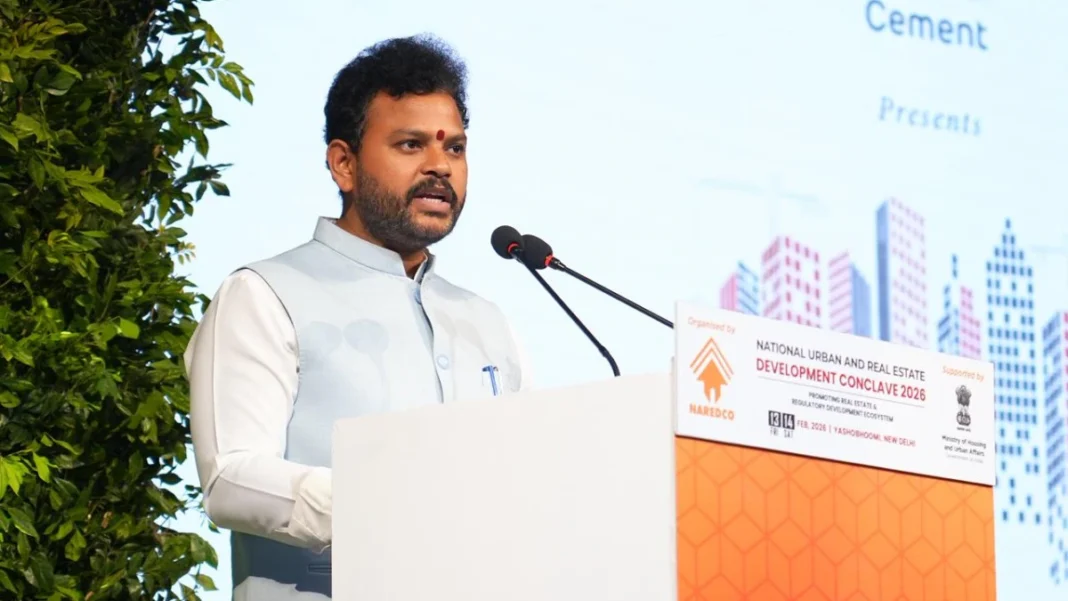
New Delhi, February 14, 2026: The Government could tweak regulations here and there in its existing framework of real estate to ensure that the vertical development of housing, real estate and other affiliate sectors associated with the construction industry takes off at a faster speed to double the contribution of housing and construction to national GDP by 2047, Civil Aviation Minister Kinjarapu Ram Mohan Naidu has indicated.
According to the minister, the “Indian real estate market is expected to reach $1 trillion by 2030 driven by structural reforms, enhanced transparency and rising investor confidence. It has the potential to expand to $5-7 trillion by 2047.”
Addressing the National Urban and Real Estate Development Conclave-2026, Naidu indicated that since horizontal expansion and growth of real estate and construction would not be possible in future given the constraint of space, the vertical development of the sector would be required, for which the government would have to make amendments in the present real estate and construction sector, including in some of its infrastructure segments.
The minister, however, did not elaborate on possible changes in the regulatory framework of the real estate and construction sector, barring adding that a comprehensive study is being conducted by a well-established agency whose recommendations would unfold in future to suggest changes in the regulatory framework so that the real estate and construction sector emerges as the beneficiary of airport led growth in the country.
“Nearly 50 more airports would be added to the current airport strength of India in the next five years whereas this number would multiply to 200 airports in the next 20 years, which would not only transform the civil aviation sector but have its massive multiplier effects in the real estate, construction and housing sectors,” he said.
He called upon NAREDCO to prepare to make India walk on the trajectory of “rental housing” project faster because the aspirational India wants it to experience rather than staying on the old idea of owning housing because the rental housing trends have evolved worldwide, particularly in the economies of scale in continents such as America, Europe and even South East Asian nations so that the rising demand of young India is met and accordingly policies are made.
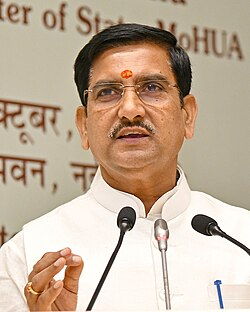
Speaking on the occasion, Minister of State for Housing & Urban Affairs Tokhan Sahu assured the real estate industry and their representatives present in the conclave of the government’s legitimate support in terms of policies and framework so that the construction, housing and affordable housing sector including construction are well served as per government targets and India moves faster towards its Viksit Bharat targets.
The minister pointed out that in the affordable housing segment, the industry should be proactive as this area remains filled with challenges and the government endeavour would be that affordable housing units as promised under the Prime Minister Awas Yojana are created for the poorest of the poor.
In his welcome address, NAREDCO President Parveen Jain pointed out that the real estate and construction sector need policies that support the industry so that its contribution to national GDP doubles in the next couple of years to take India to its desired destination of Viksit Bharat by 2047.
He, however, added that the transformation of the real estate and construction sector would come up provided there is equal focus on the development of urban India so that its benefits percolate down to the countryside in which the real India resides.
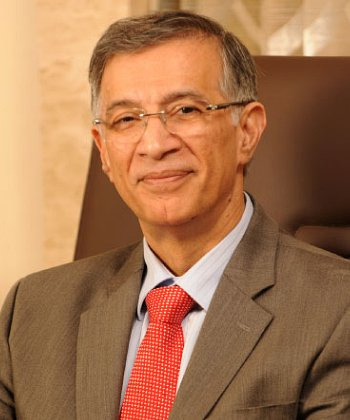
Dr. Niranjan Hiranandani, Chairman, NAREDCO, in his address stated that India stands today at the threshold of historic transformation. “As we move towards Viksit Bharat@2047, the role of real estate and urban development becomes not peripheral-but central-to national progress.”
He adeded: “Urban India today houses nearly 37 per cent of our population and contributes almost 65 per cent of our GDP. By 2047, more than half of India will be urban. The question before us is simple but profound : will we allow urbanisation to happen to us – or will we shape it responsibly and strategically?”
Among others who were present on the occasion and spoke to galvanise the construction, real estate and housing sector through policy support included Justice Rajan Gupta, Chairman, Haryana Real Estate Appellate Tribunal, and N Saravana Kumar, IAS, Vice Chairman, Delhi Development Authority (DDA).



TK Elevator Powering India’s Vertical Growth Story
As India’s urban landscape rises both outward and upward, the role of vertical mobility is undergoing a fundamental transformation. No...

UP RERA Amends its Regulations for the 10th time, Provides Major relief to home buyers
Lucknow/GautamBuddh Nagar, March 26, 2026: The Uttar Pradesh Real Estate Regulatory Authority (UP RERA) notified the 10th Amendment to its...


Noida International Airport: Property Prices Along the Airport to Rise 28% by 2027: Square Yards
March 26, 2026: The upcoming Noida International Airport at Jewar has triggered a sharp real estate price appreciation across the...


Manasum Senior Living Partners with Alt DRX for Digital Investment in Senior Living Real Estate
New Delhi, March 26, 2026: Manasum Senior Living, has announced a partnership with Alt DRX to enable Tokenized, digital investment...


Indian Auto LPG Coalition urges PNGRB to include Auto LPG in TERI-Led Fuels Study
New Delhi, March 26, 2026: The Indian Auto LPG Coalition (IAC) has submitted a formal representation to the Petroleum and...


India Reinforces Its Position as Asia Pacific’s Most Cost-Competitive Fit-Out Market: Cushman & Wakefield
Gurugram, March 26, 2026 – India continues to reinforce its position as the most cost-competitive office fit out market in...
-
 News4 weeks ago
Hiranandani Communities Launches Watersports Centre at Premium Coastal Hiranandani Sands, Alibaug Township
-
Guest Column3 weeks ago
Retail Trends to Watch Out for in 2026
-
News4 weeks ago
Strategic Partnership between Brigade Group, Primus Senior Living to Develop Senior Living Communities
-

 News4 weeks ago
FY27 Outlook Residential Real Estate: High Base and Affordability Challenges; Tier I Mid-Premium Segment Resilient
-

 News1 week ago
FractoProp Receives SEBI Registration for Ridhama Real Estate Fund
-
News4 weeks ago
TARC Marks New Milestone at TARC Kailasa with Grand Tower Launch, New Experience Gallery Reveal
-
Guest Column4 weeks ago
Trust-Led, Lifestyle-Focused, Infrastructure-Driven: Punjab’s Real Estate Evolution
-
News4 weeks ago
Mumbai Real Estate Hits 14-Year High with Over 13,000 Property Registrations in February 2026