Delhi-NCR Retail Space Leasing Surges 78 Percent to 1.3 Million Sq Ft in Jan-Jun 2026: Cushman & Wakefield
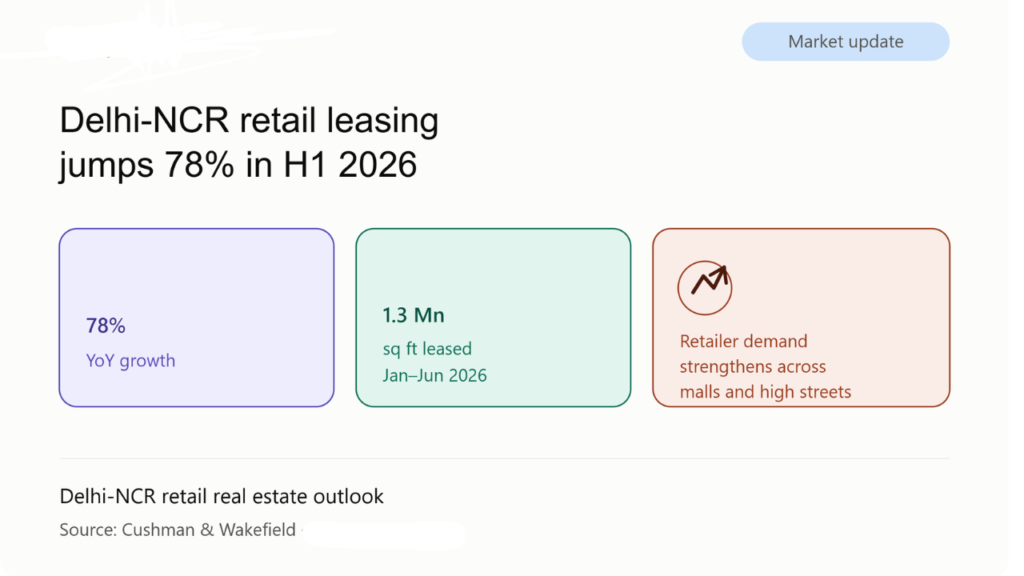
The surge was primarily led by fashion brands, which accounted for 28 percent of total leasing activity, followed by food and beverage operators at 16 percent and department stores at 12 percent. Mall leasing jumped 100 percent year-on-year, while high-street leasing rose 4 percent, indicating a dual strategy by retailers to balance destination formats with broader neighborhood coverage.
Delhi continued to draw flagship formats and premium high-street occupiers due to its dense spending catchments and established commercial hubs. Gurugram led the regional market by commanding a 45 percent share of total NCR retail leasing in the second quarter, driven by its Grade A office ecosystem, high-income residential population, and expanding leisure sector. Delhi followed closely with a 44 percent share, while Noida accounted for 11 percent.
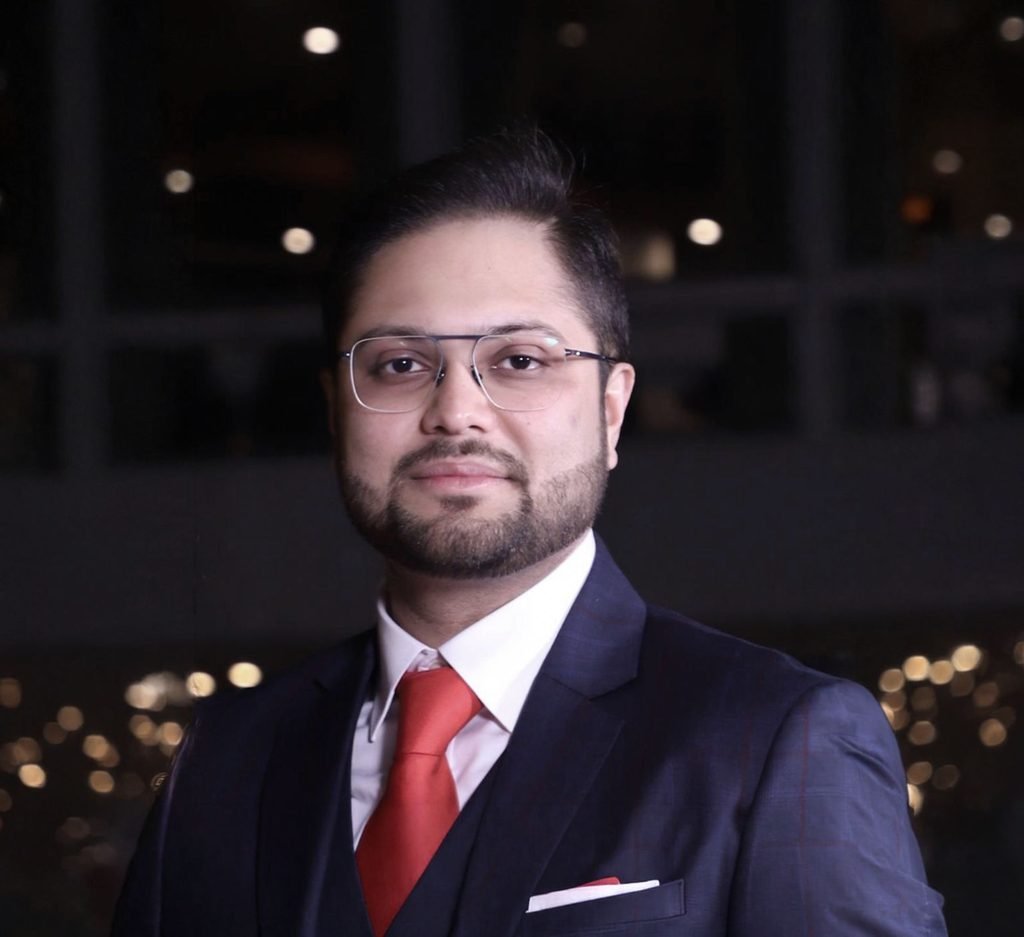
Shyamrup Roy Choudhury, Founder and Managing Director, Aura World, said, “The current leasing momentum shows that brands are becoming more disciplined about their physical expansion. They are not choosing locations on visibility alone; they are examining the quality of the catchment, access, parking, frontage, tenant adjacencies and the ability of a destination to generate footfall across the day. Gurugram performs well on these parameters because it has a strong mix of office workers, affluent residents and leisure-led visitors. Locations such as Sohna, backed by robust infrastructure upgrades, improving connectivity and planned urban development continues to attract brands and investors’ interest. However, the market is also more discerning now. Fashion, beauty, food and beverage, and lifestyle brands are especially focused on destinations where the experience is consistent and the consumer journey is convenient. The quality of execution will increasingly determine which projects attract and retain leading brands.”
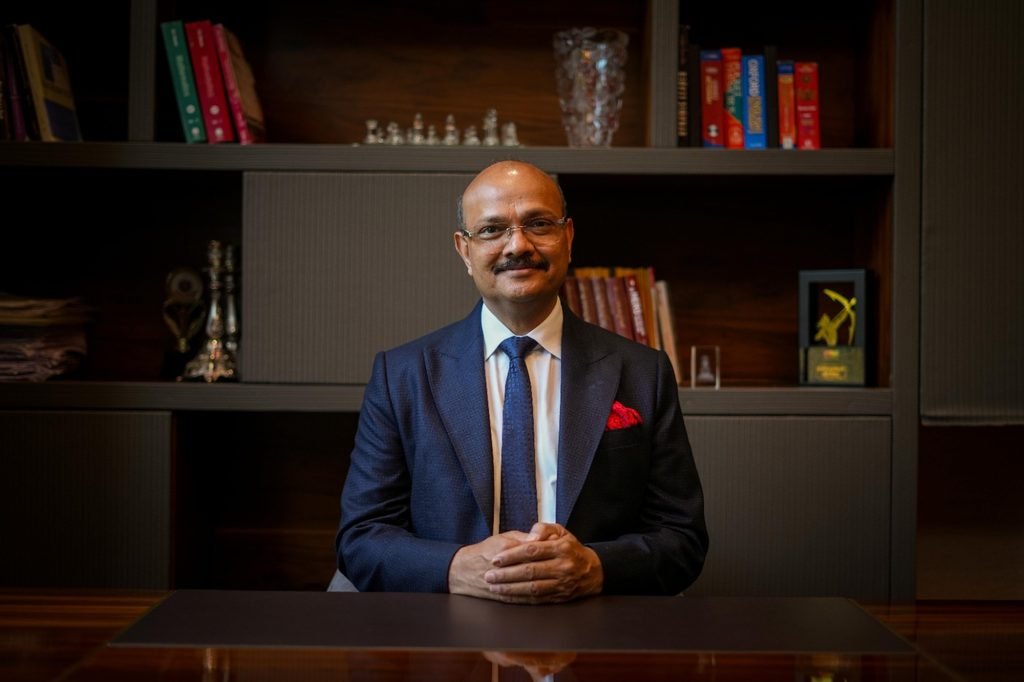
Pankaj Jain, Founder and CMD, SPJ Group, added, “The strong growth in retail leasing across NCR reflects growing confidence among brands in the region’s consumption potential. Importantly, brands are now looking beyond the established high-visibility locations and exploring markets where there is already a strong and consistent consumer base. Old Gurugram is a good example of this opportunity. It is a mature and densely populated part of the city, surrounded by residential neighbourhoods, schools, offices and a steady flow of daily consumers. However, the area has historically lacked a well-integrated retail destination that brings shopping, dining and entertainment together. This presents a significant opportunity for organised retail. Instead of waiting for a new catchment to develop, brands can tap into an existing consumer base with established spending patterns. For Old Gurugram, successful retail will ultimately come down to convenience—easy access, ample parking, a strong mix of brands, comfortable spaces and entertainment for families. A well-planned retail destination can not only give consumers more reasons to shop locally, but also help retain spending within the local market and elevate the overall retail experience in Old Gurugram.”
Market sentiment is currently being supported by expansion efforts from established brands looking for closer proximity to consumers, along with incoming domestic and international labels seeking physical footprints. Additionally, digital-first brands are launching brick-and-mortar locations as part of wider omnichannel strategies, leveraging storefronts for discovery, order fulfillment, and brand building.
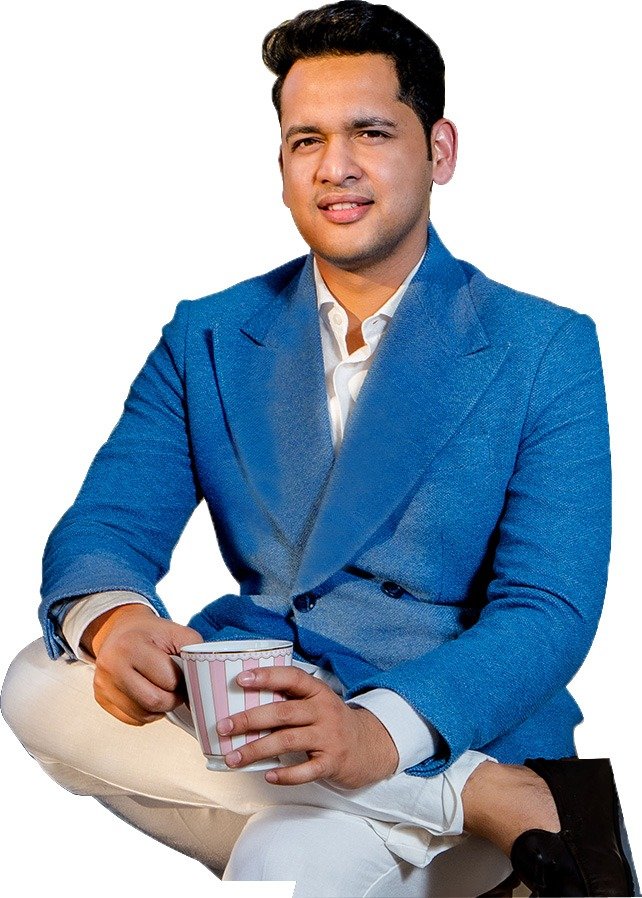
Jatin Goel, Executive Director, Omaxe Group, said, “The rise in retail leasing across Delhi-NCR is a reflection of how the region’s consumption story is becoming more geographically broad-based. Brand expansion is no longer centred only on established malls or traditional high streets. Retailers are studying where new residential catchments are maturing, where connectivity is improving and where consumers are beginning to spend more within their own neighbourhoods. This is particularly relevant for markets such as Faridabad and Greater Noida. In Faridabad, the opportunity lies in a large and evolving resident base that is increasingly looking for branded shopping, quality dining and family entertainment closer to home. The next phase of retail development in NCR will therefore be less about adding space and more about creating the right destination for each catchment. Well-curated projects, with an appropriate mix of fashion, F&B, leisure and daily-use brands, will be better placed to convert this latent demand into sustained footfall.”
Industry analysts noted that the upcoming phase of retail growth in the region will rely heavily on developers matching formats to specific micro-markets. This flight to quality is underlined by vacancy trends, where Grade A mall vacancies stand tight at 6 percent compared to 13 percent in Grade B+ malls, reflecting clear tenant demand for professionally managed, top-tier retail spaces.