How South India’s Real Estate Has Changed in the Last 20 Years
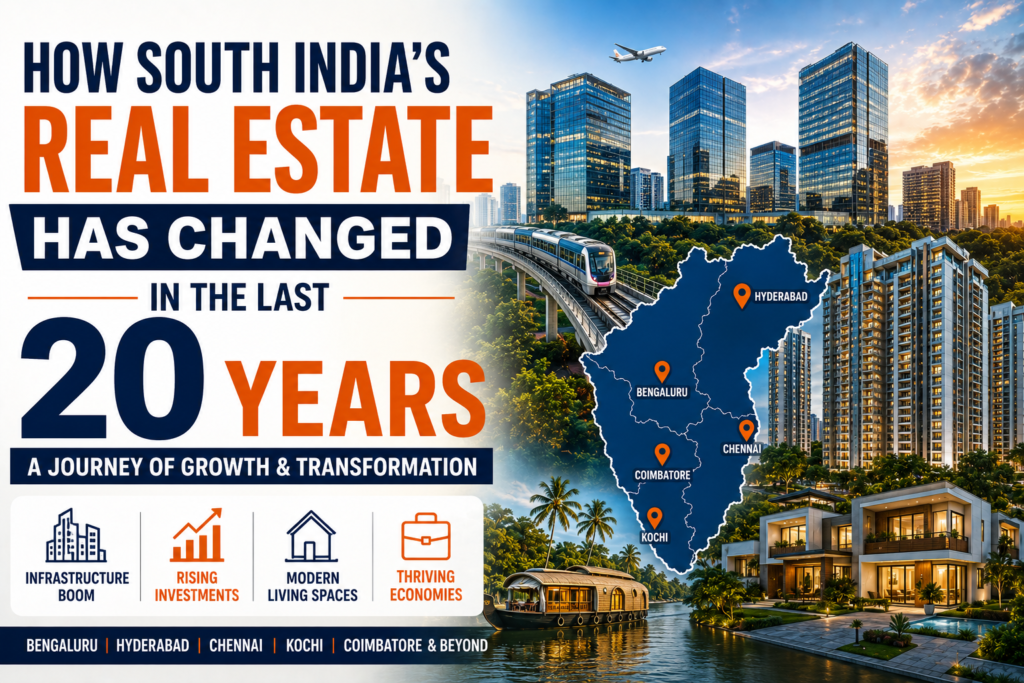
Over the last two decades, South India has emerged as one of the strongest drivers of India’s real estate growth. Cities like Bengaluru, Hyderabad, Chennai, Kochi, Coimbatore, and Visakhapatnam have transformed from regional economic centres into globally recognized business and investment destinations. Improved infrastructure, rapid urbanisation, booming IT industries, and supportive government policies have reshaped both residential and commercial property markets.
Understanding how South India’s real estate has changed in the last 20 years provides valuable insights for homebuyers, investors, NRIs, and developers looking to capitalize on one of the country’s most dynamic regions. From affordable housing to luxury apartments, integrated townships, and Grade A office spaces, South India’s property landscape has undergone a remarkable transformation.
The Evolution of South India’s Real Estate
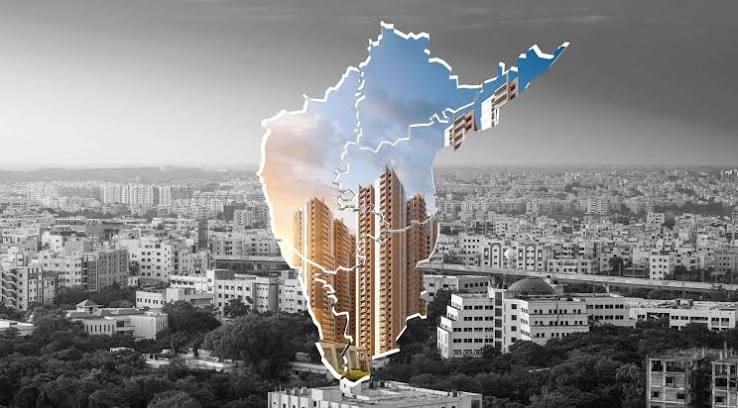
Twenty years ago, South India’s property market was largely concentrated around traditional city centres. Residential developments were limited, commercial office space was relatively scarce, and infrastructure expansion was progressing at a slower pace.
Today, South India is home to:
- India’s largest IT corridors
- World-class business parks
- International airports
- Metro rail networks
- Smart city projects
- Modern integrated townships
- Premium commercial districts
The region now attracts domestic buyers, global corporations, institutional investors, and NRIs seeking long-term value.
What Changed South India’s Property Market?
IT Revolution Became the Biggest Catalyst
The expansion of India’s technology sector dramatically changed the region.
Cities like:
- Bengaluru
- Hyderabad
- Chennai
became global technology hubs, attracting multinational companies such as Microsoft, Google, Amazon, Apple, Infosys, TCS, Wipro, Accenture, and Deloitte.
The influx of professionals created enormous demand for:
- Residential apartments
- Rental housing
- Office spaces
- Retail developments
- Mixed-use communities
This transformed real estate into one of the region’s strongest economic sectors.
Infrastructure Development Changed Everything
Infrastructure investment has been the backbone of South India’s property boom.
Major developments include:
Bengaluru
- Namma Metro expansion
- Peripheral Ring Road
- Satellite Town Ring Road
- Kempegowda International Airport expansion
Hyderabad
- Outer Ring Road
- Hyderabad Metro Rail
- Financial District
- Airport corridor development
Chennai
- Chennai Metro Rail
- IT Expressway (OMR)
- Chennai Peripheral Ring Road
- Port connectivity upgrades
Kochi
- Kochi Metro
- Smart City Kochi
- Water Metro
- Improved highway connectivity
These projects unlocked entirely new residential and commercial investment corridors.
Rise of Integrated Townships
Modern buyers increasingly seek convenience and lifestyle rather than just a home.
Developers introduced integrated townships featuring:
- Schools
- Hospitals
- Office spaces
- Shopping malls
- Green parks
- Sports facilities
- Clubhouses
- Walking trails
This concept has become especially popular in Bengaluru, Hyderabad, and Chennai.
Commercial Real Estate Entered a New Era
South India now accounts for a significant share of India’s office leasing activity.
Grade A office developments continue to expand due to:
- Global Capability Centres (GCCs)
- IT companies
- Financial services
- Startups
- Research centres
Bengaluru alone remains India’s largest office market, while Hyderabad has become one of the fastest-growing commercial hubs.
Luxury Housing Witnessed Strong Growth
Higher incomes and expanding business opportunities encouraged demand for luxury homes.
Today’s premium developments offer:
- Smart home technology
- Private clubhouses
- Rooftop amenities
- Wellness centres
- Concierge services
- EV charging stations
- Green certifications
Luxury housing has expanded significantly in Hyderabad, Bengaluru, and Chennai.
Affordable Housing Also Expanded
Despite luxury growth, affordable housing remains an important segment.
Government initiatives such as:
- PMAY
- Interest subsidies
- Better housing finance availability
have encouraged first-time homebuyers across Tier I and Tier II cities.
Digital Transformation Simplified Buying
Technology has made property transactions more transparent.
Buyers can now:
- Compare projects online
- Take virtual site tours
- Verify RERA registrations
- Apply for digital home loans
- Complete online documentation
Developers increasingly rely on AI-powered marketing and digital sales platforms.
Benefits of South India’s Real Estate Growth
Employment Generation
The property sector has created millions of direct and indirect jobs through:
- Construction
- Architecture
- Engineering
- Interior design
- Facility management
- Legal services
- Technology
Strong Investment Returns
South Indian cities have consistently delivered attractive capital appreciation, particularly in areas benefiting from new infrastructure and employment growth.
Better Urban Lifestyle
Residents now enjoy:
- Metro connectivity
- Modern healthcare
- International schools
- Retail destinations
- Entertainment zones
- Better public infrastructure
Increased NRI Investment
NRIs continue to prefer South Indian cities due to transparent markets, reliable developers, and strong rental demand.
Challenges Facing South India’s Property Market
While growth has been impressive, several challenges remain.
Traffic Congestion
Rapid urbanisation has increased traffic pressure, particularly in Bengaluru and Chennai.
Rising Property Prices
Premium localities have become significantly more expensive, making affordability a challenge.
Land Availability
Developers increasingly look toward suburban growth corridors due to limited land within city centres.
Sustainability
Future projects must focus on:
- Water conservation
- Green buildings
- Energy efficiency
- Sustainable urban planning
Expert Tips for Buyers and Investors
1. Invest Near Infrastructure Projects
Properties near metro stations, airports, expressways, and IT parks generally appreciate faster.
2. Verify RERA Registration
Always choose projects registered with the respective state RERA authority.
3. Focus on Employment Corridors
Locations near technology parks, financial districts, and business hubs tend to generate stronger rental demand.
4. Research Developer Reputation
Review previous projects, delivery timelines, and customer satisfaction before investing.
5. Think Beyond City Centres
Suburban locations with planned infrastructure often offer better long-term investment potential.
Indian Market Perspective
South India has become one of the strongest pillars of India’s real estate sector. Bengaluru continues to dominate office leasing and startup activity, Hyderabad remains one of the country’s fastest-growing residential and commercial markets, while Chennai has strengthened its position in manufacturing, automobiles, and IT.
Cities such as Kochi, Coimbatore, Mysuru, Visakhapatnam, and Trivandrum are also emerging as attractive investment destinations due to improving infrastructure, better connectivity, and increasing employment opportunities.
Government initiatives like RERA, Smart Cities Mission, PM Gati Shakti, metro rail expansion, and digital governance have further improved transparency and investor confidence. With sustained infrastructure spending, rising urbanization, and growing demand for quality housing, South India’s real estate market is well-positioned for continued long-term growth.
Conclusion
Over the last 20 years, South India’s real estate market has undergone a remarkable transformation driven by technology, infrastructure, urbanization, and economic growth. The region has evolved from a collection of traditional city markets into a globally recognized investment destination offering world-class residential, commercial, and mixed-use developments.
As infrastructure projects continue to expand and demand for quality housing and office spaces grows, South India is expected to remain one of the most attractive real estate markets in the country. Whether you are a first-time homebuyer, investor, or NRI, understanding these trends can help you make informed property decisions.
Stay updated with the latest real estate news, expert insights, and market trends on RealtyNMore.