News
NCR Real Estate Outlook 2026: Quality, Credibility and Long-Term Demand

New Delhi, January 10, 2026: The NCR real estate market in 2026 is being shaped by measured decision-making rather than market exuberance. After several years of sharp price movement and rapid expansion, the focus has shifted decisively toward asset performance, operational efficiency, and long-term sustainability across offices, retail, and residential developments.
In commercial real estate, occupiers are favouring future-ready Grade-A office spaces, integrated developments, and well-connected locations, driven by corporate expansion, GCC leasing, and infrastructure upgrades taking shape on the ground. Retail, meanwhile, is benefiting from changing consumption patterns, with destination-led malls, high-street formats, and community-centric developments emerging as preferred choices for brands and investors alike.

Manoj Gaur, CMD, Gaurs Group says, “Across economic cycles, capital consistently moves toward assets with enduring fundamentals. That is precisely why real estate continues to be the safest investment option, rooted in fundamentals that do not disappear with market noise: land scarcity, urban expansion, infrastructure growth, and the need for homes and workplaces. Unlike paper assets driven by sentiment and short-term volatility, real estate derives its strength from utility and permanence. What is different today is the maturity of the buyer; investors are choosing locations with infrastructure visibility, projects with execution credibility, and assets that offer both end-use value and financial security. Even during slowdowns, quality real estate protects capital, delivers rental income, and rebounds faster than most asset classes. Importantly, real estate also offers a hedge against inflation; construction costs rise, land becomes scarcer, and replacement value increases over time. For long-term investors, this combination of physical ownership, predictable appreciation, and income visibility makes real estate a resilient wealth-building asset.”

Yukti Nagpal, Director, Gulshan Group says, “What’s becoming clear in 2026 is that luxury housing in NCR, particularly in Noida and Greater Noida, has evolved beyond just bigger homes or better locations. Buyers today are looking for a complete living experience, which is why branded residences are seeing growing traction in this market. The value proposition now extends to professional management, thoughtful design, service standards, and long-term asset reliability, especially for HNIs and NRIs. With expressway connectivity, improving infrastructure, and a rising corporate presence, the region is attracting a new generation of end-users who see luxury real estate as both a lifestyle upgrade and a prudent long-term wealth asset. Importantly, this demand continues to be end-user driven, which adds stability to the market. As supply remains selective and quality becomes non-negotiable, Noida–Greater Noida is steadily positioning itself as a credible luxury residential destination within NCR.”

Arjun Gehlot, Director, Ambience Malls says, “In 2026, we expect organised retail to be clearly moving beyond recovery into a phase of structural consolidation, and malls that offer scale, experience, and tenant quality will lead this cycle. In Gurugram, consumer spending is being driven by a growing base of affluent households, professionals, and the global workforce, which is directly translating into stronger footfalls and healthier retailer performance. What we are seeing is a shift from transactional retail to destination-led consumption, where dining, entertainment, and flagship brand formats play an equally important role. In H1 2025, retail leasing in NCR rose nearly 25 per cent, signalling a clear return of consumption-led growth. Fashion and apparel brands drove about 35 per cent of leasing activity, while vacancy levels in Grade-A retail spaces in Gurugram dropped below 3 per cent, tightening supply. As brands prioritise fewer but stronger physical touchpoints, large-format, well-curated malls are expected to outperform in 2026, positioning organised retail as a resilient, income-stable asset class.”

Bhupindra Singh, COO, RISE Infraventures says, “As we head into 2026, India’s real estate market is settling into a phase of calibrated, quality-led growth across both residential and commercial segments. In luxury housing, demand remains end-user driven, even as price appreciation is expected to normalise after the sharp run-up seen in 2025. Gurugram led the housing price increase among Indian cities, with property rates soaring by an impressive 150 per cent since 2019, while Noida and Greater Noida witnessed an increase of 104 per cent. On the commercial side, fundamentals continue to strengthen, particularly in Grade-A offices, where global occupiers are taking long-term positions. GCCs have emerged as a key growth engine, having leased more than 100 million sq ft since 2021, with their share projected to remain strong through 2026–27. With interest costs stabilising and government policies encouraging foreign participation, 2026 is likely to reward markets that offer scale, credibility, and long-term value rather than speculative upside.”

Sandeep Chhillar, Founder and Chairman, Landmark Group, says: “As 2026 unfolds, luxury housing in Gurugram is being shaped by genuine lifestyle-led buying, particularly along growth corridors like the Dwarka Expressway. Improved connectivity, proximity to the airport, and rapidly maturing social infrastructure have transformed the expressway into a preferred address for end-users as well as long-term investors. What stands out in this cycle is the diverse nature of buyers; they are prioritizing larger layouts, privacy, green spaces, and design-led living over sheer scale. After the sharp price appreciation seen in 2025, the market is now entering a more balanced phase where value creation is driven by product quality and holistic planning rather than rapid escalation. With limited new land parcels and strong absorption in completed and near-completion projects, 2026 is reinforcing Dwarka Expressway’s position as a mature luxury micro-market rather than an emerging one.”

Pankaj Jain, Founder and Chairman, SPJ Group, says, “As we look towards 2026, the next phase of retail growth in Gurugram is likely to come from high-potential yet untapped micro-markets. Areas like Old Gurgaon are witnessing renewed interest due to improving infrastructure, dense catchments, and limited quality retail supply. This shift was clearly visible in 2025, when food and beverage operators alone accounted for nearly 40 per cent of leasing activity, with main streets outperforming malls and capturing close to 58 per cent of overall F&B demand, highlighting the growing preference for experience-led, high-visibility retail. Unlike saturated corridors, these micro-markets offer brands the advantage of sustainable rentals and deeper community engagement. Retailers today are far more data-driven, with expansion decisions closely linked to footfall quality rather than just location prestige. In 2026, we expect neighborhood-led formats and daily-need anchored developments to continue this growth trajectory, particularly in pockets that balance affordability with accessibility.”

Yash Miglani, Managing Director, Migsun Group, added, “Moving onwards in 2026, it seems that the real estate market in India has entered an intensely positive phase for growth in terms of end-users, affordability, and development in terms of sustainability and quality. Today’s buyers are far more aware in terms of their preferences regarding real estate; in other words, the need for transparent, committed projects that revolve around lifestyles has encouraged real estate companies to enhance quality in every way possible.”

Sanchit Bhutani, Managing Director, Group 108, says, “The 2026 outlook for Noida and Greater Noida’s commercial sector is increasingly being shaped by infrastructure-led confidence rather than speculative growth. With the Noida–Greater Noida Expressway maturing and Noida International Airport progressing steadily, the region is emerging as a credible alternative for both office occupiers and organised retail. We are seeing strong interest from MNCs and GCCs looking for scalable, cost-efficient office environments. While retail demand is being driven by a growing residential base and improving social infrastructure, paving the way for national and global brands. What differentiates this corridor is its ability to support long-term expansion, both in terms of land availability and planning. As occupiers move beyond CBD saturation, 2026 is expected to position this region as a sustained growth market rather than a cyclical beneficiary.”

Harvinder Singh Sikka, Managing Director, Sikka Group, says, “Looking ahead to 2026, it is apparent that NCR’s real estate market is poised to enter a phase where quality, compliance, and delivery integrity will assume far greater importance than mere scale. The market is seeing a growing trend of end-users driving demand in both the residential as well as commercial market, thanks to improved infrastructure, finance, and transparency. The modern homebuyer is well-informed, and what they are looking for is a project which has long-term value, is sustainable, and livable. For a developer, 2026 will be a year of responsible development, of establishing trust, and creating alignment between what is offered in products and actual market needs.”

Kushagr Ansal, Director, Ansal Housing, says, “Moving ahead into year 2026, the real estate market is projected to witness a smooth and widespread growth because of infrastructure development, urbanization, and changing lifestyle trends. In the residential real estate market, there’s a paradigm shift in terms of the development of planned and secured communities. This would be parallel to the increasing popularity of mixed-use projects and the need for integrated spaces. In the year to come, developers will need to emphasize execution, innovation, and sustainable development to meet the changing demands and sentiments of buyers, shifting from speculative growth to reliability and relevance.”



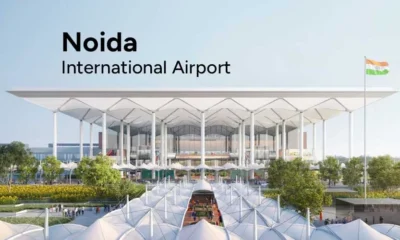

Noida International Airport and Akasa Air Forge Strategic Partnership to Develop MRO Facility
Noida, March 14, 2026: Noida International Airport (NIA) and Akasa Air announced a strategic partnership on March 13, 2026, to...


Perfectpac Limited to Invest ₹125 Crore in New Greater Noida Manufacturing Unit
Greater Noida, March 14, 2026: BSE-listed packaging firm Perfectpac Limited has announced a major expansion of its operations with the...


Emaar India Lays Foundation for ELITE OASIS in Lucknow
Lucknow, March 13, 2026: Emaar India, the local arm of the global real estate giant EMAAR, officially commenced construction on...
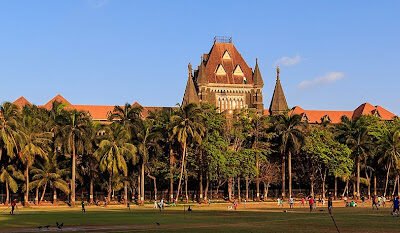

Bombay High Court Overturns Pune District Court’s Interim Order Against Runwal Enterprises
Pune, March 14, 2026: In a significant legal development, Runwal Enterprises Limited has successfully appealed a previous ruling by the...

Premium Housing Drives India’s Real Estate Market to ₹8.46 Lakh Crore in 2025: CREDAI–Liases Foras Report
New Delhi, March 14, 2026: The Indian residential real estate market has demonstrated significant value growth in 2025, driven by...

Why Gurugram Needs a Second Urban Masterplan
Gurugram, March 13, 2026: Gurugram is one of India’s fastest-growing urban centres. What was once a small satellite town has,...
-
 News3 weeks ago
Hiranandani Communities Launches Watersports Centre at Premium Coastal Hiranandani Sands, Alibaug Township
-
News2 weeks ago
Strategic Partnership between Brigade Group, Primus Senior Living to Develop Senior Living Communities
-
Guest Column1 week ago
Retail Trends to Watch Out for in 2026
-
News3 weeks ago
Sambhav Homes Completes 85-acre Land Delivery for ₹600-Cr ESR Hosur Advanced Manufacturing Park
-
 News2 weeks ago
FY27 Outlook Residential Real Estate: High Base and Affordability Challenges; Tier I Mid-Premium Segment Resilient
-
News2 weeks ago
TARC Marks New Milestone at TARC Kailasa with Grand Tower Launch, New Experience Gallery Reveal
-
News4 weeks ago
Five Listed Indian REITs Distribute Over ₹2,450 Cr to Unitholders in Q3 FY26: Indian REITs Association
-
Guest Column2 weeks ago
Trust-Led, Lifestyle-Focused, Infrastructure-Driven: Punjab’s Real Estate Evolution