News
Office Leasing Hits Record High For Third Consecutive Year in 2025 At 82.6 MSF
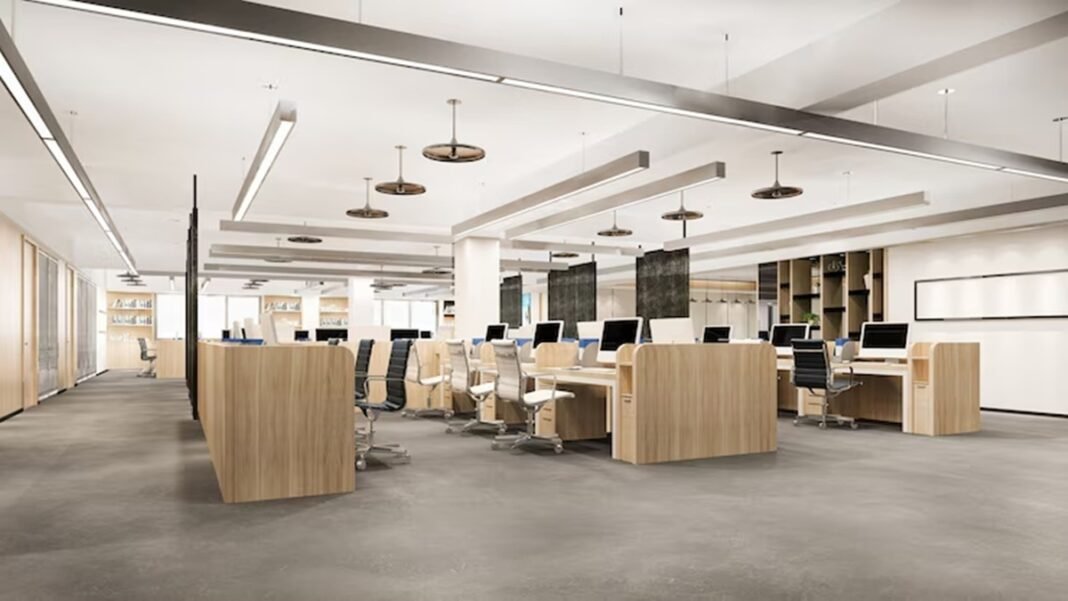
New Delhi, January 6, 2026: Real estate consultancy CBRE South Asia Pvt. Ltd has released a report titled, ‘CBRE India Office Figures Q4 2025’, highlighting that the office leasing activity hit a record high in 2025 for the third consecutive year, reaching 82.6 million square feet (MSF), registering a ~1 per cent increase year-on-year (YoY).
Space take-up was led by Bengaluru, Mumbai, and Delhi-NCR, with these cities together accounting for a share of approximately 61 per cent of the overall absorption. The report mentioned that the office demand is being driven by steady investment and the portfolio expansion strategies of global and domestic companies, underpinned by their ongoing digitisation efforts.

According to Anshuman Magazine, Chairman & CEO, India, South-East Asia, Middle East & Africa at CBRE, India’s office market continues to demonstrate strong fundamentals despite a rapidly shifting global backdrop, marked by geopolitical uncertainties and challenges surrounding cross-border talent mobility. “Global firms are poised to expand their footprints in India through their Global Capability Centres (GCCs), buoyed by the country’s inherent advantages, including a highly skilled talent pool and cost differentials. These centres are projected to drive ~35-40 per cent of total space absorption in 2026, with new growth expected from mid-market entities, global unicorns, and emerging sectors. Despite existing uncertainties, global firms continue to view India as a strategic destination for their multi-functional hubs delivering innovation and enterprise leadership,” he said.
In 2025, office leasing activity was dominated by technology firms, flexible space operators, and BFSI corporates, with these sectors cumulatively accounting for around 60 per cent of total absorption. Looking ahead, the tech sector is expected to continue driving India’s office space absorption, focusing on hiring specialised talent in advanced domains such as artificial intelligence (AI), machine learning (ML), data analytics, and cloud computing.
Moreover, during the October-December quarter, the leasing activity increased by 15 per cent quarter-on-quarter to touch 22.2 MSF. This absorption was led by Bengaluru with a share of about 24 per cent, followed by Mumbai (22 per cent) and Delhi-NCR (18 per cent).
Of the total, GCCs accounted for a share of around 39 per cent, leasing about 8.5 MSF in Q4 2025. Bengaluru continued to dominate leasing by GCCs, with a share of 44 per cent, followed by Hyderabad (25 per cent), and Delhi-NCR (13 per cent). While U.S. companies remain the primary drivers of GCC demand, occupiers from the EMEA and APAC regions are increasingly establishing operations in India, influenced by the proven success of existing centres and the rapid growth of the country’s digitally skilled talent pool.

Ram Chandnani, Managing Director, Leasing, CBRE India, said that in 2026, major markets such as Bengaluru, Delhi-NCR, Mumbai, and Hyderabad are poised to maintain their dominance in office space absorption.
“Additionally, Chennai and Pune are likely to continue gaining traction, fuelled by their healthy supply pipelines and diversified talent pools. Leasing momentum is also anticipated to expand to tier-II cities as occupiers seek to strategically grow their footprints beyond the gateway hubs,” he added.
Entrenched sectors, such as E&M and BFSI, are expected to remain active, while firms in niche industries such as life sciences, semiconductors, and automotive, are also likely to witness continued expansion. Furthermore, the flexible workspace market is set for robust growth as corporates increasingly integrate these spaces into their long-term growth strategies to enhance scalability, risk management, and cost efficiency.
On the supply side, developers rushed to meet high demand during 2025, with total supply rising 5 per cent Y-o-Y to 56.3 MSF In line with the demand, developers are increasingly delivering fully amenitised, premium, green-certified office spaces that align with occupiers’ priorities regarding operational scalability, employee experience, and long-term business goals.
Moreover, sustainability has become a defining feature of premium office developments, with occupiers increasingly treating LEED and IGBC certifications as the minimum standard for meeting their ESG commitments. Notably, developers are now advancing beyond certifications by integrating energy-efficient design, renewable energy systems, and sustainable construction practices that align with occupiers’ ESG priorities, BRSR requirements, and long-term operating efficiency goals.
In 2026, a significant proportion of new supply is expected to be green-certified, underscoring the sector’s decisive shift towards environmentally responsible development.
Magazine said that the sector is poised for a steady pipeline of premium, institutional-grade assets in 2026 but high-quality, well-amenitised supply with comprehensive health and wellness features in prime locations would be critical to sustaining demand.
“Occupiers’ sustained preference for premium, ESG-compliant assets is expected to drive further vacancy compression and rental appreciation across key office locations throughout 2026,” Chandnani added.



Assotech Realty Collaborates with Atmosphere Core to Develop Hospitality Project in Shirdi
New Delhi, March 13, 2026: In a move signaling the rapid modernization of India’s spiritual tourism hubs, Assotech Realty has...


Enviro Infra Engineers Secures ₹411 Crore Bihar Sewerage Project Under AMRUT 2.0
New Delhi, March 13, 2026: Enviro Infra Engineers Limited (EIEL), a national player in water and wastewater treatment, has secured...


Altre Launches India’s First AI for Consulting-Grade Workspace Intelligence
Gurugram, March 11, 2026: Altre has announced the launch of Aly, a first-of-its-kind AI-powered intelligence platform engineered to transform how...

KG Builders Expands Western Chennai Footprint with ₹400 Crore Plotted Development Launch
Chennai, March 13, 2026: Legacy real estate developer KG Builders, a mainstay in the Tamil Nadu property market for over...


Aurum PropTech Exits non-core Assets for Rs112 Crore, Builds War Chest to Scale AI led PropTech
Mumbai, March 13, 2026: Aurum PropTech Limited announced on March 12 that its Board of Directors has greenlit the sale...


Godrej Properties Marks Debut in Coimbatore with 44-Acre Land Acquisition
Mumbai, March 13, 2026: Godrej Properties Limited (GPL) has officially entered the Coimbatore market through the outright purchase of an...
-
 News2 weeks ago
Hiranandani Communities Launches Watersports Centre at Premium Coastal Hiranandani Sands, Alibaug Township
-
News2 weeks ago
Strategic Partnership between Brigade Group, Primus Senior Living to Develop Senior Living Communities
-
Guest Column1 week ago
Retail Trends to Watch Out for in 2026
-
News3 weeks ago
Sambhav Homes Completes 85-acre Land Delivery for ₹600-Cr ESR Hosur Advanced Manufacturing Park
-

 News2 weeks ago
FY27 Outlook Residential Real Estate: High Base and Affordability Challenges; Tier I Mid-Premium Segment Resilient
-
News2 weeks ago
TARC Marks New Milestone at TARC Kailasa with Grand Tower Launch, New Experience Gallery Reveal
-
News4 weeks ago
Five Listed Indian REITs Distribute Over ₹2,450 Cr to Unitholders in Q3 FY26: Indian REITs Association
-
News4 weeks ago
Sales Surge in Kolkata’s Premium Housing Market, Strong Shift Toward South & East Corridors, says Nklusive