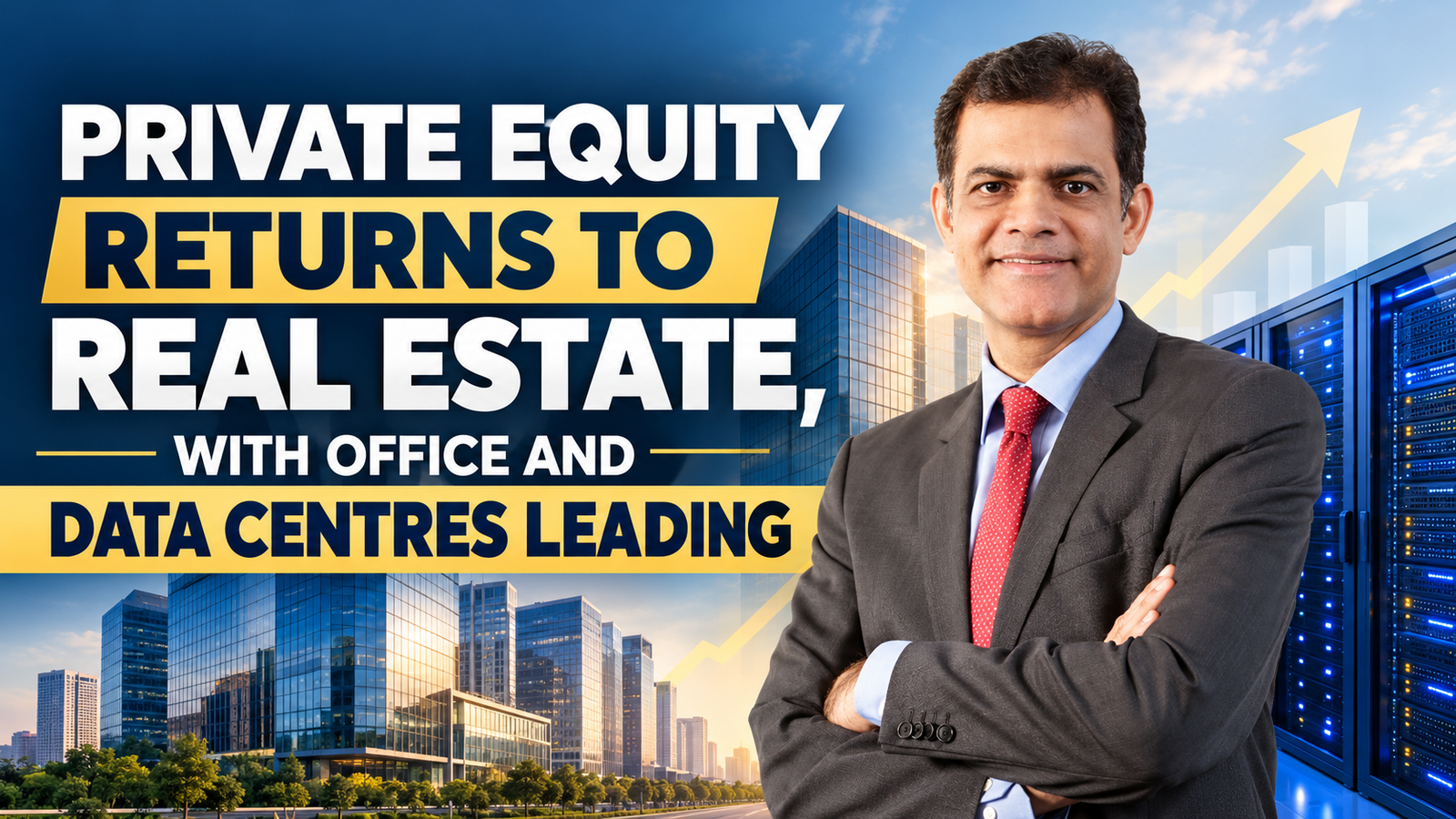
Private Equity Returns to Real Estate, With Office and Data Centres Leading: ANAROCK Group Founder & Chairman

Private equity is returning strongly to Indian real estate, with institutional investment interest led by core office income-generating assets, data centres, warehousing, operating malls, and residential projects. In this exclusive conversation with RealtyNMore Founder and Editor Palash Roy, Anuj Puri, Chairman & Founder, ANAROCK Group, discusses the sectors attracting foreign capital, the infrastructure needed to support Global Capability Centres (GCCs) and data centres, emerging real estate markets beyond the top seven cities, and key policy measures required to revive affordable housing.
Q. Foreign funds are flowing into Indian real estate. Which segments are attracting the maximum interest?
A: Private equity is really back in the play for real estate. The largest flow is into office income-generating core assets. The second is data centres, where there is a lot of interest. Third is warehousing and logistics. Fourth is malls—largely completed, operating, income-generating assets—and fifth is residential. Those are the five sectors, in that order of priority.
Q. With so much money flowing into the sector and the buzz around GCCs, do we have enough infrastructure to handle the influx?
A: At this point in time, GCCs are excited about the talent. As a beginning, there is enough talent of the quality they desire, willing to work hard. That is the biggest infrastructure for them. The second is physical infrastructure. Developers are doing their bit by creating very good-quality, Grade A and international-quality buildings for GCCs. In many cities, the physical and social infrastructure is also being laid by the government. If you speak with global Western-world GCCs, their point is that they want the talent first. As long as the talent is there, that is 80–85% of the challenge. The balance is the rest of the physical infrastructure, including buildings, the social fabric, roads and transportation infrastructure.
Q. Data centres require substantial water and electricity. Do we have the resources to cope with the expected influx?
A: At this stage, there is enough on both the water and power sides. But as we grow, we will see what the challenges are. There are certainly challenges in the US, where larger populations in smaller towns are not welcoming data centres. But in India, at this point, there seems to be enough physical infrastructure, availability of power and water in the cities where these data centres are coming.
Q. Beyond the top seven cities, where do you see the maximum scope for residential and real estate activity?
A: My favourites would be Lucknow, Jaipur, Bhubaneswar, Kochi, Coimbatore and Patna.
Q. There is a lot of traction in premium, branded and ultra-premium residences. What needs to be done for affordable housing and housing for all?
A: I think there are two or three things. One is that we need to relook at the physical and financial incentives delivered to developers to produce enough supply of affordable housing. Second, we need to provide similar incentives on the buyer side so that demand continues to remain strong. Third, we need to bring in more land parcels designated for affordable housing so that this supply can come into the market. If we do that, there are enough people out there who are willing to buy.