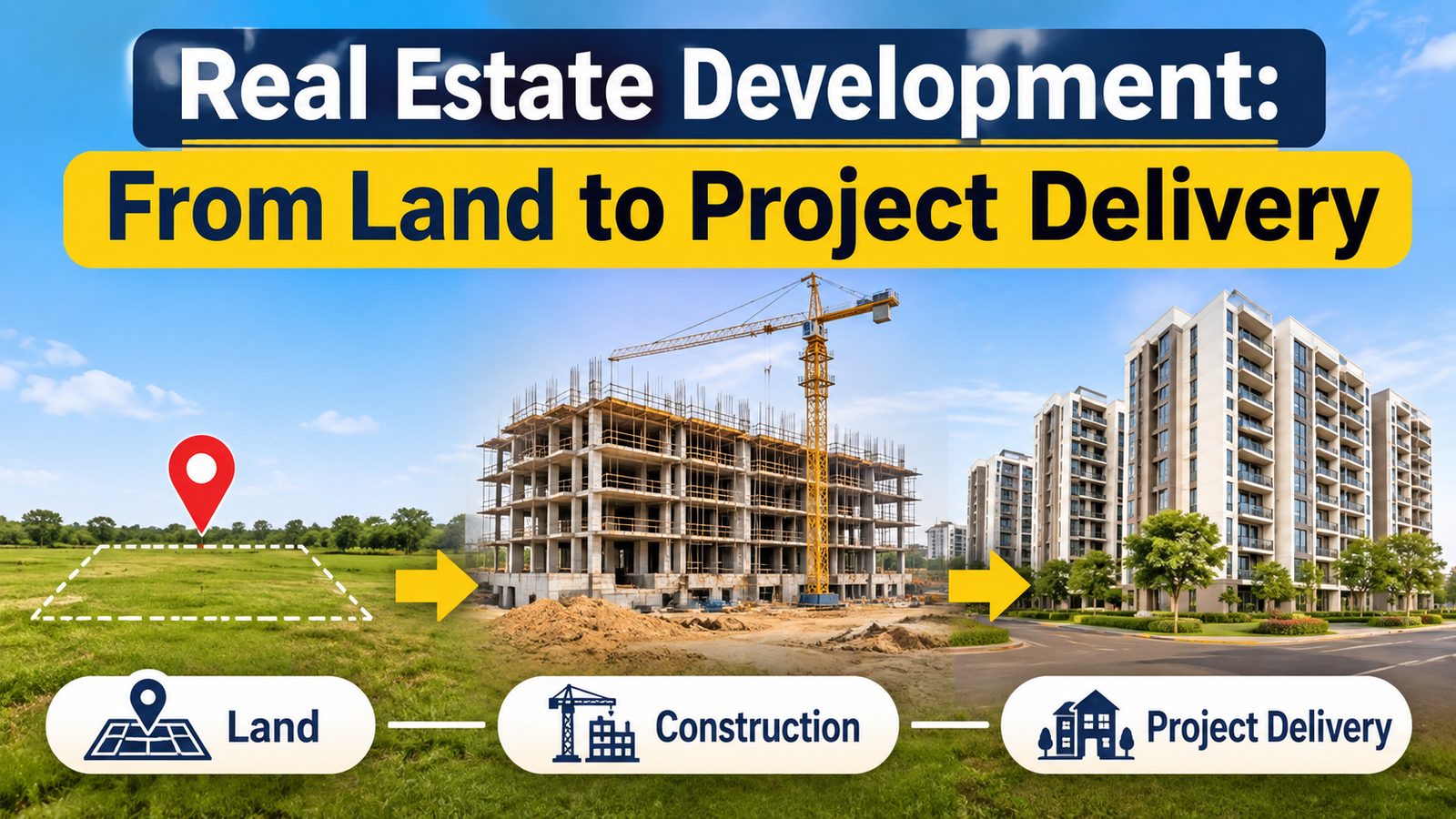
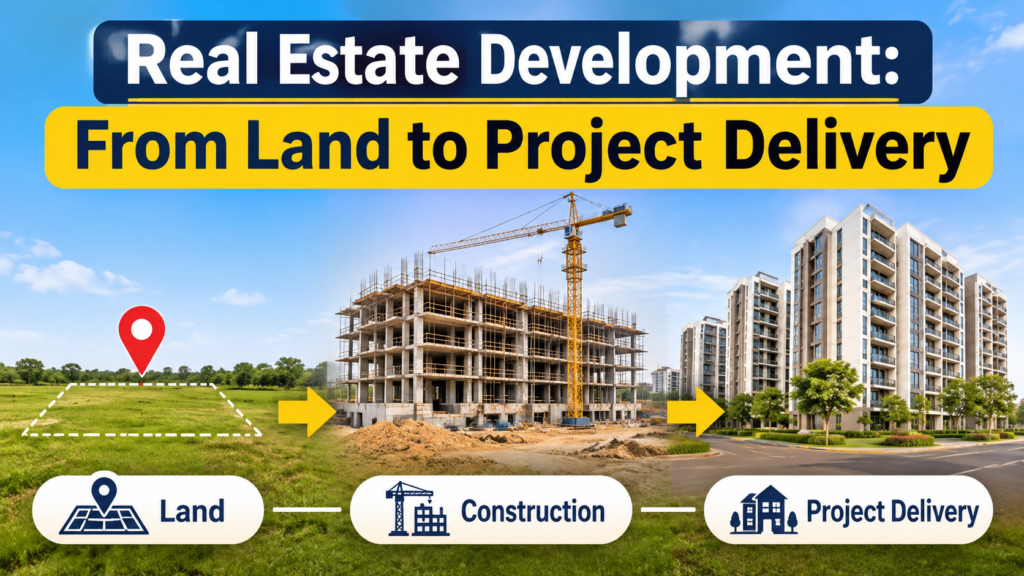
Real Estate Development: From Land to Project Delivery
Real estate development is a complex process that involves transforming vacant land or existing properties into residential, commercial, retail or mixed-use developments. From identifying the right location and acquiring land to obtaining regulatory approvals, managing construction and delivering completed projects, every stage plays an important role in determining the success of a development.
In India, the real estate sector continues to evolve with growing urbanisation, infrastructure expansion, changing consumer preferences and increasing demand for organised residential and commercial spaces. As cities expand and new investment opportunities emerge, understanding the real estate development process has become important for homebuyers, investors, developers and other industry stakeholders.
But what exactly happens between acquiring a piece of land and handing over a completed property? Here is a closer look at the key stages of real estate development.
1. Land Identification and Acquisition
The first step in any real estate development project is identifying suitable land. Developers evaluate several factors before selecting a location, including connectivity, infrastructure, surrounding development, market demand and future growth potential.
Land acquisition also requires careful legal and financial due diligence. Developers must examine ownership records, land titles, existing encumbrances, zoning regulations and permissible land use to ensure that the property can be developed as intended.
In India, land-related regulations and documentation vary across states. Therefore, verifying ownership and ensuring clear land titles are essential to reducing legal complications and project delays.
2. Feasibility Study and Market Research
Once suitable land has been identified, developers conduct feasibility studies to determine whether the proposed project is commercially and technically viable.
This stage involves analysing local property prices, demand and supply trends, target customers, competing developments and potential revenue opportunities.
For instance, a residential project in an emerging urban corridor may benefit from upcoming metro connectivity, highways, educational institutions and employment hubs. Similarly, a commercial development may depend on office space demand, business activity and accessibility.
Financial feasibility is equally important. Developers estimate land acquisition costs, construction expenses, approval fees, marketing expenditure, financing requirements and expected returns.
A detailed feasibility study helps developers assess risks and make informed investment decisions before committing substantial capital.
3. Project Planning and Design
After establishing the project’s feasibility, developers move towards planning and architectural design. This stage determines how the available land will be utilised and what the completed development will look like.
Architects, engineers, urban planners and consultants work together to prepare project layouts, building designs and infrastructure plans.
Depending on the nature of the development, planning may include:
- Residential units, commercial spaces or retail areas.
- Internal roads, parking facilities and access points.
- Water supply, drainage and electricity infrastructure.
- Green spaces, recreational facilities and common areas.
- Fire safety systems and emergency access.
- Sustainable building features and energy-efficient solutions.
Developers must also consider local development control regulations, building codes, Floor Area Ratio (FAR) or Floor Space Index (FSI), permissible building height and environmental requirements.
Efficient planning helps optimise land utilisation while ensuring that the proposed project meets regulatory standards and customer expectations.
4. Regulatory Approvals and Compliance
Obtaining the necessary approvals is one of the most important stages of real estate development in India. Before construction begins, developers must secure permissions from the relevant government authorities and local bodies.
Depending on the project, these may include:
- Land use conversion and zoning permissions, wherever applicable.
- Building plan approval.
- Environmental clearances, where required.
- Fire safety approvals.
- Airport Authority clearances, where applicable.
- Water and electricity connection permissions.
- Other local authority and statutory approvals.
The Real Estate (Regulation and Development) Act, 2016 (RERA) has also introduced greater accountability and transparency in the sector.
Under RERA, eligible projects must be registered with the respective state real estate regulatory authority before being advertised, marketed, booked or sold, subject to applicable exemptions. Developers are required to disclose project details, timelines, approvals and other prescribed information.
Compliance with these requirements helps protect homebuyers and establishes greater transparency throughout the development process.
5. Financial Planning and Funding
Real estate projects require substantial capital investment, often spread across multiple years. Developers must establish a financial structure that supports land acquisition, approvals, construction, marketing and project completion.
Funding sources may include:
- Internal accruals and developer equity.
- Bank loans and institutional financing.
- Private equity investments.
- Joint ventures and development partnerships.
- Customer collections, subject to applicable regulations.
Financial planning also involves cash flow management, cost estimation and contingency planning. Unexpected increases in material prices, labour expenses, interest rates or construction timelines can affect project profitability.
Under RERA, developers are also required to deposit 70% of the amounts realised from allottees in a separate account, subject to the Act’s provisions, for covering the cost of construction and land cost. Withdrawals are linked to the percentage of project completion and must be certified as prescribed.
Effective financial management is therefore essential for maintaining project continuity and meeting delivery commitments.
6. Construction and Project Execution
Construction is the stage where the proposed development begins to take physical shape. It involves coordinating contractors, engineers, architects, suppliers, labourers and project management teams.
The construction process generally includes:
- Site preparation and excavation.
- Foundation and structural development.
- Construction of the building framework.
- Electrical, plumbing and mechanical installations.
- Internal finishing, flooring and painting.
- External development, landscaping and common facilities.
Project execution requires continuous monitoring to ensure that construction activities remain aligned with approved designs, budgets and timelines.
Quality control is equally important. Developers must ensure that construction materials, structural components and safety systems meet the applicable standards.
Delays caused by labour shortages, supply chain disruptions, regulatory issues or adverse weather conditions can affect project delivery. Strong project management and coordination help minimise these challenges.
7. Marketing, Sales and Customer Engagement
Marketing and sales activities often begin during the development phase, depending on the project’s approvals and applicable regulatory requirements.
Developers communicate the project’s location, specifications, amenities, pricing and expected completion timelines to potential buyers and investors.
Digital marketing, property portals, channel partners, exhibitions and direct sales teams are commonly used to reach prospective customers.
However, marketing must remain consistent with the information registered with RERA and other applicable legal requirements. Developers are expected to provide accurate information about project specifications, possession timelines and promised facilities.
Transparent communication during the sales process helps build customer confidence and reduces the possibility of disputes.
8. Project Completion and Possession
The final stage of real estate development involves completing construction, obtaining the required completion or occupancy certificates and handing over the property to buyers.
A Completion Certificate generally confirms that construction has been completed in accordance with the sanctioned building plans and applicable regulations. An Occupancy Certificate, where required, confirms that the building is fit for occupation under the relevant rules.
Before possession, developers must ensure that essential services, common areas and promised amenities are ready as applicable.
Homebuyers should verify relevant approvals, inspect the property, review documentation and understand maintenance arrangements before taking possession.
For developers, timely delivery is not simply the conclusion of construction. It is also an important factor in establishing credibility and maintaining long-term relationships with customers.
Key Challenges in the Real Estate Development Process
Despite the opportunities in India’s property market, real estate development involves several challenges that can affect project execution and profitability.
Land and Legal Issues: Disputes over ownership, unclear titles and land-use restrictions can delay project commencement.
Regulatory Delays: Obtaining multiple approvals from different authorities can increase project timelines.
Rising Construction Costs: Fluctuations in steel, cement, labour and other input costs can affect project budgets.
Financing Constraints: Limited access to capital and cash flow pressures can slow down construction activities.
Changing Market Demand: Shifts in buyer preferences, interest rates and economic conditions can influence sales and project viability.
Project Delivery Risks: Poor coordination, contractor delays and inadequate quality control can affect the final outcome.
Addressing these challenges requires careful planning, financial discipline, regulatory compliance and effective project management.
The Role of Technology and Sustainability in Modern Real Estate Development
Technology is increasingly influencing how real estate projects are planned, designed and executed.
Building Information Modelling (BIM), project management software, drone-based site monitoring and digital construction tools are helping developers improve coordination, monitor progress and reduce inefficiencies.
Sustainability has also become an important consideration. Developers are increasingly exploring energy-efficient building designs, rainwater harvesting, waste management systems, renewable energy and green building certifications.
These initiatives can improve resource efficiency, support environmental goals and contribute to better long-term building performance.
As urban centres become more densely populated, integrating technology and sustainable practices into real estate development will play an increasingly important role in creating efficient and future-ready projects.
Conclusion
Real estate development is much more than acquiring land and constructing buildings. It is a structured process involving market research, legal due diligence, financial planning, regulatory approvals, design, construction and project delivery.
Each stage influences the project’s overall feasibility, quality, profitability and timely completion.
With India’s urban landscape continuing to expand, efficient real estate development will remain essential to meeting the growing demand for residential, commercial and mixed-use spaces. For developers, a well-managed development process can strengthen market credibility, while for buyers and investors, understanding these stages offers valuable insight into how a property moves from an initial piece of land to a completed real estate asset.
At RealtyNMore, stay informed about the latest real estate developments, infrastructure updates, property trends and industry insights shaping India’s property market.
Disclaimer: The information provided in this article is for general informational and educational purposes only and should not be construed as legal, financial, or professional investment advice. Real estate development and property transactions are subject to statutory regulations, local laws, and market risks. Readers, prospective buyers, and investors are advised to conduct their own independent due diligence, verify legal documentation and statutory approvals (including RERA registrations), and consult qualified legal and financial professionals before making any property or investment decisions. The publisher accepts no liability for actions taken based on the content of this article.