News
RUSAL Develops Revolutionary Tech to Treat Aluminum Scrap With Electrolysis
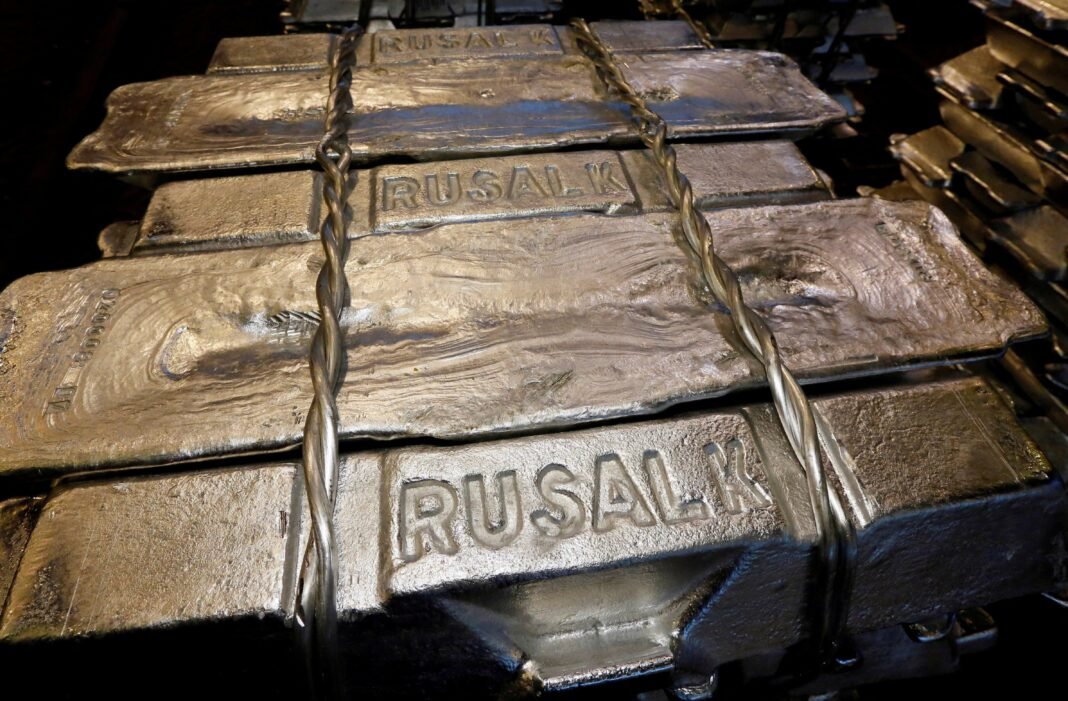
Moscow/New Delhi, October 7, 2025: RUSAL, one of the world’s largest aluminum producers, has pioneered a technology for producing high-quality aluminum from scrap by electrolysis. This technology makes it possible to recycle off-grade scrap with impurities into a metal with a record low carbon footprint.
RUSAL has made a revolutionary breakthrough in the reprocessing of aluminum scrap: the company has patented the operations of electrochemical reprocessing by electrolysis of off-grade scrap into a highly pure metal equivalent to primary aluminum of grade P1020 (A7 according to the Russian classification, with the purity higher than 99.7 per cent).
An important issue for the aluminum industry is the reprocessing of contaminated scrap. Conventional reprocessing of scrap with a high content of impurities, e.g. iron and copper, in melting furnaces even after applying the existing treatment methods, leads to downcycling, that is, production of low-grade alloys with a limited scope of application. RUSAL’s innovative technology solves this problem by providing a full-fledged closed cycle of metal without losing its quality and the capability of using reprocessed metal in high-tech industries, such as automotive, aerospace and food packaging industries.
The unique design of the pot developed by RUSAL ensures the electrochemical treatment of scrap at low costs and high energy efficiency. The technology converts off-grade scrap (quoted below the LME price) into P1020 aluminum (quoted at the LME price plus the regional premium).
The technology was successfully demonstrated at prototype pots with the amperage of 500 A and 3 kA. Tests have confirmed the high purity of the product and stable production of aluminum with a purity of over 99.7 per cent, operational stability of the prototypes achieving stable operating cycles lasting 40–45 days, high energy efficiency with about 9 MWh of energy consumed to produce one tonne of aluminum from scrap. For comparison, the most efficient conventional pots consume 12–14 MWh of energy to smelt one tonne of metal from alumina.
The technology is designed, among other, for the reprocessing of post-consumer scrap, which has a zero carbon footprint. In combination with ‘green’ energy sources (RUSAL uses hydro power plants), the technology makes it possible to produce grade P1020 metal with a carbon footprint of less than 1 tonne of greenhouse gases (full scope). The average full scope carbon footprint of the global aluminum industry is an order of magnitude higher: 14,8 tonnes of CO2 per tonne of metal.


Highway Hub Signs MoU With Viva Apotek to Develop Retail Network
Highway Hub, a venture by the Pragati Group, has signed an MoU to form a Joint Venture with Viva Apotek...


How Technology is Changing Real Estate
A complete, human-style deep dive into the future of property, investment, and living Introduction: A Digital Revolution in Real Estate...

Mindspace REIT Expands Chennai Footprint with ₹2,541 Crore Acquisition of Commerzone Pallikaranai
Mumbai, April 2, 2026: Mindspace Business Parks REIT has announced a major expansion of its southern India footprint with the...


Abhee Ventures Brings a Scotland-Inspired Living Concept to Bengaluru
Bengaluru: Abhee Ventures is preparing to bring a residential development in Bengaluru,inspired by the enduring architectural charm and pastoral serenity...


Chelvies Coffee Company Opens at Spectrum@Metro, Noida
Noida, April 3, 2026: Strengthening its vibrant retail and F&B mix, Spectrum@Metro haswelcomed the launch of Chelvies Coffee Company, a...


Record Sales, Production Propel SAIL’s Strongest-ever Performance in FY2025-26
New Delhi, April 2, 2026: The largest steelmaking public sector company, SteelAuthority of India Limited (SAIL), has achieved its highest-ever...
-
 Guest Column4 weeks ago
Retail Trends to Watch Out for in 2026
-

 News3 weeks ago
FractoProp Receives SEBI Registration for Ridhama Real Estate Fund
-
News1 week ago
How Noida International Airport Will Impact Property Prices
-
News5 days ago
Noida International Airport Inauguration Sparks New Real Estate Boom For NCR
-
News2 weeks ago
Rise of Airport-Linked Real Estate: Opportunities Emerging Around Jewar
-
News3 weeks ago
Enviro Infra Engineers Secures ₹411 Crore Bihar Sewerage Project Under AMRUT 2.0
-
News3 weeks ago
Greenlands Global Private Limited Appointed as Managing Partner for Big FM Realty’s ₹1,200 Crore Mixed-Use Development
-

 News3 weeks ago
India Maintains Competitive Edge as Asia-Pacific Office Fit-Out Hub, Reports Knight Frank