News
The Airport Effect: Why Jewar Changes the Flex Office Equation for NCR


By Vishal Datt Wadhwa, Founder & CEO – CoWorkZen
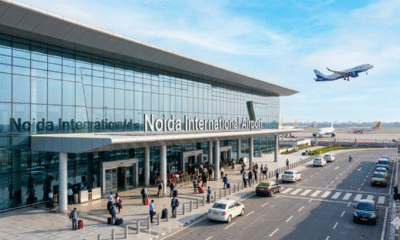
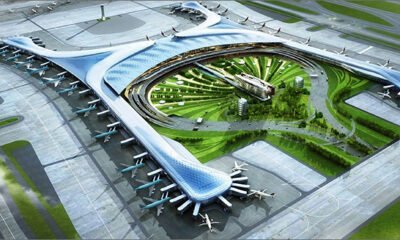
There’s a moment in any city’s evolution when infrastructure stops being a convenience and starts being a conviction. For the National Capital Region, that moment arrived on March 28, 2026 — the day the Noida International Airport at Jewar was inaugurated.
I’ve spent years watching the flex workspace market in Delhi-NCR develop — sometimes in fits and starts, occasionally with surprising momentum. But what’s unfolding now feels categorically different. The Jewar airport isn’t just a piece of aviation infrastructure; it is an economic signal. And signals of this magnitude don’t just reshape corridors — they reshape the logic of where businesses choose to plant themselves.
The Numbers Are Already Telling a Story
India’s office market has been on a remarkable run. Demand for structured commercial and IT-ITES campus spaces is projected at 70–75 million sq ft in 2026, with new supply tracking at 60–65 million sq ft — and within that national story, Delhi-NCR is holding its own, likely recording more than 10 million sq ft of both demand and new supply this year.
The flex segment, specifically, is where things get interesting. Flex leasing saw a 77 per cent increase in Q1 2026, reaching 3.9 million sq ft — up from 2.2 million sq ft a year ago. Delhi-NCR, along with Hyderabad, drove more than 45 per cent of national flex space leasing in that period. For those of us operating in the premium flex space, these aren’t abstract statistics. They’re footfall, inquiries, and deal closures.
GCCs: The Demand Engine No One Is Ignoring
If there is one structural force reshaping the commercial real estate landscape across NCR — and the flex sector within it — it is the Global Capability Centre boom. GCCs are set to drive 30–35 million sq ft of leasing in 2026, accounting for 40–50 per cent of total structured office and campus leasing nationally. These are no longer cost arbitrage units for their parent companies. They run product development, advanced analytics, AI platforms, and global operations — and they are choosing India with growing conviction.
Delhi-NCR hosts around 270 GCCs, accounting for roughly 15–18 per cent of India’s total GCC ecosystem — with Noida’s IT and SEZ corridors emerging as particularly active ground. What’s changed is the appetite for flexibility within this expansion. GCCs accounted for 40–45 per cent of enterprise flex demand in 2025, a share expected to rise to nearly half of all enterprise seat uptake over the next two years. The distributed hub model — headquarters plus satellite plus flex — is becoming the new normal. And that plays directly into what premium flex operators offer.
What Jewar Actually Does to the Commercial Map
The Yamuna Expressway corridor was already attracting serious attention before the airport opened. Land values around the airport have seen a 60–70 per cent increase primarily over the last three years, driven by global and domestic enterprises establishing offices and GCCs in the Noida–Greater Noida zone. The airport’s inauguration accelerates an existing trajectory — it doesn’t create one from scratch.
Industry projections point to close to 2–3 million sq ft of annual demand for IT-ITES campuses and structured commercial complexes in Noida over the next few years — accounting for almost one-fourth of Delhi-NCR’s total leasing activity. That’s a meaningful number for a micro-market that has historically played second fiddle to Gurugram.
What airports do — and what Jewar will do over the next decade — is make previously peripheral locations suddenly legible to global decision-makers. A CFO in Amsterdam or a real estate head in Singapore evaluating India footprint options now sees Noida and Greater Noida differently. The airport puts NCR’s eastern corridor on the global enterprise map in a way that no amount of infrastructure investment had previously managed.
For Flex, This Is a Structural Opportunity
The timing converges well. India’s total flex stock is expected to surpass 100 million sq ft by 2027, up from 72.3 million sq ft in 2025, with flex penetration across structured IT-ITES and commercial campuses projected to rise from 8.5 per cent to 10.5 per cent. Operators who can offer genuinely premium, tech-integrated, and plug-and-play environments — rather than generic co-working boxes — will capture the lion’s share of this growth.
GCCs, in particular, are increasingly seeking “GCC-as-a-Service” models that handle everything from location advisory to workspace deployment and compliance support. This is where the quality of the flex operator matters enormously. A seat in a well-designed, managed flex environment is often the fastest path to market for a global company testing a new location — and for them, it’s as much a talent and brand statement as it is a cost decision.
The Conviction Behind the Opportunity
The Noida International Airport doesn’t solve everything overnight. Infrastructure of this scale takes time to fully catalyse the commercial activity around it. But the direction of travel is unambiguous. Delhi-NCR’s office market is broadening — geographically and by occupier type — and the flex segment sits squarely in the path of that expansion.
For premium flex workspace operators building for the long term, this moment calls for exactly that: long-term thinking, quality assets, and the patience to let the infrastructure work. The airport is open. The businesses will follow.
Vishal Datt Wadhwa is the Founder & CEO of CoWorkZen, a Noida-based premium flex workspace platform serving the Delhi-NCR market.





Knight Frank appoints Deben Moza as Head of Project Management India & Asia-Pacific
Mumbai, March 31, 2026: Knight Frank, a leading global independent real estate consultancy, has announced the strategic appointment of Deben...


Viceroy Properties Brews Community Connection With ‘Brew on Wheels’ Initiative in Versova
Mumbai, March 31, 2026: Departing from traditional real estate marketing tactics that typically center on sales galleries and site visits,...


Itel & AWF, in collaboration with GNIDA, Bring Eye Care Support to 150 Safai Mitras
Greater Noida, March 31, 2026: In a significant boost to the health and well-being of frontline sanitation workers, a specialized...

Stalled Real Estate Projects get New Lease of Life due to Funding and Strong Demand
New Delhi, March 31, 2026: Thousands of stalled real estate projects across India’s major metropolitan hubs are receiving a critical...


Bollywood Actress Malaika Arora Khan Leases Out an Apartment in Bandra West, Mumbai for Rs. 1.17 Crore Over 3 Years: Square Yards
Mumbai, March 31, 2026: Bollywood actress and television personality Malaika Arora has leased out her premium apartment in the upscale...


Signature Global and RMZ Form ₹16,000 Crore Joint Venture for Mega Commercial Project in Gurugram
New Delhi, March 30th, 2026: In a move that significantly reshapes the commercial real estate landscape of the National Capital...
-
 Guest Column4 weeks ago
Retail Trends to Watch Out for in 2026
-

 News2 weeks ago
FractoProp Receives SEBI Registration for Ridhama Real Estate Fund
-
News4 weeks ago
Mumbai Real Estate Hits 14-Year High with Over 13,000 Property Registrations in February 2026
-
News4 days ago
How Noida International Airport Will Impact Property Prices
-
News2 weeks ago
Rise of Airport-Linked Real Estate: Opportunities Emerging Around Jewar
-
News4 weeks ago
Savills India Celebrates Women’s Day with Continued Focus on Trust, Flexibility and Career Growth
-
News3 weeks ago
Greenlands Global Private Limited Appointed as Managing Partner for Big FM Realty’s ₹1,200 Crore Mixed-Use Development
-
News1 day ago
Noida International Airport Inauguration Sparks New Real Estate Boom For NCR