Real Estate in 2026: Powered by Investment, Infrastructure and Innovation
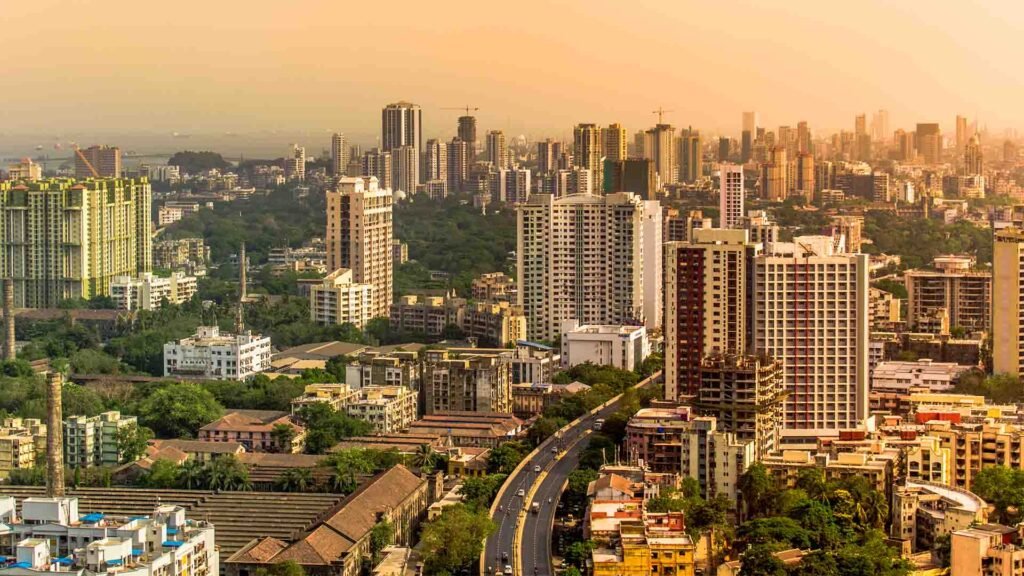
New Delhi, December 16, 2025: India’s real estate sector continues to be on the upswing throughout 2025, supported by strong economic growth, heightened consumption levels, progressive government policies, and sustained investor confidence. Although global trade friction disrupted supply chains, the year also witnessed a gradual easing of inflationary pressures, improvements in credit accessibility, traction in equity markets and considerable reduction in benchmark lending rates, all of which boosted consumer sentiments and enhanced consumption across economic sectors including real estate.
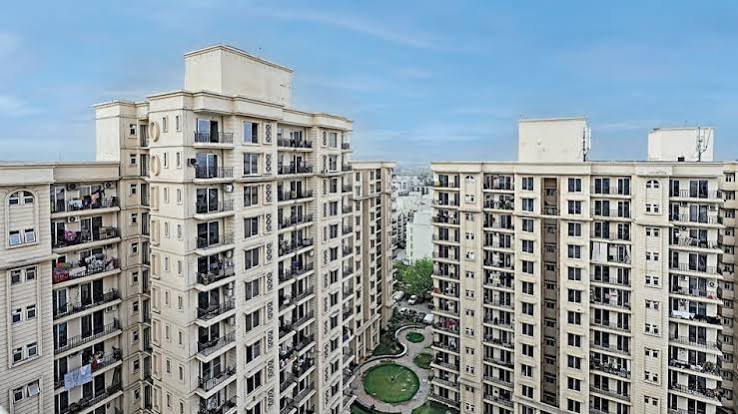
Against this backdrop, office space demand in 2025 remains upbeat as companies across Technology, Banking, Financial Services, and Insurance (BFSI), engineering & manufacturing domain and flex space operators continue to drive leasing activity across key markets, aided by evolving workplace strategies and a rising focus on high-quality, amenity-rich commercial developments. Housing sales also remain firm despite increasing cost pressures, supported by rise in average income levels, improving affordability, enhanced connectivity, and traction amongst homebuyers seeking lifestyle upgrades in gated communities.
The industrial & warehousing segment, too remains upbeat in 2025, supported by logistics upgradation, modernization of local supply chains, and sustained Grade A space demand from Third-Party Logistics (3PL) players, and firms from segments such as engineering, e-commerce, automobile etc. At the same time, mixed use and alternative asset classes such as data centers, senior living, and co-living have witnessed rising participation from institutional investors, driven by robust demand, rapid digital adoption, demographic shifts, and evolving lifestyle needs. Overall, 2025 has been a year of sustained institutional investor participation, higher consumer confidence, and broader diversification led by expanding opportunities across Tier II/III cities of the country, setting the foundation for a more balanced real estate growth in the coming years.
Looking ahead in 2026, India’s real estate sector is set to continue its steadfast growth journey marked by institutionalization and diversification, supported by heightened consumption, steady occupier interest and uptick in investor confidence. Demand across both commercial and residential segments is expected to remain healthy, driven by evolving workplace models, rising homeownership, steady improvements in affordability and infrastructure-led connectivity enhancements. Industrial & warehousing and select alternative segments are also likely to gain further traction as domestic manufacturing expands, supply chains modernize, and demographic & digital shifts reshape real estate requirements.
On the institutional investments front, investor participation is likely to stay strong amid democratization of real estate assets through Real Estate Investment Trusts (REITs), Small & Medium (SM) REITs, Infrastructure Investment Trust (InvITs), and innovative investment structures such as Alternate Investment Funds (AIFs). A greater push for Environmental, Social, and Governance (ESG) integration, and technology-adept built structures will guide long-term strategies, reinforcing India’s position as a future-ready, globally competitive real estate market.
Office: Demand Remains Strong Across Most Tier I Markets
India’s office market demonstrated notable performance, crossing the 50 million square feet (msf) leasing mark in the first nine months of 2025, an 8 per cent YoY growth. Top cities include Bengaluru, Chennai, Delhi NCR, Hyderabad, Kolkata, Mumbai, and Pune.
Global Capability Centers (GCCs) drove nearly 40 per cent of this uptake, underscoring their expanding role in Indian commercial real estate. Overall, the diversification of occupier base and increasing space uptake by both global corporates as well as domestic firms is likely to push Grade A office space demand close to 70 msf by the end of the year. New supply is expected to close around 55-60 msf, reinforcing India’s position as a major office market within the APAC region. Vacancy levels are likely to remain rangebound at the pan India level and rentals are likely to firm up by 5-10 per cent as compared to 2024 levels.
2026 Outlook: Shift Towards Agility and Flight-to Quality
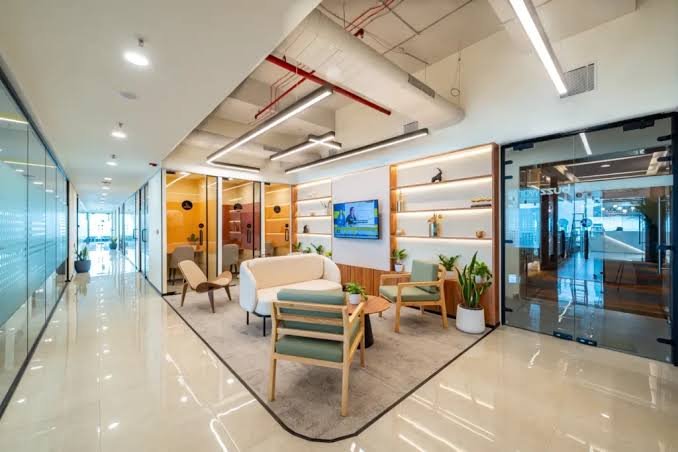
Building on the strong momentum seen in the past few years, demand is expected to scale up amid evolving occupier preferences in 2026. GCCs will drive leasing, expanding their footprint across major businesses and geographies while prioritizing flight-to-quality, tech-adoption and sustainability. Flexible workspaces will gain further prominence as occupiers embrace agile and ‘Core + Flex’ portfolios. Overall demand will continue to diversify beyond Technology, with BFSI, engineering & manufacturing, healthcare and consulting firms gaining further traction. Moreover, decentralized work models will accentuate real estate requirement in Tier II/III cities supported by cost arbitrage, availability of skilled talent and ongoing infrastructure developments. Overall, we anticipate annual office space demand to stabilize at around 70-75 msf in 2026 and beyond.
- GCCs to drive high-value growth: In 2026 and beyond, GCCs in India will firmly establish themselves as strategic centers for research, product development, advanced analytics, artificial intelligence, and cloud technologies, supported by the country’s strong IT ecosystem and business-conducive government policies. GCC leasing is expected to reach 30-35 msf in 2026, and account for 40-50 per cent of the Grade A office space demand. Moreover, GCC demand is likely to become more broad-based and expand beyond technology firms, with notable surge in demand from global financial services, engineering & manufacturing and healthcare companies.
- Flex spaces to become an unavoidable feature of occupier strategy: In 2026, flexible workspaces are expected to account for nearly 20 per cent of Grade A leasing, driven by hybrid work models, cost optimization, and the need for speed-to-market solutions. With flex stock projected to reach 85-90 msf in 2026, leading operators will continue to offer enterprise-grade and fully managed solutions that integrate technology, sustainability, and portfolio agility. Further, GCCs are set to deepen their flex space adoption, contributing 40-45 per cent of the total enterprise demand of ~200,000 seats, as they prioritize scalable, highly customizable workplaces built to global standards.
- REITs and IPOs to democratize commercial real estate: India’s office market is entering a new era of democratization driven by increasing number of equity market listings in the form of REITs, SM REITs and Initial Public Offerings (IPOs), especially by flex space operators. Interestingly, of the ~850 msf of Grade A office stock in the country, around 135 million sq ft of assets are already listed under REITs, translating into a penetration of nearly 16 per cent. With over 370 msf of existing stock having a potential to be listed in future REITs and more office-specific-REITs being on the anvil, this penetration can touch 20% over the course of next few years—marking a steady shift in how commercial real estate is owned, managed and monetized in India. Concurrently, leading flex space operators are likely to expand their portfolios across Tier I & II cities, expediting their IPO plans in the next year.
- Workspace design to seamlessly embed AI and PropTech: The design and functionality of new-age workspaces are being reimagined to enhance collaboration and employee experience using AI and PropTech. This trend is set to gain further prominence in 2026, with AI-led space planning and IoT sensors optimizing collaboration zones and energy efficiency. Predictive analytics will further support real-time fault detection and diagnostics, while automated HVAC, lighting and utilities will help reduce operational costs. Such adaptive workspaces integrating wellness features, ergonomic design, and biophilic elements will continue to boost productivity, well-being and become the cornerstone of future office spaces.
- Retrofitting & green energy usage will become central in the ‘flight-to-quality’: Sustainability is becoming a defining feature of India’s office market, with green-certification now a mandatory requirement for most occupiers. Going ahead in 2026, 80–90 per cent of the new supply is expected to be green certified, pushing overall green penetration to 70–75 per cent at the India level. ‘Flight-to-quality’ will gain more traction as occupiers prioritize premium, ESG-compliant assets with advanced energy efficiency and wellness standards. In fact, older buildings (>10 years), totaling over 350 million sq ft, present retrofitting potential of more than INR 425 billion, which can ultimately ensure higher occupancy levels and rentals for developers and investors alike in the long-term.
Residential: Sales Firm Amid Improving Affordability
During 2025, housing sales across major Indian cities continued to remain steady, led by consistent demand, favorable interest rates, and rise in average income levels. Despite persistent concerns around raw material cost pressures, GST rationalization of key construction materials has been welcomed by residential developers. Infrastructure augmentation in Tier I markets has further expanded residential catchment areas across suburban and peripheral localities, particularly which are in proximity to office hubs. Moreover, overall affordability levels have improved, given the steady rise in average income levels and 125 bps reduction in benchmark lending rates throughout 2025. Consequently, we expect housing sales to the tune of 0.3-0.4 million in 2025, at par with levels witnessed in the preceding year.
2026 Outlook: Urbanization, Premiumization and Green Living
Residential sales have improved in the post-pandemic era, reaching 0.3-0.4 million units annually, and the momentum is likely to continue in 2026 as well. Driven by rapid urbanization and impetus on infrastructure enhancement, leading residential developers are likely to expand their offerings across Tier II/III cities of the country. Moreover, the demographic advantage of India, with median age of around 30 years will continue to support housing demand, with developers catering to first-time homebuyers, and High-Net worth Individuals (HNIs) alike. Lifestyle focused preferences will further drive the demand for plotted developments, gated villas, upscale apartments, and vacation homes, while investors are likely to prioritize emerging micro-markets guided by long-term returns. Sustainability, meanwhile, will remain a defining theme, with green homes, energy-efficient construction materials, and net-zero, climate-resilient communities gaining inroads.
- Lifestyle and sustainability led home buying preference to pick pace: Homebuyers in 2026 are likely to increasingly prioritize lifestyle and sustainability driven housing projects. Demand for plotted developments, gated-community villas, premium homes with concierge services, and vacation homes in offbeat locations will remain strong as buyers seek spacious, wellness-focused, and experiential living experiences. At the same time, the preference for green homes using smart technologies and energy-efficient materials is also likely to increase driven by government incentives and growing consumer awareness.
- Redevelopment projects to reshape urban skylines: India’s urban housing market is set to transform steadily as redevelopment initiatives gather speed across major cities such as Mumbai, Delhi NCR, Bengaluru, Chennai, Kolkata etc. Redevelopment of older and dilapidated buildings will be increasingly supported by favorable Floor Space Index (FSI) policies, Transferable Development Rights (TDR) frameworks, and revised urban planning guidelines. Close coordination between government bodies and private developers will be crucial in addressing redevelopment challenges and creating contemporary, resilient urban neighborhoods.
- Fringe localities to gain traction driven by infrastructure developments: Peripheral and suburban micro markets of most Tier I cities are anticipated to witness heightened residential activity in 2026, supported by ongoing infrastructure developments such as expressways, metro extensions, arterial corridors, and greenfield airports. These enhancements will unlock new residential pockets, improve accessibility, and stimulate housing demand across major transit corridors. Residential catchment areas in peripheral localities particularly will emerge as complementary growth centers, offering budget-friendly options across housing segments.
- Leading developers to increasingly foray into untapped Tier II/III markets: Beyond the established markets, Tier II & III cities, including spiritual hubs & temple towns are set for long-term growth, driven by urbanization, favorable demographics, and infrastructure upgrades. Demand traction and preference for premium product offerings will push property prices in these smaller cities up by 10-15% annually, supported by better infrastructure and targeted expansion by reputed developers.
- Fractional ownership poised to broaden access in premium housing: Investors are expected to increasingly adopt fractional ownership as a strategy to enter residential real estate at relatively lower price points. This model allows multiple stakeholders to co-own premium assets such as luxury homes, vacation properties and high-end condominiums, bringing greater flexibility, liquidity, and passive income opportunities. However, its continued growth will depend upon factors including clear regulations and a strong digital infrastructure to ensure transparency in transactions, bringing in trust in shared ownership.