Delhi–Dehradun Expressway Opens Today: A Game-Changer for Connectivity & Real Estate Growth
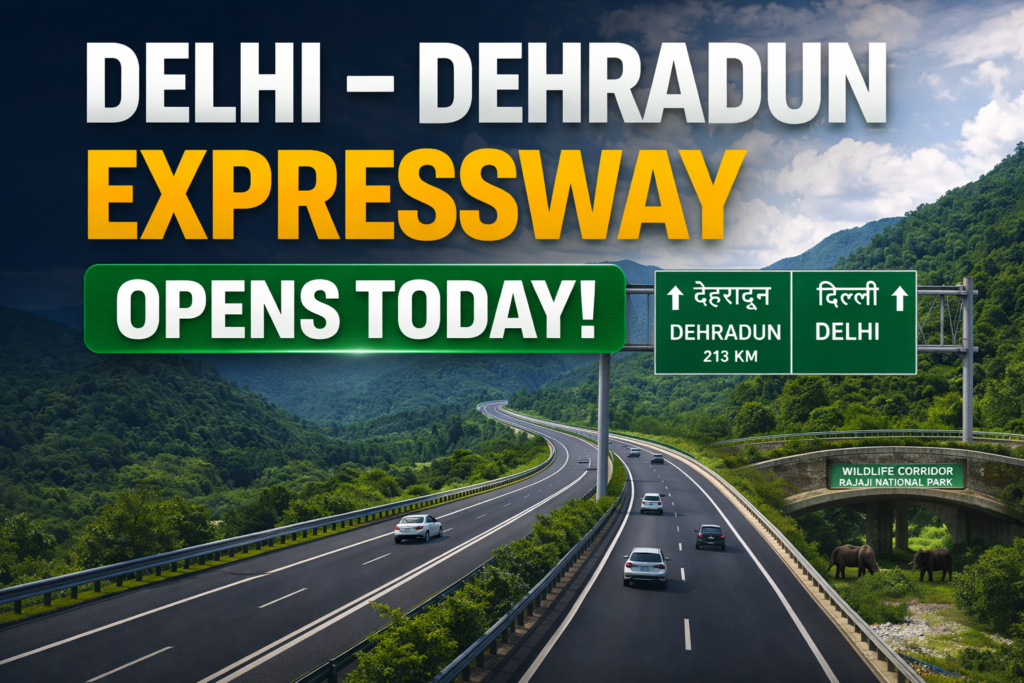
India’s infrastructure landscape marked a major milestone today with the inauguration of the Delhi–Dehradun Expressway. Opened on April 14, 2026, by Narendra Modi, this mega project is set to redefine travel, boost regional economies, and significantly impact the real estate sector across North India.
Overview of Delhi–Dehradun Expressway
The Delhi–Dehradun Expressway is a 213-kilometre, access-controlled, six-lane highway developed by the National Highways Authority of India. Built at an estimated cost of over ₹12,000 crore, the expressway connects Delhi, Uttar Pradesh, and Uttarakhand, creating a seamless high-speed corridor.
One of the biggest highlights is the drastic reduction in travel time. The journey between Delhi and Dehradun, which earlier took 5–6 hours, can now be completed in just 2.5 hours.
Route & Connectivity
The expressway starts from Delhi (near Akshardham) and passes through key cities including:
- Baghpat
- Shamli
- Muzaffarnagar
- Saharanpur
before entering Dehradun in Uttarakhand. It is strategically connected to major highways and expressways, improving regional mobility and reducing congestion on existing routes.
Key Features & Innovations
The Delhi–Dehradun Expressway stands out not just for speed, but for its modern and sustainable design:
- Asia’s longest elevated wildlife corridor (12 km) through Rajaji National Park
- 8+ animal crossings and elephant underpasses
- 113 vehicular underpasses and 10 interchanges
- Advanced Traffic Management System (ATMS)
- Speed limit: ~100 km/h for cars
- Eco-sensitive zones with noise restrictions
These features make it one of India’s most environmentally conscious highway projects.
Toll & Travel Details
- Estimated toll: Around ₹60 for cars (FASTag users)
- Special benefit: 25% discount on return journey within 24 hours
- Improved safety with controlled entry/exit points
The toll structure remains competitive considering the massive time savings and fuel efficiency benefits.
Impact on Real Estate & Econom
The opening of this expressway is expected to transform real estate dynamics across multiple micro-markets:
1. Emerging Investment Corridors
Areas along the route—especially Baghpat, Shamli, and Saharanpur—are expected to see a surge in residential and commercial developments.
2. Boost to Dehradun Real Estate
With improved connectivity, Dehradun is likely to emerge as a preferred second-home and retirement destination for Delhi-NCR buyers.
3. Industrial & Logistics Growth
The corridor enhances connectivity for logistics and warehousing, creating new opportunities for industrial real estate.
4. Tourism Upsurge
Faster access to Uttarakhand will drive tourism, benefiting hospitality and retail sectors.
Today’s Key Highlights (April 14, 2026)
- Expressway officially inaugurated and opened to public today
- Travel time reduced to just 2.5 hours
- Features India’s most advanced wildlife-friendly highway design
- Expected to boost regional economy and infrastructure growth
- Built at a cost of over ₹12,000 crore
- Positioned as a model for future sustainable expressways
Challenges & Observations
While the project is a major success, there were some concerns raised just days before inauguration regarding last-minute maintenance and waterlogging issues.
However, authorities have assured that all operational aspects have been addressed before opening.
Real Estate Impact: Expert Insights
The expressway is expected to trigger significant transformation across residential, industrial, and hospitality segments.
Anupam Rastogi – Co-founder & CBO, Square Yards– The Delhi-Dehradun Expressway will be instrumental in real estate transformation. The travel time is expected to be reduced by nearly 50%. Dehradun will witness a surge in second-home demand, plotted developments, and villa communities. On the other hand, micro-markets across NCR and western Uttar Pradesh will see rising interest from both end-users and investors, with property prices expected to appreciate by 15 to 25% in key stretches. This corridor will effectively expand the NCR influence zone deeper into Uttarakhand

Mr Vimal Nadar, National Director & Head, Research, Colliers India– The Delhi-Saharanpur-Dehradun Expressway is likely to transform regional connectivity and stimulate real estate activity along the corridor, particularly industrial & warehousing demand in key micro markets of Delhi NCR. The expressway connects prominent industrial & warehousing markets of Delhi NCR such as Ghaziabad, Noida, Greater Noida and Meerut to other key industrial hubs & cities such as Muzaffarnagar, Saharanpur and Dehradun. With improvements in connectivity driven by the expressway, we anticipate 1-2 million sq.ft. of Grade A supply infusion in these Delhi NCR micro markets over the course of next few years. On a similar note, the expressway will lead to demand traction and annual leasing can potentially touch 1-1.5 million sq.ft. Additionally, connectivity enhancement is likely to support hospitality & second homes market in and around Haridwar, Rishikesh & Dehradun.
Conclusion
The Delhi–Dehradun Expressway is more than just a road—it is a transformative infrastructure project that strengthens connectivity, promotes sustainability, and unlocks new real estate opportunities. For developers, investors, and homebuyers, this corridor represents a high-potential growth zone in the coming years.
As India continues to invest in world-class infrastructure, projects like this reaffirm the country’s commitment to faster, greener, and smarter development.