Connectivity as a Catalyst: The Role of New Corridors in Faridabad’s Real Estate Growth Story

By Goldi Arora, Co-founder & Managing Director of Property Master
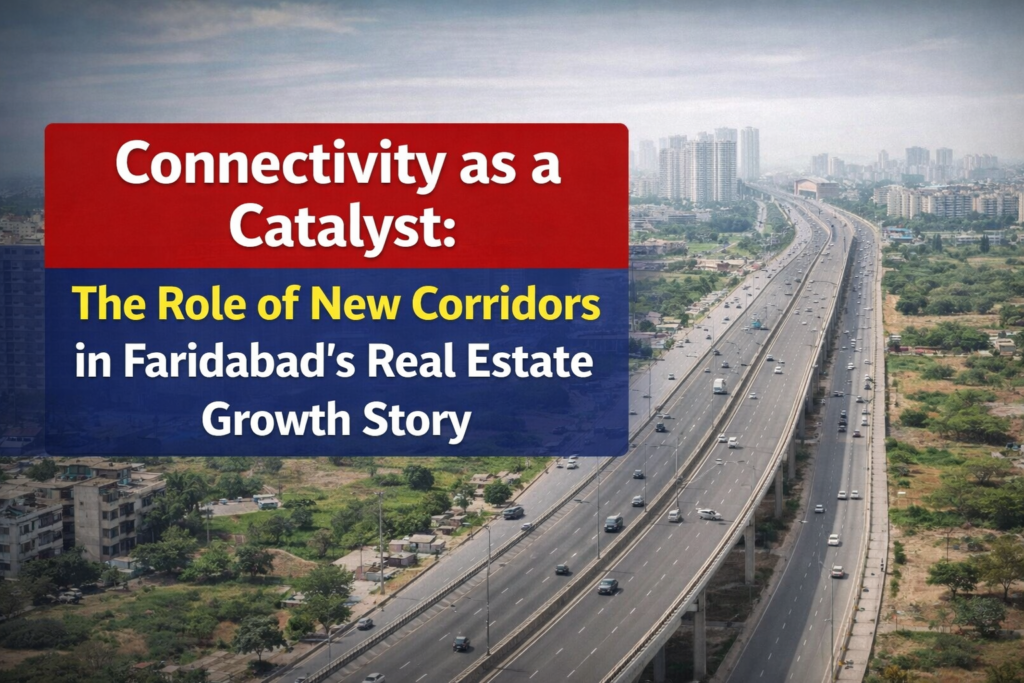
Faridabad, long perceived as a peripheral extension of NCR, is now steadily repositioning itself as a promising real estate destination—and at the heart of this transformation lies connectivity. Over the past few years, the city’s infrastructure narrative has evolved from being industrial-centric to becoming residential and lifestyle-driven, largely due to the emergence of new corridors and enhanced regional linkages.
Connectivity has always been a defining factor in real estate growth, but in Faridabad’s case, it is acting as a true catalyst. The expansion of road networks, improved metro access, and seamless connectivity to Delhi, Noida, and Gurugram are reshaping both perception and demand. Key infrastructure developments such as the Faridabad-Noida-Ghaziabad (FNG) Expressway, Delhi-Mumbai Expressway linkages, and upgrades to arterial roads have significantly reduced travel time and enhanced accessibility. This has not only improved livability but also strengthened investor confidence in the micro-market.
From an end-user perspective, improved connectivity translates into convenience—shorter commutes, better access to employment hubs, and enhanced social infrastructure. For a city like Faridabad, which historically lagged behind its NCR counterparts in terms of urban appeal, these upgrades are bridging the gap. As connectivity improves, so does the willingness of homebuyers to consider Faridabad as a viable residential choice, especially for those seeking relatively affordable options compared to Gurugram and Noida.
Recent industry observations suggest that infrastructure-led corridors tend to witness accelerated price appreciation and demand consolidation. Faridabad is beginning to reflect a similar trajectory. Emerging sectors along key corridors are seeing increased traction, with developers launching projects that cater to evolving buyer preferences—larger homes, gated communities, and amenity-rich developments. This marks a shift from purely budget housing to more aspirational offerings, indicating a maturing market.
From a developer’s standpoint, connectivity reduces risk and enhances project viability. Areas that were once considered distant or underdeveloped are now being unlocked for organized real estate development. This has led to a gradual increase in both supply and absorption, with a noticeable uptick in mid-segment and premium housing projects. Moreover, improved infrastructure is also attracting commercial and retail developments, further strengthening the ecosystem.
However, it is important to note that infrastructure alone cannot sustain growth unless complemented by robust civic and social infrastructure. Schools, healthcare facilities, retail hubs, and recreational spaces must evolve alongside connectivity improvements to ensure long-term livability. Encouragingly, Faridabad is witnessing gradual progress on this front as well, with integrated developments beginning to take shape.
Looking ahead, Faridabad’s growth story appears closely tied to how effectively these connectivity projects are executed and integrated. If the current momentum continues, the city has the potential to emerge as a well-balanced real estate market—offering affordability, accessibility, and improving quality of life. In many ways, Faridabad exemplifies how strategic infrastructure investments can redefine the trajectory of a city, turning it from a peripheral option into a compelling real estate destination within NCR.