TOD Framework Set to Redefine Delhi’s Urban Landscape
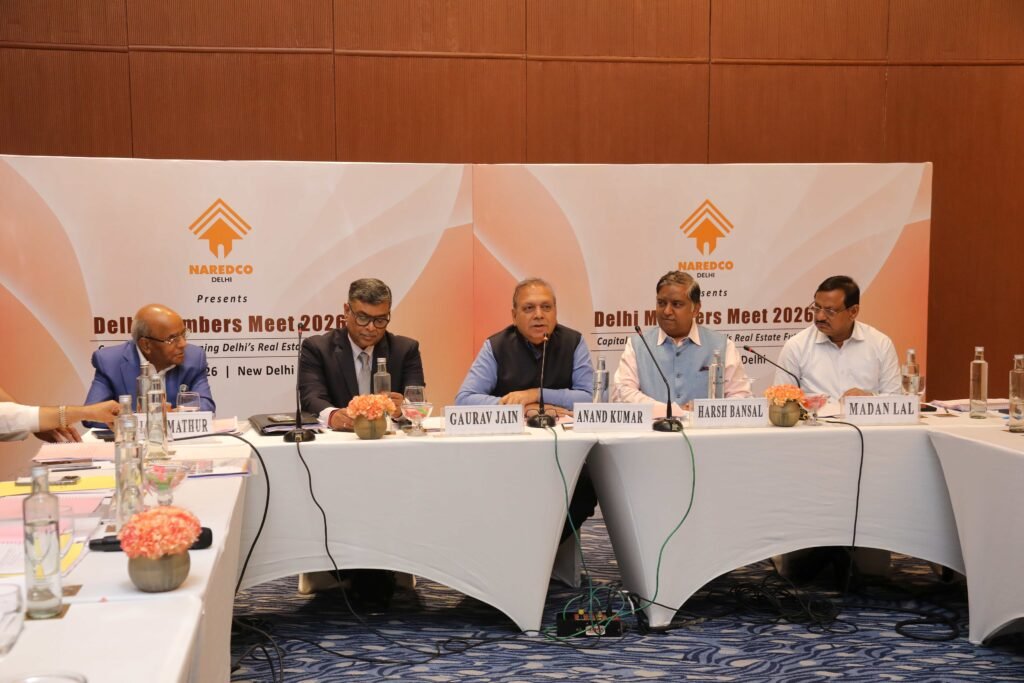
New Delhi, May 12, 2026: The Delhi Chapter of the National Real Estate Development Council (NAREDCO) recently convened a high-level “Members Meet” to analyze the transformative potential of the Delhi TOD Policy 2026. The forum, titled “TOD – Changing Delhi’s Skyline,” gathered policymakers and urban planners to discuss how transit-led development could trigger a massive regeneration of the capital. With nearly 207 km of metro-linked corridors and up to 40 sq km of developable land now eligible for higher-density mixed-use projects, experts identified this as the most significant redevelopment opportunity in decades, NAREDCO said in a press release.
The summit featured a keynote from Anand Kumar, Chairperson of Delhi RERA, who detailed the regulatory guardrails essential for this growth. Kumar underscored the necessity of transparency, mandating that every advertisement carry a RERA registration number and project link. He noted that marketing must be based strictly on carpet area and highlighted a new clause prohibiting rebate schemes like assured returns or guaranteed rentals. Addressing the broader vision, Kumar stated, “Transit-Oriented Development is not only about increasing density around transit corridors. It is about creating more efficient, accessible and future-ready urban ecosystems where planning, infrastructure and housing evolve together.”
A central panel examined the mechanics of the policy, which allows for a Floor Area Ratio (FAR) of 400–500 and replaces multiple levies with a single composite TOD charge. Industry leaders noted that these norms, combined with a 60-day deemed approval process, are designed to accelerate redevelopment in central and south Delhi. This shift is expected to bolster housing supply and potentially pivot buyer interest back toward centrally connected urban hubs rather than peripheral expansions. Anand Kumar added, “The TOD framework has the potential to fundamentally change how Delhi grows over the next decade by aligning urban expansion with mass transit infrastructure.
”To ensure the policy’s success, NAREDCO members proposed several implementation refinements. These included transitioning the affordable housing benchmark from “built-up” to “carpet area” and allowing for the tradability of surplus FAR from height-restricted zones. They also advocated for locking in circle rates at the time of submission to avoid financial volatility and providing FAR incentives for sustainable, green-certified buildings. These recommendations aim to bridge the gap between policy intent and project-level viability.

Harsh Vardhan Bansal, President of NAREDCO Delhi, emphasized that while the opportunity is vast, success depends on seamless execution. “The discussions during the Members Meet reflected the growing importance of integrated and policy-driven urban transformation in Delhi. TOD is becoming central to how the city will accommodate future growth, improve connectivity and create more efficient urban ecosystems,” Bansal remarked. He concluded by noting that “implementation challenges around approvals, aggregation, financing and infrastructure coordination will require continuous industry-government collaboration to ensure smooth execution and sustainable long-term growth.”