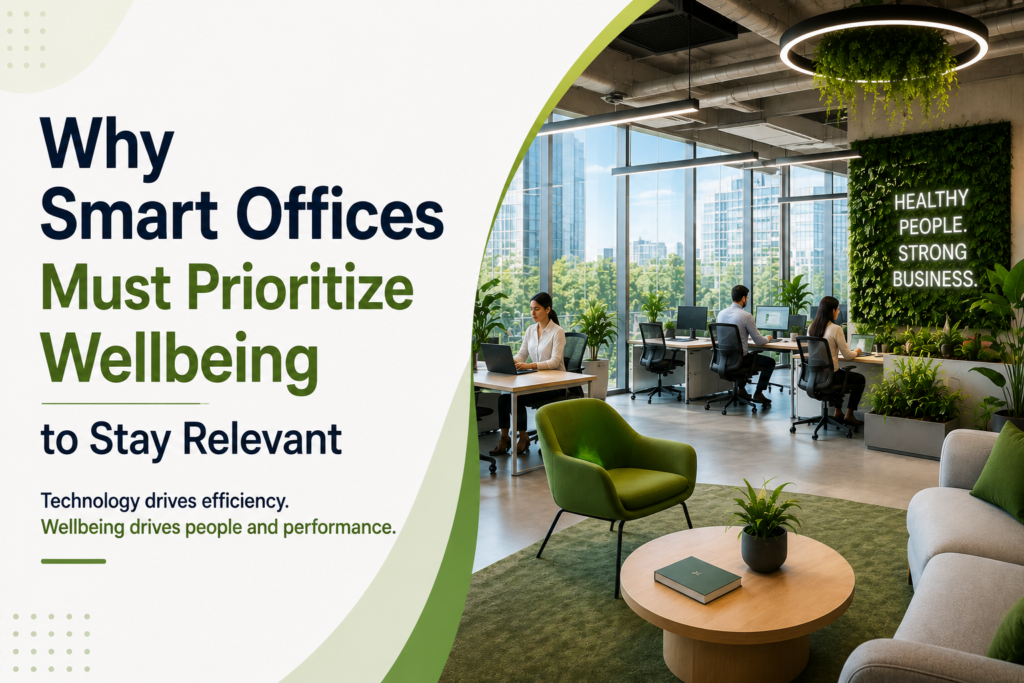
Why Smart Offices Must Prioritize Wellbeing to Stay Relevant
The concept of smart offices has long been associated with cutting-edge technology—automated lighting, IoT-enabled devices, AI-driven systems, and seamless digital connectivity. While these advancements have transformed how workplaces function, a new dimension is emerging that goes beyond technology: wellbeing.
In today’s rapidly evolving work environment, organizations are realizing that technology alone cannot drive productivity or employee satisfaction. Instead, the focus is shifting toward creating workplaces that support the physical, mental, and emotional wellbeing of employees. This marks the rise of a new paradigm—the wellbeing-centric smart office.
The Evolution of Smart Offices
Smart offices initially gained popularity as a way to improve efficiency and reduce operational costs. Features like automated climate control, occupancy sensors, and digital collaboration tools made workplaces more streamlined and data-driven.
However, as the nature of work evolved—particularly with the rise of hybrid models—companies began to recognize the limitations of a purely technology-driven approach. Employees were no longer just users of office systems; they became central to workplace design.
This shift has led to the integration of wellbeing principles into smart office environments, transforming them into holistic ecosystems that prioritize human experience alongside technological efficiency.
Why Wellbeing Matters in the Workplace
Employee wellbeing is no longer a soft benefit—it is a strategic priority. Studies have consistently shown that healthier employees are more productive, engaged, and loyal.
In India, where long working hours, commuting stress, and urban challenges are common, the need for wellbeing-focused workplaces is even more pronounced. Companies that invest in employee wellness are better positioned to attract and retain top talent.
Moreover, the pandemic highlighted the importance of health and safety, making wellbeing a non-negotiable aspect of workplace design.
Key Elements of Wellbeing-Centric Smart Offices
The modern smart office integrates technology with design and wellness strategies to create a balanced work environment. Some of the key elements include:
1. Indoor Environmental Quality
Air quality, temperature, lighting, and acoustics play a crucial role in employee comfort. Smart sensors monitor and optimize these factors in real time, ensuring a healthier indoor environment.
2. Biophilic Design Integration
Incorporating natural elements such as plants, natural light, and water features helps reduce stress and improve mental wellbeing. Biophilic design is becoming a cornerstone of modern office architecture.
3. Flexible and Adaptive Spaces
Wellbeing-centric offices offer a variety of spaces—quiet zones, collaborative areas, relaxation lounges, and wellness rooms. This flexibility allows employees to choose environments that suit their tasks and moods.
4. Ergonomic Design
Furniture and layouts designed for comfort and posture support help prevent physical strain and long-term health issues.
5. Mental Health Support
Dedicated spaces for meditation, relaxation, and even counseling services are becoming increasingly common in progressive workplaces.
6. Technology for Personalization
Smart systems enable personalized experiences, allowing employees to adjust lighting, temperature, and workspace settings according to their preferences.
The Role of Technology in Enhancing Wellbeing
Technology remains a critical enabler in this transformation. However, its role has shifted from being the centerpiece to a supportive function.
AI-powered analytics help organizations understand how spaces are used and identify opportunities to improve comfort and efficiency. Wearable devices and wellness apps can be integrated with office systems to provide insights into employee health and activity levels.
Touchless technologies, such as facial recognition and app-based access control, enhance hygiene and safety—an important consideration in the post-pandemic era.
The Indian Context: A Growing Trend
In India, the adoption of wellbeing-centric smart offices is gaining momentum, particularly in major business hubs like Bengaluru, Gurugram, and Hyderabad.
Developers and corporates are increasingly recognizing the value of creating workplaces that go beyond functionality. Premium office spaces now emphasize wellness features as a key differentiator.
The demand is also being driven by multinational companies and startups that prioritize employee experience as part of their organizational culture. As competition for talent intensifies, workplace quality has become a critical factor.
Benefits for Businesses and Employees
The shift toward wellbeing-centric smart offices offers multiple benefits:
For Employees:
- Improved physical health and comfort
- Reduced stress and better mental wellbeing
- Enhanced productivity and focus
- Greater job satisfaction
For Businesses:
- Higher employee retention rates
- Increased productivity and performance
- Stronger employer branding
- Better utilization of office spaces
This win-win scenario makes wellbeing-focused workplaces a compelling investment.
Challenges in Implementation
Despite its advantages, creating a wellbeing-centric smart office is not without challenges. The initial cost of integrating advanced technologies and wellness features can be high.
Additionally, measuring the impact of wellbeing initiatives can be complex, as it involves qualitative factors such as employee satisfaction and mental health.
Organizations must also ensure that technology does not become intrusive or overwhelming. The goal is to enhance the human experience, not complicate it.
The Future of Smart Offices
The future of offices lies in the seamless integration of technology and wellbeing. As innovations continue to evolve, workplaces will become more intuitive, responsive, and human-centric.
In the coming years, we can expect to see greater use of AI, data analytics, and immersive technologies to create personalized and adaptive environments. At the same time, the emphasis on sustainability and wellness will continue to grow.
Offices will no longer be static spaces but dynamic ecosystems that support diverse workstyles and promote holistic wellbeing.
Conclusion
The evolution of smart offices into wellbeing-centric environments represents a significant shift in workplace philosophy. It reflects a deeper understanding that employees are not just resources but individuals whose health and happiness directly impact organizational success.
By going beyond technology and embracing a holistic approach, companies can create workplaces that inspire, energize, and empower their workforce.
In this new era, the smartest offices are not just those equipped with the latest technology—they are the ones that put people first.
And as this trend continues to gain traction in India, wellbeing will become the defining feature of the workplaces of tomorrow.