India’s green housing push can improve long-term affordability, reveals Square Yards report
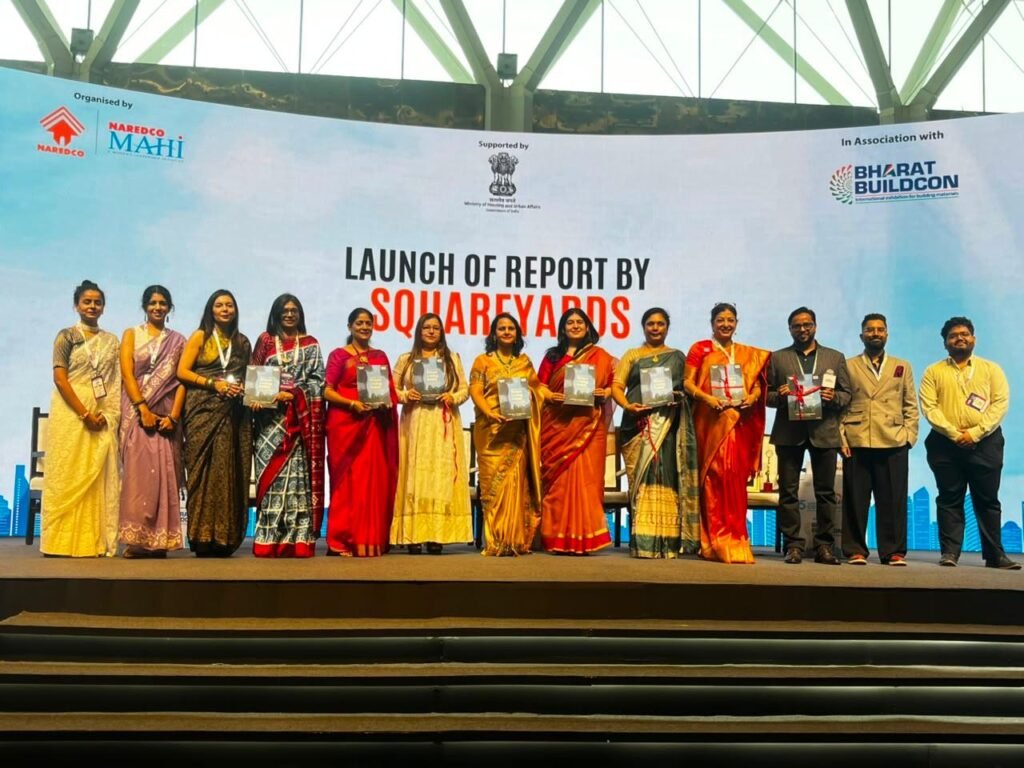
New Delhi, June 23, 2026: Proptech major Square Yards has released a comprehensive research report revealing that a green housing push across India can significantly enhance long-term residential affordability. Unveiled in association with NAREDCO MAHI at Yashobhoomi in New Delhi, the report highlights that green residential developments can reduce water consumption by 30 to 50 percent and lower energy costs by 20 to 30 percent, directly impacting household resource efficiency, financial affordability, and overall quality of life, Square Yards said in a press release.
Despite India being home to more than 19,700 green building projects, the research points out that the country still lacks a standardized framework that enables homebuyers to accurately compare the sustainability credentials of different residential developments. While modern property seekers can easily evaluate prices, locations, amenities, and financing options, sustainability information remains fragmented across various technical disclosures, certifications, and developer claims, making project-to-project comparisons difficult.
To bridge this information gap, Square Yards, in collaboration with its sustainability research partner The Habitat Emprise, has launched the Square Yards Green Living Index (SYGLI). This standardized assessment tool translates publicly available sustainability disclosures, RERA filings, and geospatial intelligence into an accessible score. It evaluates properties across four core parameters: Resource Efficiency, Health and Comfort, Safety and Resilience, and Connectivity. Available on the company’s website and application, the index is designed to empower consumers while driving transparency throughout the broader real estate ecosystem.

The introduction of the index comes at a critical juncture for India’s urban landscape. The nation is projected to add nearly 400 million people to its cities by 2050, causing the residential building stock to double over the coming decades. Because the construction sector currently accounts for nearly one-third of India’s greenhouse gas emissions, tackling residential sustainability is increasingly viewed as imperative for the country to reach its broader Net-Zero targets by 2070.
The launch also aligns with shifting policy priorities, as the Central government explores a new certification mechanism to indicate the expected lifespan of buildings. Speaking at the inaugural session of the Bharat Buildcon 2026, Union Minister for Housing and Urban Affairs Manohar Lal Khattar noted that while modern buildings are generally designed for 60 to 70 years, India should also explore technologies capable of delivering structures with significantly longer life spans wherever feasible.

Commenting on the launch, Vivek Agarwal, Co-founder and CTO of Square Yards, emphasized the necessity of data transparency in environmental initiatives. He said, “Sustainability cannot become mainstream unless it becomes measurable, transparent, and easily understandable for consumers. The Square Yards Green Living Index represents our effort to build a technology-led information layer for Indian residential real estate. By leveraging data extraction, automation, and analytical intelligence, we are translating complex sustainability disclosures into a standardised score that can help buyers make more informed decisions. We believe the next generation of property discovery platforms will not only help consumers find homes but also help them understand how those homes will perform over time.”

Speaking on the occasion, Smita Patil, President, NAREDCO MAHI, said, “Sustainability is rapidly becoming a defining factor in the future of housing. Through our ‘Shashwat Nirman’ initiative, we have been actively promoting sustainable development practices and encouraging greater adoption of environmentally responsible real estate across the sector. Homebuyers today seek greater transparency, healthier living environments and long-term resilience against climate-related challenges. We have consistently advocated responsible and future-ready urban development, and are pleased to support initiatives such as the Green Living Index that empower consumers with credible information while encouraging the industry to adopt measurable sustainability standards.”

Dr. Priyanka Kochhar, CEO and Co-Founder of The Habitat Enterprise, highlighted the financial and practical benefits that the index brings to everyday households. She said, “India has made significant progress in green building adoption, but information asymmetry continues to limit consumer participation in the sustainability journey. Sustainable housing should be understood not only as an environmental imperative but also as a financial and health imperative for households. By making sustainability performance visible, measurable and comparable, SYGLI has the potential to reshape how residential value is assessed in the market.”