Indoor Plants as per Vastu: What to Keep & Where
By Dr Aarushi Sadhotra, Founder of VaastuBlessings

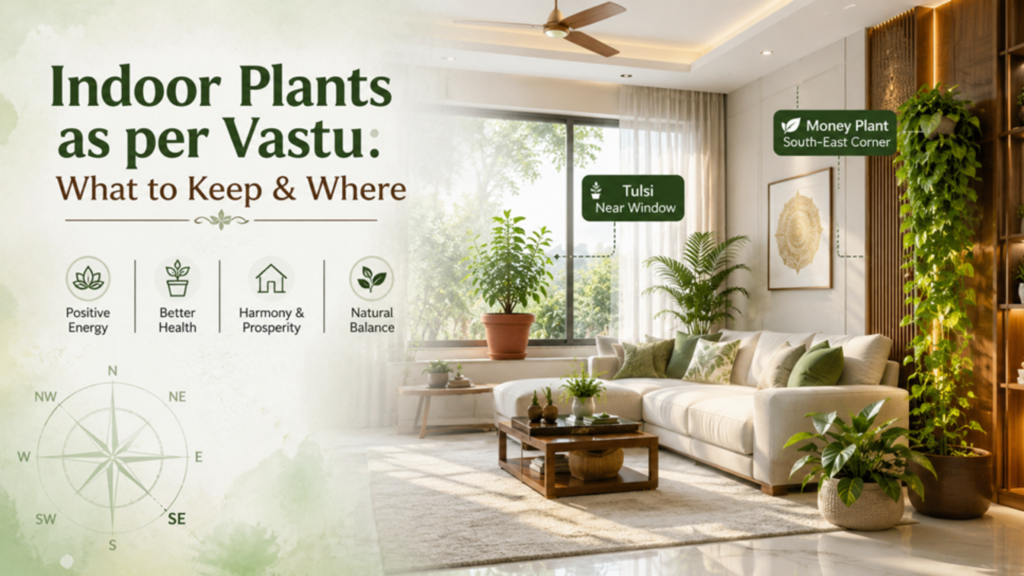
Indoor plants do more than beautify your home. They improve air quality, reduce stress, and create a refreshing environment. According to Vastu Shastra, certain plants can also attract positive energy, prosperity, good health, and financial growth when placed in the right direction.
However, simply bringing home a plant is not enough. The type of plant and its placement play a crucial role in determining whether it supports positive energy or creates imbalance.
In this guide, we’ll explore the best indoor plants according to Vastu, ideal placement directions, plants to avoid, and practical tips to maximize their benefits.
Importance of Indoor Plants in Vastu Shastra
Vastu Shastra is based on balancing the five natural elements—Earth, Water, Fire, Air, and Space. Plants represent the Earth and Air elements and are believed to absorb negative energy while promoting positivity. Healthy and well-maintained plants can enhance the flow of beneficial energy within a space, making the environment more vibrant and peaceful.
Indoor plants are often recommended as simple Vastu remedies because they can improve the energy of a home without requiring major structural changes. They also contribute to better air circulation and create a stronger connection with nature, which positively impacts mental and emotional well-being.
The presence of green plants indoors is associated with growth, abundance, and renewal. This is why Vastu experts often suggest specific plants for homes, offices, and commercial establishments.
Best Indoor Plants as per Vastu
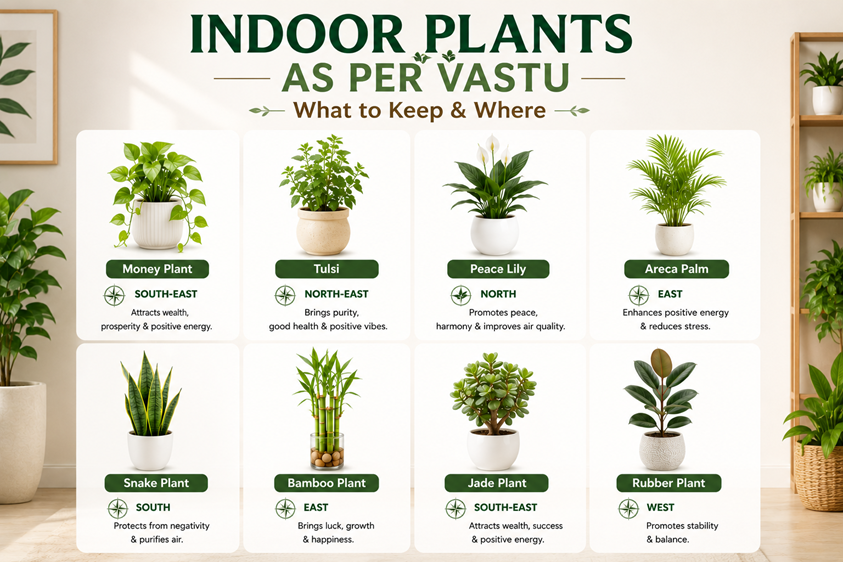
The Money Plant is one of the most recommended plants in Vastu Shastra due to its association with prosperity and financial growth. It is believed to attract wealth, reduce stress, and encourage positive energy within the household.
According to Vastu principles, the South-East direction is the ideal location for a Money Plant. This direction is governed by the Fire element and is closely linked to financial stability and wealth accumulation. Placing a healthy Money Plant in this area is believed to support economic growth and create opportunities for success.
However, placing a Money Plant in the North-East direction is generally discouraged, as it may create an imbalance in energy according to Vastu beliefs.
Tulsi Plant
Tulsi, also known as Holy Basil, holds immense religious and spiritual significance in Indian culture. It is considered one of the most auspicious plants and is often found in traditional Indian homes.
In Vastu Shastra, Tulsi is believed to purify the environment, promote spiritual growth, and protect the household from negative influences. It creates a positive atmosphere and contributes to physical and emotional well-being.
The ideal directions for keeping a Tulsi plant are the North, North-East, or East. These directions are associated with purity, spiritual development, and positive vibrations. Tulsi should ideally receive sufficient sunlight and regular care to maintain its beneficial energy.
Lucky Bamboo Plant
Lucky Bamboo is widely recognized as a symbol of prosperity, harmony, and growth. It is commonly used in homes and offices to create a peaceful environment and encourage positive energy.
According to Vastu principles, Lucky Bamboo can be placed in the East or South-East direction. These areas are associated with growth, family harmony, and financial well-being. The plant is also known for its attractive appearance and low maintenance requirements, making it a popular choice for indoor spaces.
Many professionals place Lucky Bamboo on office desks or near entrances to promote success and positive workplace energy.
Jade Plant
The Jade Plant is often referred to as the “Plant of Wealth” due to its association with financial prosperity and business success. Its rounded leaves are believed to symbolize growth, abundance, and good fortune.
Vastu experts generally recommend placing the Jade Plant in the South-East direction of a home or office. This location is believed to attract financial opportunities and support career advancement. In commercial spaces, Jade Plants are commonly positioned near entrances, reception areas, or workstations.
Areca Palm
The Areca Palm is valued not only for its visual appeal but also for its ability to improve indoor air quality. It is considered a Vastu-friendly plant that promotes positivity and creates a refreshing atmosphere.
This plant is best placed in the East or North direction, where it can enhance the flow of positive energy and support overall well-being. Due to its elegant appearance, the Areca Palm is often used in living rooms and common areas.
Peace Lily
The Peace Lily is known for its soothing appearance and ability to create a sense of calm. In Vastu Shastra, it is associated with harmony, emotional balance, and peaceful relationships.
It is commonly recommended for bedrooms and living rooms, where it can contribute to a tranquil environment. The North and East directions are considered suitable locations for this plant.
Snake Plant
The Snake Plant is one of the most popular indoor plants because of its ability to improve oxygen levels and remove toxins from the air. Vastu principles also consider it beneficial for creating a balanced and protected environment.
The South and South-East directions are generally regarded as ideal placements for Snake Plants. These areas can benefit from the plant’s energy-balancing properties while also enhancing the visual appeal of the space.
Plants to Avoid Indoors According to Vastu
While many plants are considered beneficial, some are believed to create unfavorable energy when kept indoors.
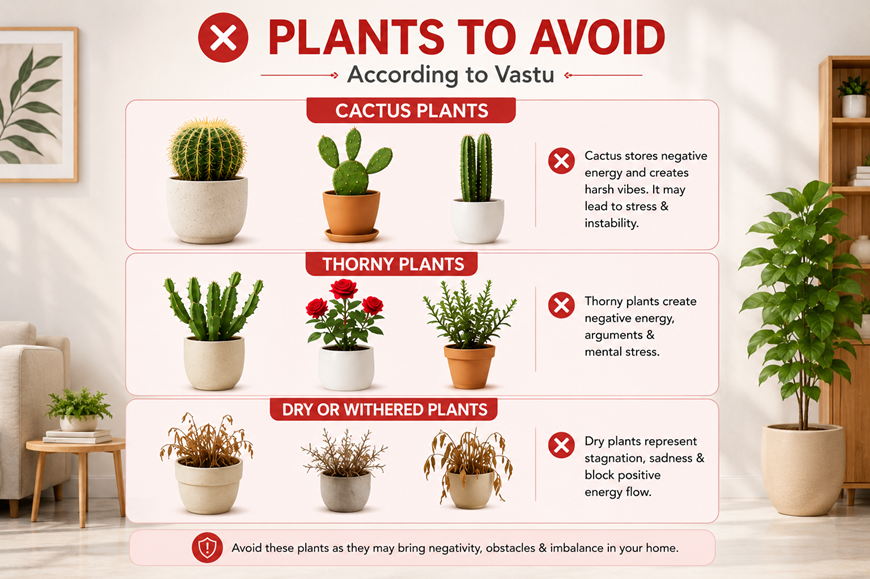
Cactus and thorny plants are generally avoided because their sharp edges are thought to generate stress, tension, and conflict. Similarly, dead or dried plants symbolize stagnation and should be removed immediately to prevent the accumulation of negative energy.
Bonsai plants, although aesthetically attractive, are often discouraged in Vastu because they represent restricted growth and limited progress. Since Vastu emphasizes expansion and prosperity, Bonsai plants may not align with these principles.
Maintaining healthy and vibrant plants is just as important as selecting the right species. A neglected plant can have the opposite effect of what is intended.
Room-Wise Placement of Indoor Plants
Different rooms serve different purposes, and Vastu recommendations vary accordingly.
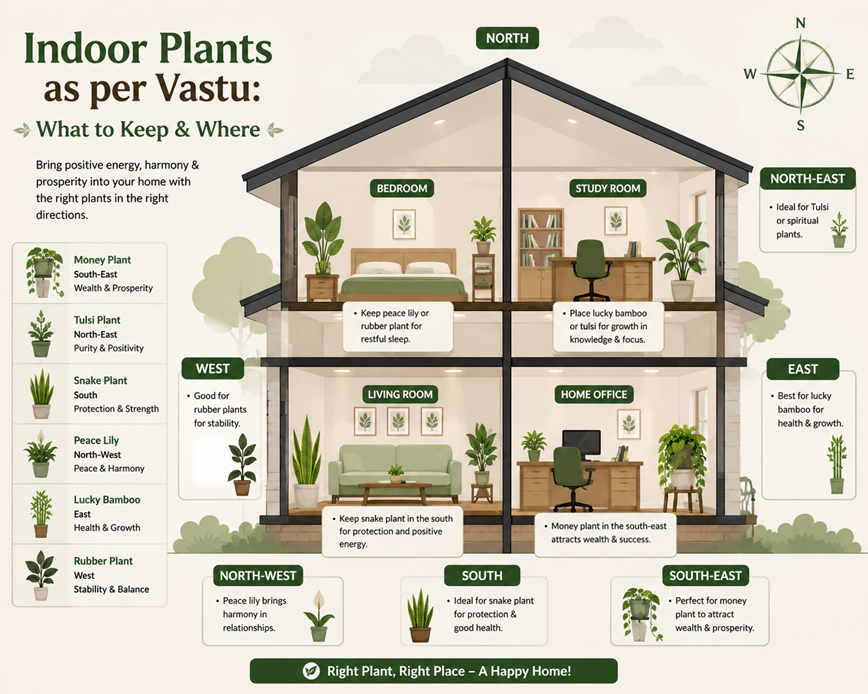
i) Living Room: The living room is often considered the center of social interaction within a home. Plants such as Areca Palm, Money Plant, and Lucky Bamboo are ideal choices for this space. They help create a welcoming atmosphere and encourage positive interactions among family members and guests.
ii) Bedroom: Bedrooms should maintain a calm and relaxing environment. Peace Lily and Snake Plant are often recommended because they support better air quality and contribute to a soothing atmosphere.
iii) Study Room: The study room benefits from plants that encourage concentration and mental clarity. Lucky Bamboo and small Money Plants are commonly suggested. Their presence can create a refreshing environment that supports learning and productivity.
iv) Home Office: For home offices, Jade Plant and Money Plant are among the most preferred options. These plants are associated with financial growth, career advancement, and professional success.
Common Mistakes to Avoid
Many homeowners unknowingly reduce the positive effects of indoor plants by making simple mistakes. One of the most common errors is keeping dry or dying plants indoors. Such plants symbolize stagnant energy and should be replaced promptly.
Another mistake is placing plants in unsuitable directions without considering Vastu principles. While a plant may be beneficial in one area, it may not provide the same results in another.
Using artificial plants is also discouraged, as they do not possess the life energy associated with natural plants. Regular maintenance, proper watering, and adequate sunlight are essential for preserving the positive influence of indoor greenery.
If you are experiencing a specific crisis in your life, you do not always need to tear down walls. Often, the remedy lies in correcting elemental conflicts. If you lack cash flow, look for hidden water elements in your Fire corner. If your marriage is rocky, check if your Earth corner is too light or cut open. By gently restoring each element to its rightful home, you allow the natural, life-supporting frequencies of the universe to flow effortlessly through your front door.For professional Vastu consultation in Bangalore, schedule a consultation with Dr. Aarushi (PhD Vastu), www.Vaastublessings.com a trusted Vastu expert at Vaastublessings, and discover practical solutions for better health, wealth, relationships, and success.