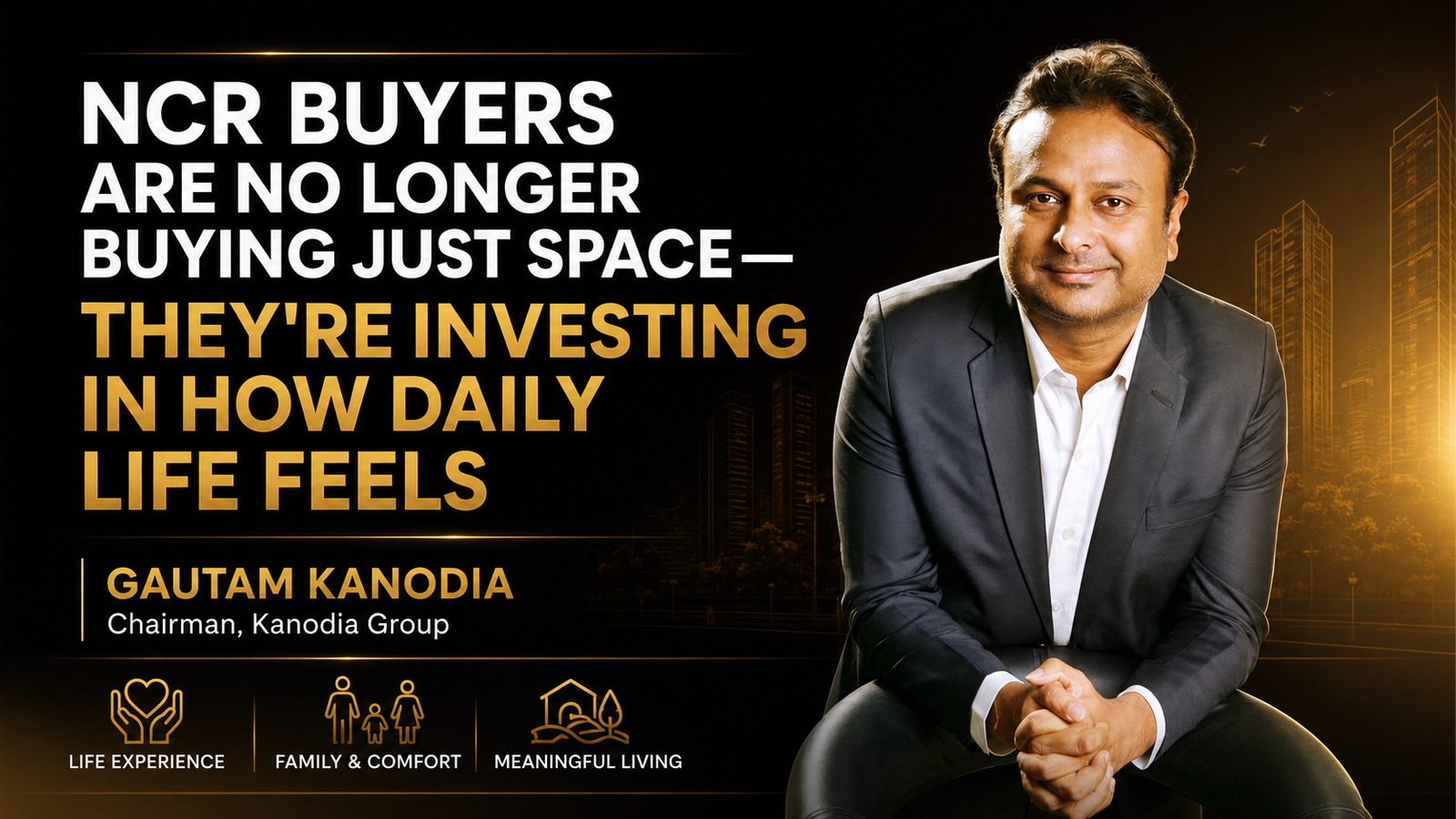
NCR Buyers Are No Longer Buying Just Space—They’re Investing in How Daily Life Feels
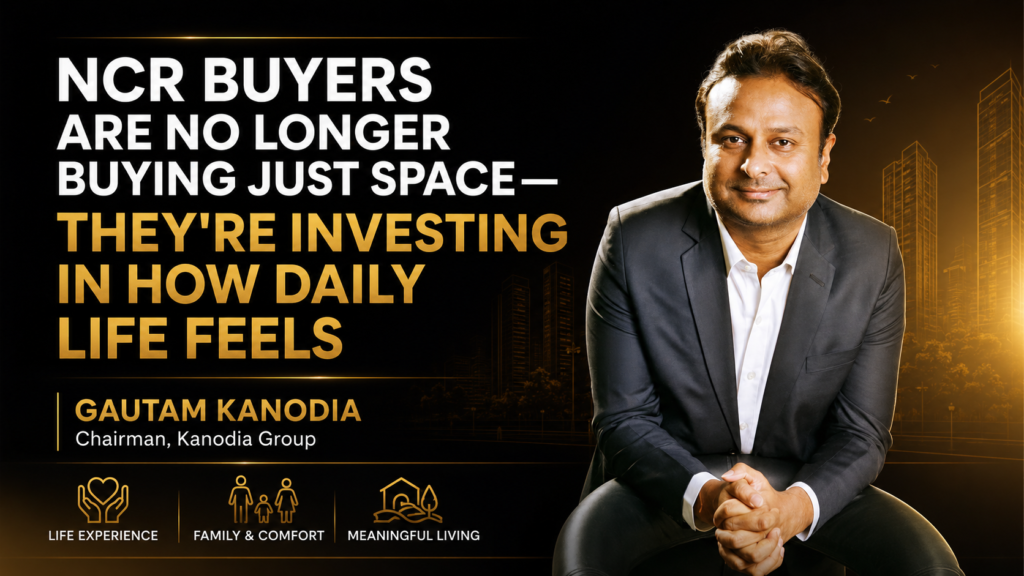
The National Capital Region (NCR) real estate market is undergoing a structural shift, moving away from simple space acquisition toward location-driven, lifestyle-led developments. In this interview, Gautam Kanodia, Founder of KREEVA and Kanodia Group, shares insights on evolving buyer expectations across key micro-markets like Gurugram, Noida Expressway, and South Delhi. He breaks down how infrastructure, low-density planning, and multi-generational living are redefining luxury housing across the region.
Q: How would you assess the current sentiment and growth trajectory of the NCR real estate market?
A: NCR has moved into a phase where residential demand is being driven by a fairly confident buyer. The market is not only about buying more space; buyers are looking more carefully at location, connectivity, the quality of the development and what daily life will look like after moving in. Gurugram continues to be a strong example, particularly across established locations such as Golf Course Road and Sector 46, as well as growth corridors such as Golf Course Extension Road and SPR. Noida Expressway is also developing its own residential identity. The interesting part is that established neighbourhoods and newer corridors are both attracting demand, but for somewhat different reasons.
Q: Which emerging micro-markets in NCR do you see offering the strongest growth potential over the next 3–5 years?
A: The strongest opportunities will come from locations where infrastructure, employment and residential development are moving together. In Gurugram, Golf Course Extension Road and SPR have that character, while established sectors such as Sector 46 continue to benefit from their mature ecosystem. Noida Expressway is another market worth watching because of its connectivity and the larger development ecosystem taking shape around it. South Delhi is a different proposition altogether. There, the opportunity is less about creating a new corridor and more about capitalisation on established neighbourhoods. New Friends Colony is a good example of how limited land availability can create a very distinctive luxury housing market.
Q: What key demand trends are shaping buyer preferences across NCR’s evolving residential markets?
A: Space has become much more important, but it is no longer space in isolation. Buyers want homes that work for different parts of their lives: family time, work, wellness, privacy and entertainment. There is also a clear preference for developments where these requirements are planned into the community rather than added as a long list of amenities. The Dualis in Sector 46, for instance, brings together large-format residences with work, fitness, recreation and social spaces. The multi-generational project planned along SPR reflects another aspect of the same demand: homes that can accommodate changing family structures. In South Delhi, location and neighbourhood character become equally important.
Q: Could you share an overview of KREEVA’s ongoing developments and the vision behind them?
A: The portfolio has been deliberately built around locations that already have a strong residential or growth story. The Dualis in Sector 46, is planned with Shapoorji Pallonji Real Estate, represents the approach to large-format luxury residences in an established Gurugram neighbourhood. The upcoming multi-generational development along SPR looks at how families are living today and how that may evolve. There is also a presence across the larger Gurugram growth belt and Noida Expressway. South Delhi adds another dimension. The upcoming project near New Friends Colony will comprise 114 low-density sky villas across 3.5, 4.5 and 5.5 BHK configurations, with residences of roughly 3,700 to 5,100 sq. ft.
Q: How do you see the luxury housing segment evolving amid changing buyer expectations and rising demand for lifestyle-led developments?
A: Luxury housing is becoming more personal. Earlier, a large home and a good address could define the proposition. Today, buyers look at how the entire environment supports the way they live. That means generous layouts, privacy, wellness, social spaces, professional management and a sense of community. The location still matters enormously. In Gurugram, that can mean the convenience of Sector 46 or the connectivity of Golf Course Extension Road and SPR. In South Delhi, the equation is different. An established address such as New Friends Colony already has an identity. The opportunity is to bring contemporary living into that setting without losing what makes the neighbourhood valuable.
Q: What are the key trends or challenges that you believe will shape the NCR real estate industry over the next few years?
A: The industry will increasingly be shaped by the quality of development rather than simply the quantity of supply. Buyers have more information today and are willing to examine the details, planning, construction, amenities, management and the larger neighbourhood. Infrastructure will remain a major factor because it changes the usefulness of a location over time. Another important shift will be towards professionally managed, lifestyle-oriented communities, particularly in the luxury segment. Redevelopment will also become increasingly relevant in established parts of Delhi. The South Delhi opportunity demonstrates this well: when new land is scarce, creating a new generation of housing within an existing neighbourhood requires a different kind of planning and sensitivity.