Tamil Nadu’s Growth Beyond Chennai: Six Cities to Drive Economic and Real Estate Expansion Towards 2036
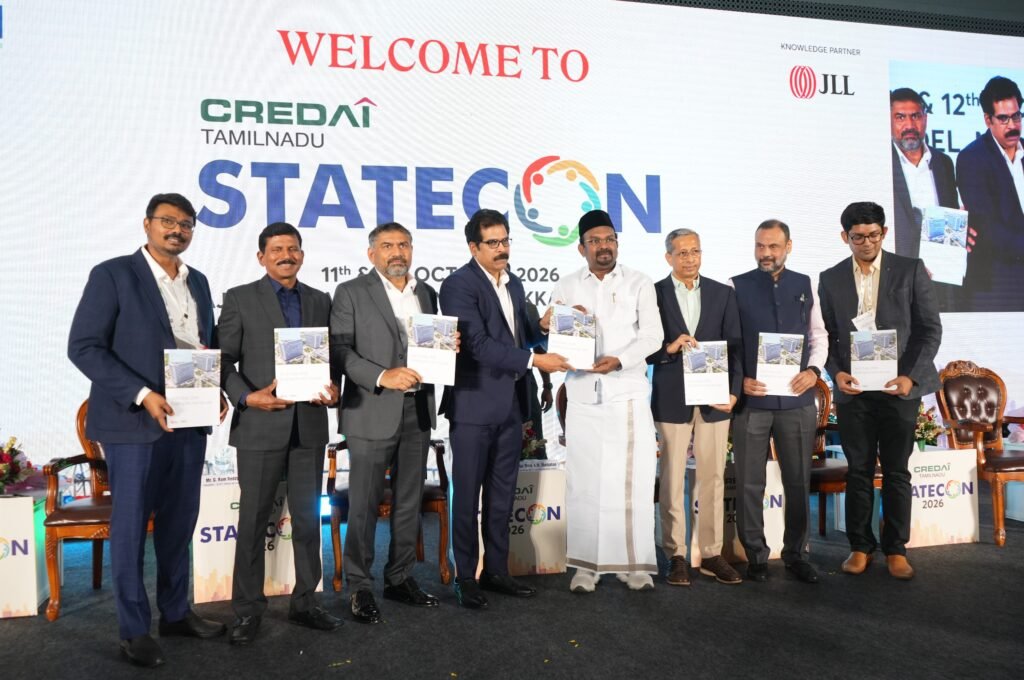
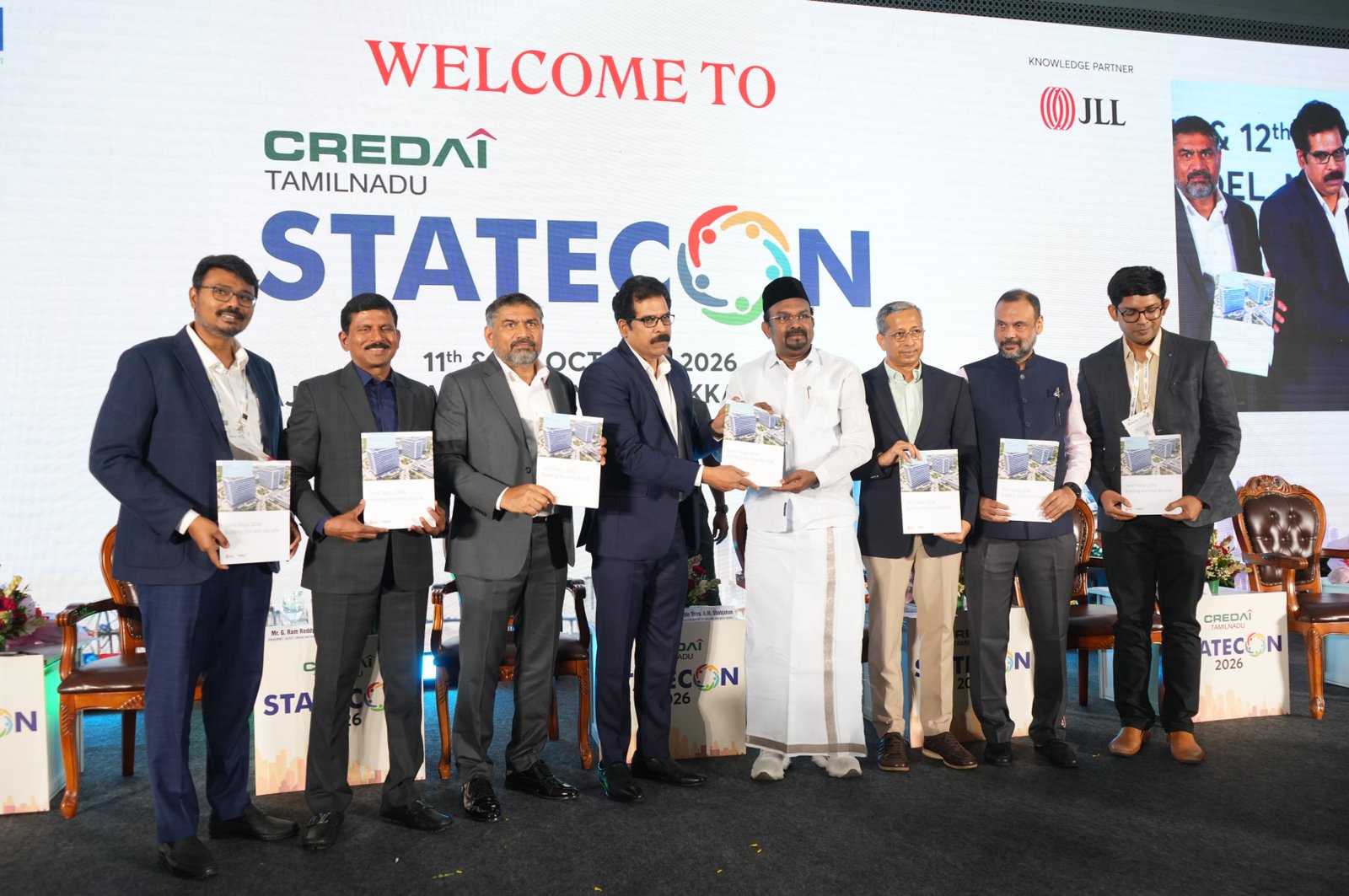
Chennai, October 12, 2026: Tamil Nadu’s next phase of economic and real estate growth will be driven by cities beyond Chennai, with Coimbatore, Madurai, Tiruchirappalli, Hosur, Salem, and Thoothukudi emerging as key investment destinations, according to a report by JLL Research prepared for CREDAI Tamil Nadu’s STATECON 2026, issued in a press release.
Titled Tamil Nadu 2036: Building the Next Decade, the report highlights a shift toward decentralised economic activity, supporting the state’s ambition to become a USD 1.5 trillion economy by 2036. Tamil Nadu accounts for around 10% of India’s GDP with a nominal GDP of approximately Rs 29.95 lakh crore. Manufacturing contributes over 20% of its output and employs 4.2 million people.
Growth is increasingly supported by advanced manufacturing, electronics, electric vehicles, green energy, semiconductors, IT, and Global Capability Centres (GCCs). The report identifies six cities as future growth drivers: Coimbatore, with 9.1 million sq. ft. of Grade-A office stock and over 60 GCCs; Madurai, emerging as a services and healthcare hub; Tiruchirappalli, a central transit and industrial hub; Hosur, transforming through EV and electronics investments; Salem, expanding into IT and logistics; and Thoothukudi, growing in green energy, maritime, and shipbuilding sectors.
Investment momentum remains strong, with over 1,283 MoUs signed in the last 5.5 years representing committed investments exceeding Rs 11 lakh crore and an MoU conversion rate of 73–78%. The South Zone leads capital concentration with over Rs 1.68 lakh crore, followed by the West Zone with over Rs 1.2 lakh crore and the North Zone with over Rs 51,000 crore.
Real estate demand is rising across sectors. Plotted developments account for 79–88% of residential launches in secondary growth corridors, while mature industrial land in Coimbatore and Madurai is nearly absorbed. Expanding TIDEL and TIDEL Neo infrastructure will further support GCC growth across these tier-II markets.
To sustain this expansion, the report recommends policy measures including extending single-window clearance mechanisms, formalising land pooling, pre-approving Transit-Oriented Development zoning, and establishing workforce housing.

Commenting on the report, W. S. Habib, President, CREDAI Tamil Nadu, said:
“Tamil Nadu’s growth story is no longer Chennai’s alone. Coimbatore, Madurai, Tiruchirappalli, Hosur, Salem and Thoothukudi are growing simultaneously, creating new opportunities for organised real estate development across the state. As Tamil Nadu works towards its USD 1.5 trillion ambition by 2036, the focus must be on faster approvals, land pooling, transit-oriented planning and housing that remains within reach. CREDAI Tamil Nadu is committed to partnering with the Government in strengthening the real estate ecosystem and supporting the state’s next phase of growth.”