Ahmedabad-GIFT City Corridor Set to Become India’s Next GCC Growth Hub
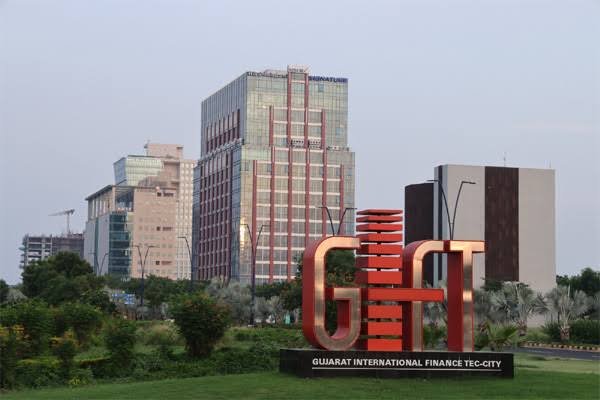
Ahmedabad, August 12, 2026: The Ahmedabad-GIFT City corridor is poised to emerge as one of the nation’s most promising commercial destinations, expected to attract 40 to 50 new Global Capability Centres (GCCs) over the coming years. According to ‘Ahmedabad: New Phase of Urban & GCC Growth’, a joint report released by Dev Accelerator Limited (DevX) and real estate services firm Anarock, this rapid expansion will generate demand for 4 to 6 million square feet of Grade A office space and create over 50,000 high-skilled jobs in the region.
The report details a structural shift in enterprise location strategies as multinational corporations increasingly adopt hub-and-spoke models beyond saturated metros like Bengaluru, Hyderabad, and the National Capital Region. India currently hosts over 1,700 GCCs employing nearly 1.9 million professionals, with projections indicating the sector will exceed 2,400 GCCs by 2030. Backed by the growth of GIFT City as the country’s first operational International Financial Services Centre (IFSC), the region is positioned to capture a large share of this expansion.
Ahmedabad currently offers nearly 26 million square feet of Grade A office space, complemented by GIFT City’s 4.1 million square feet. A primary catalyst for this shift remains cost arbitrage, with non-CBD average office rentals in Ahmedabad standing at Rs 50 per square foot per month. The net effective occupancy cost for the entire Ahmedabad-GIFT City belt is Rs 147 per square foot per month, making it the most cost-efficient choice among major Indian commercial real estate markets.

Commenting on the findings, Umesh Uttamchandani, Managing Director, Dev Accelerator Limited, said, “India’s GCC story is evolving beyond the traditional metros. Today, global enterprises are making location decisions based not only on cost, but on access to skilled talent, operational resilience and the ability to scale over the long term. This structural shift is creating opportunities for cities that can offer a balanced ecosystem rather than just lower operating costs. Ahmedabad has quietly built that foundation. With a strong talent pipeline, world-class educational institutions, improving infrastructure and the emergence of GIFT City as a global financial hub, the region is increasingly becoming a strategic destination for knowledge-led businesses.”
Uttamchandani further added, “At DevX, we’ve witnessed this transition firsthand. Organisations that initially entered Ahmedabad with small teams are now expanding their presence with greater confidence. We believe the city is no longer an emerging alternative, but one of India’s most credible destinations for the next wave of GCC-led growth and enterprise investment.”

Adding perspective to the underlying market dynamics, Anuj Puri, Chairman, Anarock Group, stated, “India’s office market continues to demonstrate remarkable resilience, supported by sustained occupier demand and the rapid expansion of Global Capability Centres. However, what is equally significant is the changing geography of this growth. As enterprises look beyond traditional Tier I markets, cities that combine talent availability, infrastructure readiness, business-friendly policies and cost competitiveness are emerging as the next engines of commercial real estate growth. Ahmedabad and GIFT City stand out as one of the country’s strongest emerging enterprise corridors. While affordability remains an important differentiator, the region’s true strength lies in its ability to offer workforce stability, institutional depth and an ecosystem that enables companies to scale with confidence.”
The corridor’s appeal is further driven by a technology talent pool of approximately 90,000 to 95,000 professionals, supported by an inflow of 55,000 to 60,000 annual graduates from premier institutions like IIM Ahmedabad and IIT Gandhinagar. Employee attrition levels remain remarkably low at 7 to 12 percent compared to established tech hubs. To support this influx, managed and flexible workspace demand is projected to reach 1 to 1.5 million square feet across key commercial zones, further backed by the state’s Gujarat GCC Policy (2025-30), which targets attracting over 250 GCCs and Rs 10,000 crore in investments alongside transformative projects like Metro Phase II and the High-Speed Rail corridor.