Guest Column
As Gurugram Claims 63 per cent of Q4 Leasing, Experience-Led Retail Takes Centrestage
By Siddharth Singh
New Delhi, February 14, 2026: Retail in NCR is entering a new phase, one where time spent is becoming more valuable than square footage leased. While India continues to rank among the fastest-growing retail markets globally, with organised retail penetration steadily rising and NCR leading Grade A supply additions, the underlying shift is more nuanced. In the fourth quarter of 2025, retail leasing in Delhi NCR stood at 1.03 million square feet (MSF), an increase of 100 per cent quarter-on-quarter and 4.5x on a year-on-year basis, as per the data released by Cushman and Wakefield. Gurugram led the overall retail leasing during Q4-25 with a 63 per cent share. Mainstreets accounted for 55 per cent of annual leasing, while malls witnessed 45 per cent of total space take-up. F&B led the space take-up in 2025 with a 22 per cent share, followed by fashion (21 per cent) and department store (14 per cent) segments. Leasing by the F&B, entertainment and consumer durables segments has almost doubled in 2025 as compared to last year.
In Gurugram, leasing momentum is increasingly being driven by experiential formats: chef-led dining concepts, wellness studios, boutique fitness, and immersive flagship stores, rather than traditional anchor-led models alone. The modern consumer, particularly in affluent micro-markets, is not merely shopping; they are seeking social currency, community interaction, and curated discovery.
Moreover, Gurugram’s next phase of retail growth is unfolding beyond its legacy hubs. While MG Road and CyberHub continue to anchor the city’s established retail map, leasing conversations are shifting toward decentralised micro-markets such as Golf Course Extension Road, SPR Road, the Dwarka Expressway belt and sectors in New Gurgaon. Developers and retailers say the logic is straightforward: retail is following rooftops– but more importantly, it is following aspiration density. As luxury residential clusters and Grade A office developments expand outward, they are creating what industry insiders describe as “experience gravity zones” where premium housing, corporate footfall and rising disposable incomes combine to generate consistent evening and weekend demand.
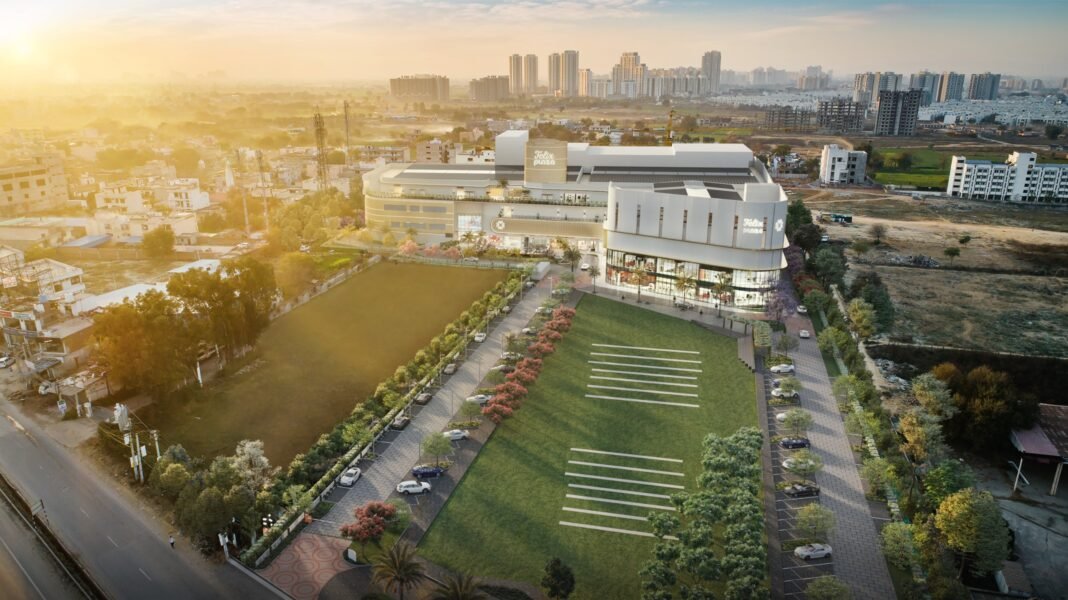
Within this decentralised shift, Sector 82A is emerging as a strategic location rather than just another plotted grid on the Gurugram map. Located at the intersection of the Dwarka Expressway and the NH-8 corridor, and embedded within New Gurgaon’s high-density luxury residential belt, the sector benefits from a catchment that is both affluent and untapped. Thousands of premium housing units are either occupied or nearing completion in the surrounding Sectors 80–95, yet organised retail supply in the immediate vicinity remains limited, creating a clear demand-supply gap.
The connectivity multiplier further strengthens the proposition: the operational momentum of the Dwarka Expressway, seamless access to Delhi and IGI Airport, and proximity to emerging office pockets lend infrastructure-backed confidence to retail investments. For developers and brands, the opportunity lies in the early-mover premium, establishing a high-quality, experience-led retail destination in a maturing residential hub before the market reaches saturation and competitive clutter.
Besides, mixed-use development is increasingly being viewed not as an architectural ambition but as structural risk management. Developers believe integrating office, residential, retail and hospitality components within a single ecosystem creates what can be described as a “live-work-play loop”. Office occupiers generate weekday lunch and post-work footfall; residents sustain evening and weekend consumption; curated retail and hospitality formats activate the ground plane throughout the day. This cross-utilisation of catchments smoothens revenue volatility and reduces vacancy cycles, offering what industry stakeholders call built-in footfall insurance.
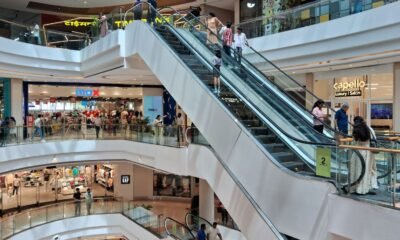
Alongside mixed-use integration, the traditional enclosed mall is gradually giving way to open, street-facing formats designed around walkability and public engagement. Developers are prioritising breathable plazas with natural light, cross-ventilation, outdoor seating and activated public realms over inward-looking corridors. Post-pandemic consumers continue to value perceived safety and open-air environments, where natural ventilation translates into subconscious comfort. At the same time, curated streetscapes and “Instagrammable” facades are becoming organic marketing tools, driving footfall beyond paid promotions. Industry observers describe this as the rise of a modern piazza culture where retail functions less as a transactional corridor and more as social theatre.
Taken together, these shifts signal a structural reset rather than a cyclical upswing. Retail in NCR, and particularly in Gurugram, is no longer being planned around anchor boxes and parking ratios alone; it is being designed around dwell time, community engagement and lifestyle alignment. As micro-markets such as Sector 82A mature alongside infrastructure upgrades and premium residential expansion, the opportunity lies in creating destinations that integrate hospitality, open public realms and mixed-use ecosystems into a single, cohesive narrative.
The author is Head of Leasing, Felix Plaza





SKA Orion Inaugurates Shri Ram Temple with Grand Two-Day Community Festival
Noida, March 27, 2026: The residential community of SKA Orion in Sector 143B was transformed into a hub of spiritual...


L&T Construction’s B&F Vertical Secures Multiple Industrial Orders Across Gujarat and Andhra Pradesh
New Delhi, March 27, 2026: The Buildings & Factories (B&F) vertical of Larsen & Toubro (L&T) has announced the acquisition...


ICCPL Foundation Promotes Menstrual Health and Hygiene Across NCR Through Navratri Outreach
Noida, March 27, 2026: The ICCPL Foundation, the corporate social responsibility arm of the ICCPL Group, has concluded a comprehensive...
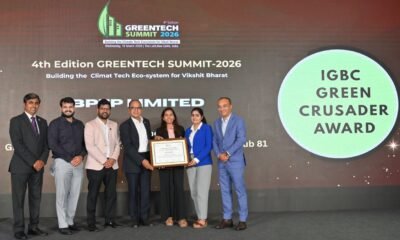

BPTP Recognised as ‘IGBC Green Crusader’ at IGBC Greentech Summit 2026
New Delhi, March 27, 2026: BPTP Limited was formally recognized as an “IGBC Green Crusader” by the Indian Green Building Council...

Beyond the Gurugram Model: Jewar Emerges as Integrated Economic Engine with 2026 Airport Launch
Greater Noida, March 27, 2026: As the Noida International Airport at Jewar prepares to begin operations on March 28, 2026,...

ArisInfra Approves Merger of ArisUnitern Subsidiary to Create Unified Construction Platform with 10x Scaling Target
Mumbai, March 27, 2026: ArisInfra Solutions Limited (ARIS), a tech-enabled service provider for the construction and real estate sectors, has...
-
 Guest Column3 weeks ago
Retail Trends to Watch Out for in 2026
-
News4 weeks ago
Strategic Partnership between Brigade Group, Primus Senior Living to Develop Senior Living Communities
-
 News4 weeks ago
FY27 Outlook Residential Real Estate: High Base and Affordability Challenges; Tier I Mid-Premium Segment Resilient
-

 News1 week ago
FractoProp Receives SEBI Registration for Ridhama Real Estate Fund
-
News4 weeks ago
TARC Marks New Milestone at TARC Kailasa with Grand Tower Launch, New Experience Gallery Reveal
-
Guest Column4 weeks ago
Trust-Led, Lifestyle-Focused, Infrastructure-Driven: Punjab’s Real Estate Evolution
-
News4 weeks ago
Mumbai Real Estate Hits 14-Year High with Over 13,000 Property Registrations in February 2026
-
News1 week ago
Rise of Airport-Linked Real Estate: Opportunities Emerging Around Jewar