Data Centre Expansion Escalates Power, Cyber, and Operational Risks: Howden Research
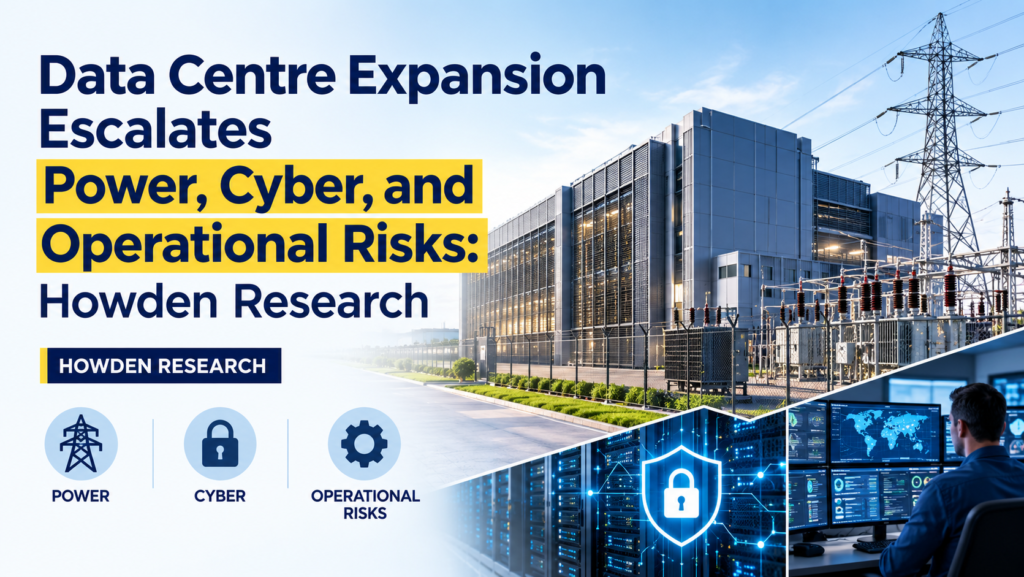
Mumbai, September 17, 2026: India’s rapid data centre expansion is creating concentrated risk exposures across power supply, construction, water usage, cyber threats, and daily operations, according to new research released by global insurance broker Howden. The study calls for an integrated risk management approach starting from initial site selection and facility design through construction and long-term operation.
According to the analysis, power infrastructure represents the most significant operational risk factor. Between 2016 and 2025, power consumed by Indian data centres expanded 68-fold, growing at a 60 per cent compound annual growth rate (CAGR), with demand projected to reach 57 TWh by 2030. To address grid connectivity and substation capacity challenges, hyperscale campuses are increasingly turning to on-site generation. Power resilience remains particularly critical in states like Maharashtra, Telangana, and Karnataka, which collectively account for approximately 70 per cent of total national capacity.
The report also highlights heightened business interruption risks driven by ongoing construction at operational sites. Between 2026 and 2030, planned expansions at existing facilities are projected to equal 78 per cent of their current operational footprint. Concurrently, average facility sizes grew from 59,000 square feet in 2016 to 276,000 square feet in 2025, concentrating higher asset values at single locations.
Additionally, while over 90 per cent of Indian facilities feature system redundancy, non-damage outages and systemic cyber threats continue to expose coverage gaps under traditional insurance policies. Environmental pressures also remain significant, with cooling a 1 MW facility requiring roughly 25.5 million litres of water annually.

Emphasizing the necessity of integrated risk management, Amit Agarwal, CEO, Howden India, stressed early intervention. He said: “India’s data centre story is not only about adding capacity. Power reliability, construction at operating sites, cyber concentration and water stress can all affect uptime. These risks need to be identified early and managed together, with insurance designed around the exposures that remain. This will help operators protect their assets and avoid gaps in cover as the sector expands.”
The report advocates for stronger site-level risk assessments, parameter-based coverage solutions, and unified insurance programs to address water availability, non-damage outages, and operational vulnerabilities as the industry continues to scale.