From Cool Roofs to 3D Printing: The New Language of Roofing in India

By Yogesh Mudras, Managing Director, Informa Markets in India – Organisers of Roof India expo.
For the longest time, roofing has been treated as an afterthought, addressed once the structure is complete and designed to protect but not necessarily perform. Today, that mindset is being reshaped as roofs are increasingly expected to deliver measurable performance.
Is this shift most visible in the evolution from cool roofing, which is practical, scalable, and immediate, to more advanced, technology led solutions such as 3D enabled roofing systems?
Roofs play a critical role in heat gain, directly influencing indoor comfort and energy consumption. Cool roofing solutions, for instance, can reduce indoor temperatures by 2 to 5 degrees Celsius and lower cooling energy demand by 10–30% in hot climates.
This is not theoretical. Under India’s National Cooling Action Plan (NCAP), cool roofs have emerged as a key intervention, with cities like Ahmedabad and Hyderabad demonstrating large-scale adoption through public programmes. In industrial and warehousing segments particularly in logistics and e-commerce cool roof coatings and reflective sheets are increasingly being adopted to reduce operational cooling loads. At the same time, roofing is evolving beyond passive performance. Integrated systems combining reflective coatings, insulation, waterproofing, and rooftop solar are becoming more common.
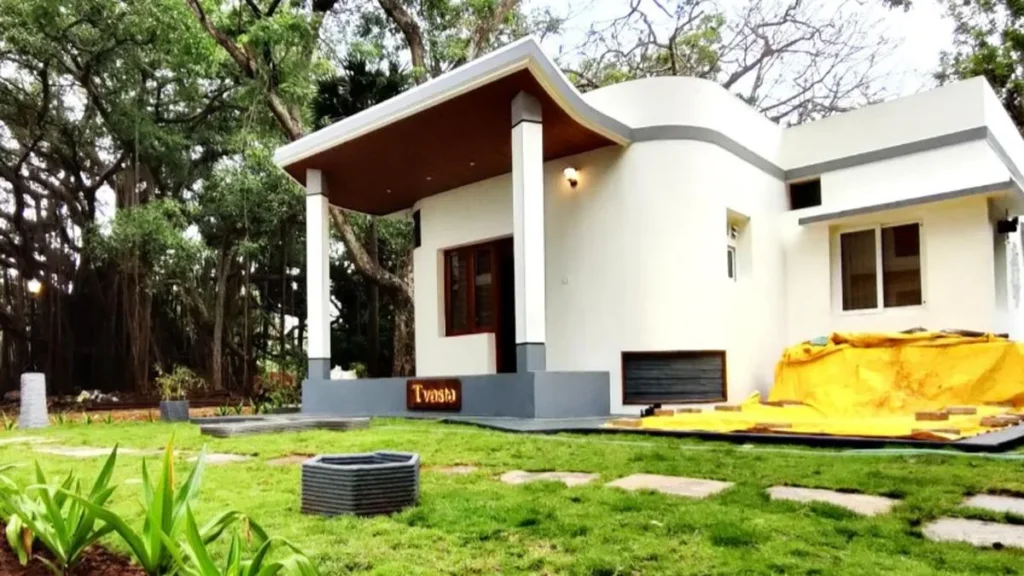
While cool roofing represents the present scale opportunity, the next phase of innovation is being shaped by digital and advanced manufacturing technologies. 3D printing, though still nascent in India, is beginning to influence how roofing components are designed and produced. Globally, additive manufacturing is being used to create customised roofing panels, complex joints, and lightweight structural elements, reducing material waste and enabling design precision. In India, institutions such as the IITs are exploring 3D-printed building components, signalling early movement in this direction.
Alongside this, smart roofing systems are introducing intelligence into the roof itself. IoT-enabled solutions can monitor temperature variation, water ingress, and
structural stress in real time, enabling predictive maintenance and extending lifecycle performance. While currently limited to high-value assets, such
technologies point toward a future where roofs are not just built but continuously monitored and optimised.
The roofing ecosystem is also expanding through allied segments such as waterproofing, insulation, and cladding. The Indian waterproofing market is projected to grow at over 10% CAGR, reflecting rising awareness around durability and lifecycle performance. Together, these segments are transforming the roof into a high-performance system rather than a standalone element.
This transition, however, is not without challenges. Cost sensitivity continues to shape decision-making, particularly in segments where upfront investment outweighs lifecycle benefits. Awareness around advanced roofing solutions remains uneven, and policy implementation varies across states despite frameworks such as the Energy Conservation Building Code (ECBC).
Yet, momentum is building. Rising energy costs, climate pressures, and ESG-linked investments are pushing stakeholders to rethink roofing as a long-term asset.
What is most notable is the shift in mindset. Developers and occupiers are asking more informed questions, not just about cost, but about performance, durability, and efficiency. Roofing is therefore becoming central to how buildings are designed and evaluated.
In this evolving landscape, platforms such as Roof India are playing a key role in advancing both ends of this spectrum, from scalable cool roofing solutions to next-generation materials and technologies.
Looking ahead, the trajectory is clear. Cool roofs will continue to scale as an immediate response to India’s climate realities, while technologies such as 3D printing and smart monitoring will shape the next wave of roofing innovation. Industry estimates suggest that energy-efficient building components, including roofing systems, will see sustained growth as sustainability moves from intent to implementation.
Because the future of roofing will not be defined by a single solution but by the convergence of efficiency, technology, and intelligence.
Disclaimer: The views expressed in this article are those of the author, and not necessarily of Realty&More.