Beyond Cost Efficiency: Rising Corporate Preference for Value-Driven Grade A Office Spaces
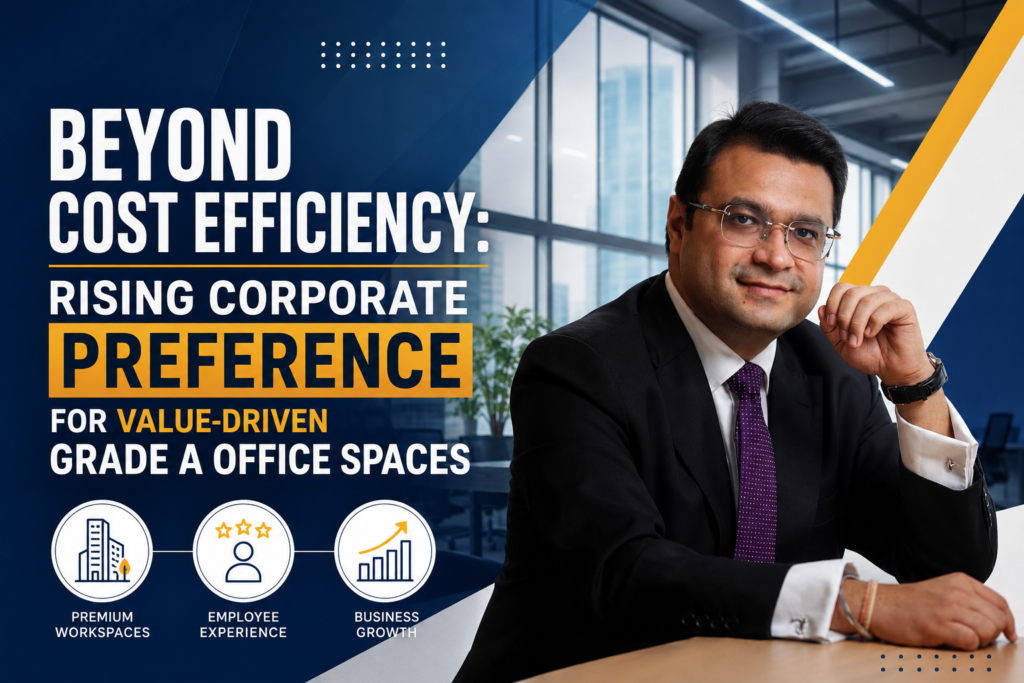
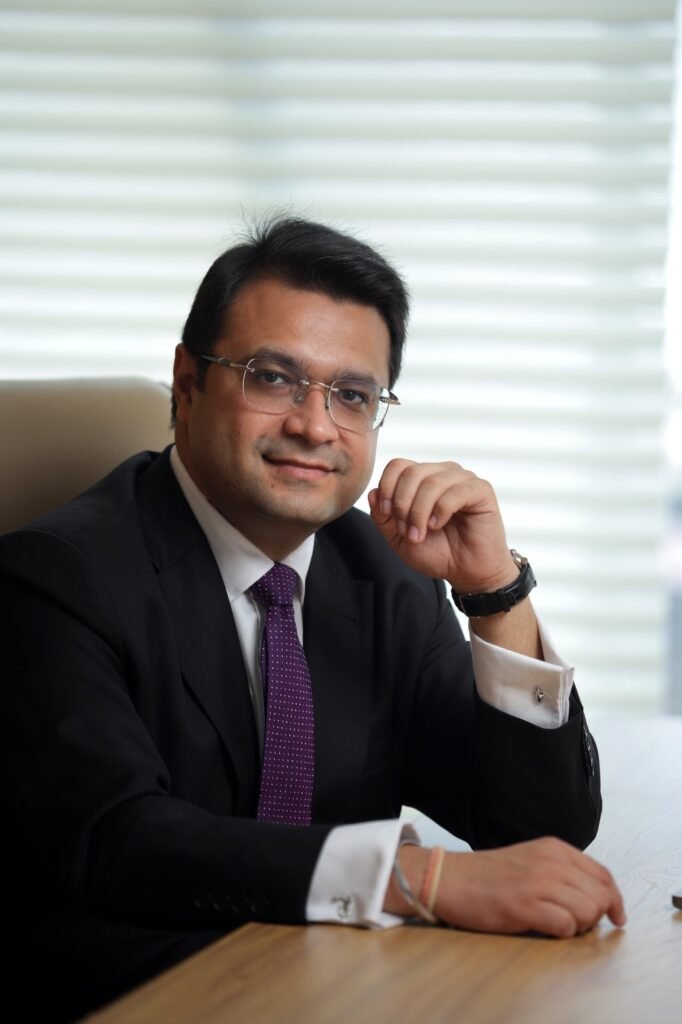
By Dr. Amish Bhutani, Managing Director, Group 108
Over the years, the corporate approach towards office spaces has evolved far beyond conventional leasing considerations. Earlier, workplace decisions were largely centred around rental efficiency, space optimisation, and cost-per-seat calculations, with occupiers prioritising operational practicality above all else. Today, however, the office is increasingly being viewed as a strategic business asset that reflects organisational culture, strengthens brand perception, and shapes workforce experience. Particularly, GCCs, MNCs, technology firms, consulting organisations, BFSI players, and innovation-led enterprises are evaluating workplaces through a far more strategic and long-term lens. In an environment where talent retention, collaboration, innovation, and employee well-being are becoming critical to business performance, the quality of the workplace itself has acquired far greater significance.
This shift is also redefining the way corporates perceive value within commercial real estate. Increasingly, occupiers are demonstrating a willingness to invest in Grade A office environments that enhance productivity, support workforce well-being, and offer seamless connectivity to the larger urban ecosystem. The conversation is no longer limited to how economically a space can be occupied; it is now centred around how effectively a workplace can contribute to business continuity, employee engagement, operational agility, and long-term organisational growth. In many ways, the market is witnessing a gradual but definitive transition from cost-led leasing to value-led occupancy decisions, where the emphasis is moving towards future-ready ecosystems capable of delivering sustained strategic advantage rather than merely lower operational expenditure.
This evolving occupier mindset is becoming particularly evident across Delhi-NCR, which has emerged as one of India’s most dynamic and strategically positioned commercial real estate markets. Backed by rapid infrastructure expansion, improving regional connectivity, and sustained corporate activity, the region is increasingly attracting both domestic enterprises and global occupiers looking to establish long-term operational bases. As per Cushman and Wakefield, the region witnessed gross leasing volume (GLV) of 2.8 MSF in Q1 2026, an increase of 36% q-o-q and 2% on a y-o-y basis. Flex operators led quarterly demand with 27%
share, followed by engineering & manufacturing (21%) and IT-BPM firms (20%). Gurugram accounted for 60% of leasing in Q1-26, followed by Noida and Delhi NCT with 37% and 3% shares, respectively. This broader urban and economic momentum is, in turn, driving sustained demand for Grade A office spaces that align with the evolving expectations of modern occupiers.
Within this broader evolution, Noida-Greater Noida is transitioning from a cost-sensitive office destination into a far more strategic and future-oriented corporate ecosystem. The region’s growing appeal today extends well beyond competitive occupancy costs; it is increasingly being driven by its ability to support long-term enterprise growth through infrastructure depth, planned urban expansion, and availability of large-scale Grade A developments. Significant investments in metro connectivity, expressway networks, the FNG corridor, and the Noida International Airport are reshaping regional accessibility and integrating emerging business districts more seamlessly with the larger NCR economy. This has meaningfully altered occupier perception around distance and connectivity, making Noida-Greater Noida far more attractive for high-value corporate operations.
What is particularly noteworthy is the growing presence of global occupiers establishing or expanding their footprint in the region. Several multinational firms and technology-led enterprises have leased substantial office spaces across Noida in recent years, reflecting rising confidence in the market’s long-term commercial potential. Adobe, for instance, recently leased nearly 1.58 lakh sq. ft. of office space in Noida–one of the largest office leasing transactions signed in the city this year.
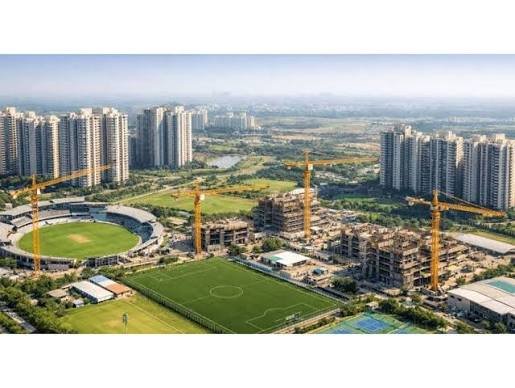
This shift in occupier expectations is also driving a meaningful evolution in developer strategy across Noida-Greater Noida. Developers today are no longer approaching office projects as standalone commercial towers designed purely around leasable area; instead, the focus has moved towards creating integrated, experience-led business environments that can remain relevant over the long term. There is a far greater emphasis on sustainability-led planning, smart infrastructure integration, ESG-aligned development practices, and workplace formats that prioritise wellness, flexibility, and employee experience. Increasingly, commercial developments are being envisioned as mixed-use ecosystems where office spaces coexist with retail, hospitality, lifestyle, and social infrastructure, enabling a more seamless and engaging work environment.
Therefore, India’s office market is entering a far more evolved phase, where workplace decisions are being guided not merely by occupancy costs, but by the larger value a business ecosystem can deliver over time. The conversation has clearly moved beyond transactional leasing towards creating environments that support innovation, talent retention, and sustainable business growth. In many ways, this marks a broader shift in how commercial real estate itself is being perceived — not simply as physical infrastructure, but as an integral contributor to organisational performance and future readiness.