How Real Estate Develops Urban Areas: Driving Growth, Infrastructure, and Economic Progress
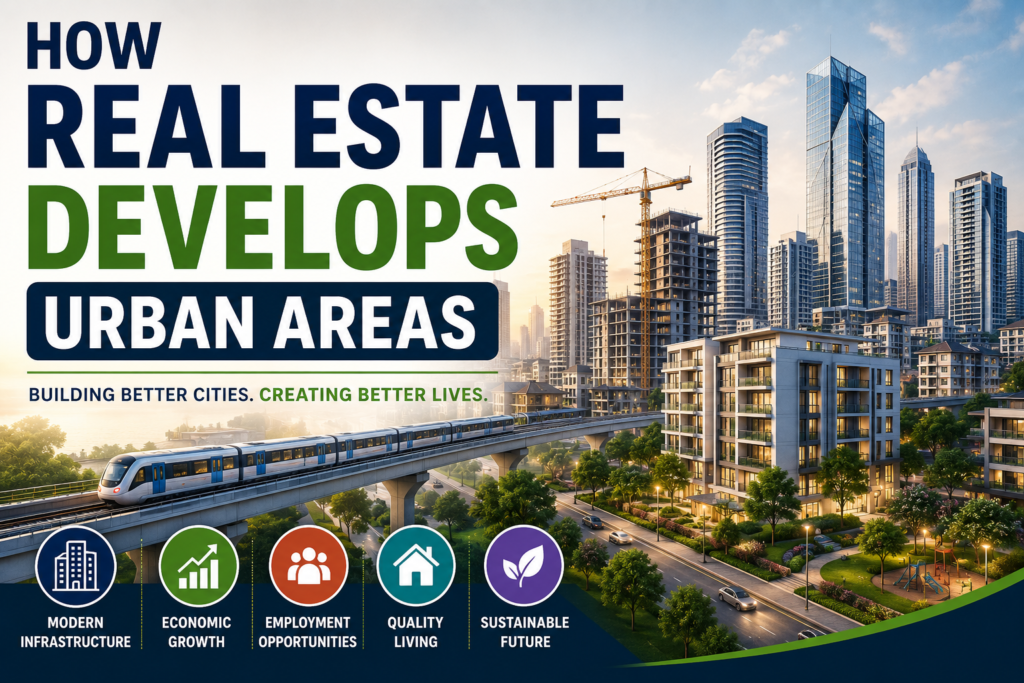
Cities are constantly evolving, and real estate plays a central role in shaping their growth. From residential townships and commercial hubs to shopping malls and business parks, real estate development transforms underdeveloped land into thriving urban spaces. As India’s urban population continues to rise, the importance of planned real estate development has become more significant than ever.
Understanding how real estate develops urban areas helps homebuyers, investors, policymakers, and businesses appreciate its broader impact on infrastructure, employment, connectivity, and quality of life. Beyond constructing buildings, real estate development drives economic growth, attracts investments, creates modern communities, and supports sustainable urbanization. This guide explores how the real estate sector contributes to urban development and why it remains one of the strongest pillars of India’s economic progress.
What Is Real Estate Development?
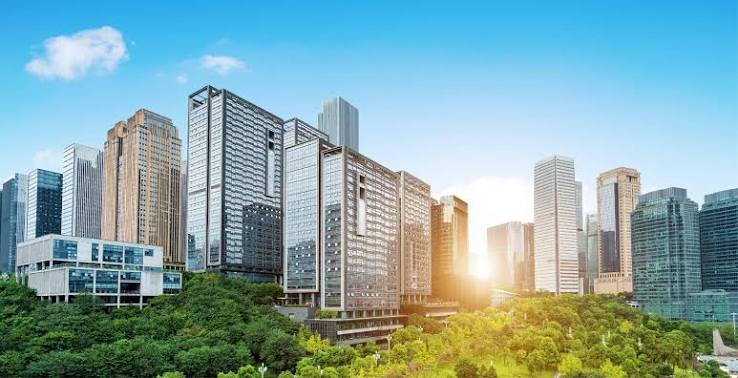
Real estate development is the process of transforming land into residential, commercial, industrial, or mixed-use projects. It involves planning, designing, financing, constructing, marketing, and managing properties to meet the growing needs of cities and communities.
Developers work closely with architects, engineers, urban planners, government authorities, financial institutions, and infrastructure agencies to create functional and sustainable developments.
Major types of real estate development include:
- Residential projects
- Commercial office spaces
- Retail developments
- Industrial parks
- Mixed-use townships
- Smart city projects
- Affordable housing
- Luxury housing communities
When carried out strategically, these developments become catalysts for urban transformation.
Why Real Estate Is Essential for Urban Development
Urban development extends beyond constructing homes and offices. It involves building complete ecosystems where people can live, work, learn, shop, and enjoy recreational activities.
Real estate development contributes by:
- Creating modern housing options
- Improving public infrastructure
- Supporting local businesses
- Generating employment
- Increasing government revenue
- Enhancing land value
- Attracting domestic and foreign investment
- Promoting sustainable urban planning
Every successful urban area relies on a strong real estate ecosystem supported by infrastructure and public services.
How Real Estate Develops Urban Areas
1. Creating Modern Residential Communities
One of the most visible contributions of real estate is the development of residential neighborhoods that accommodate growing urban populations.
Modern residential projects offer more than housing. They include:
- Parks and open spaces
- Clubhouses
- Schools nearby
- Healthcare facilities
- Shopping complexes
- Sports amenities
- Community centers
Integrated townships are increasingly becoming self-sufficient communities that reduce travel time and improve residents’ quality of life.
2. Improving Infrastructure
Real estate development often goes hand in hand with infrastructure expansion.
When large projects are announced, governments and private developers frequently invest in:
- Wider roads
- Flyovers
- Metro rail connectivity
- Water supply systems
- Sewage treatment
- Street lighting
- Electricity networks
- Public transportation
Infrastructure improvements increase accessibility and encourage further development in surrounding areas.
For example, infrastructure projects like the Dwarka Expressway, Noida International Airport, Mumbai Metro expansion, and Bengaluru’s Peripheral Ring Road have significantly boosted real estate activity in nearby regions.
3. Generating Employment Opportunities
Real estate is one of India’s largest employment-generating sectors.
Every project creates jobs for:
- Construction workers
- Civil engineers
- Architects
- Interior designers
- Surveyors
- Electricians
- Plumbers
- Project managers
- Legal consultants
- Marketing professionals
- Property consultants
Indirect employment also increases through demand for cement, steel, furniture, logistics, transportation, and home improvement industries.
4. Attracting Business Investments
Commercial real estate development encourages businesses to establish offices, retail outlets, and industrial facilities.
Modern office spaces attract:
- IT companies
- Startups
- Financial institutions
- Healthcare providers
- Educational organizations
- Hospitality businesses
As businesses expand, employment opportunities grow, strengthening local economies and increasing residential demand nearby.
5. Increasing Property Values
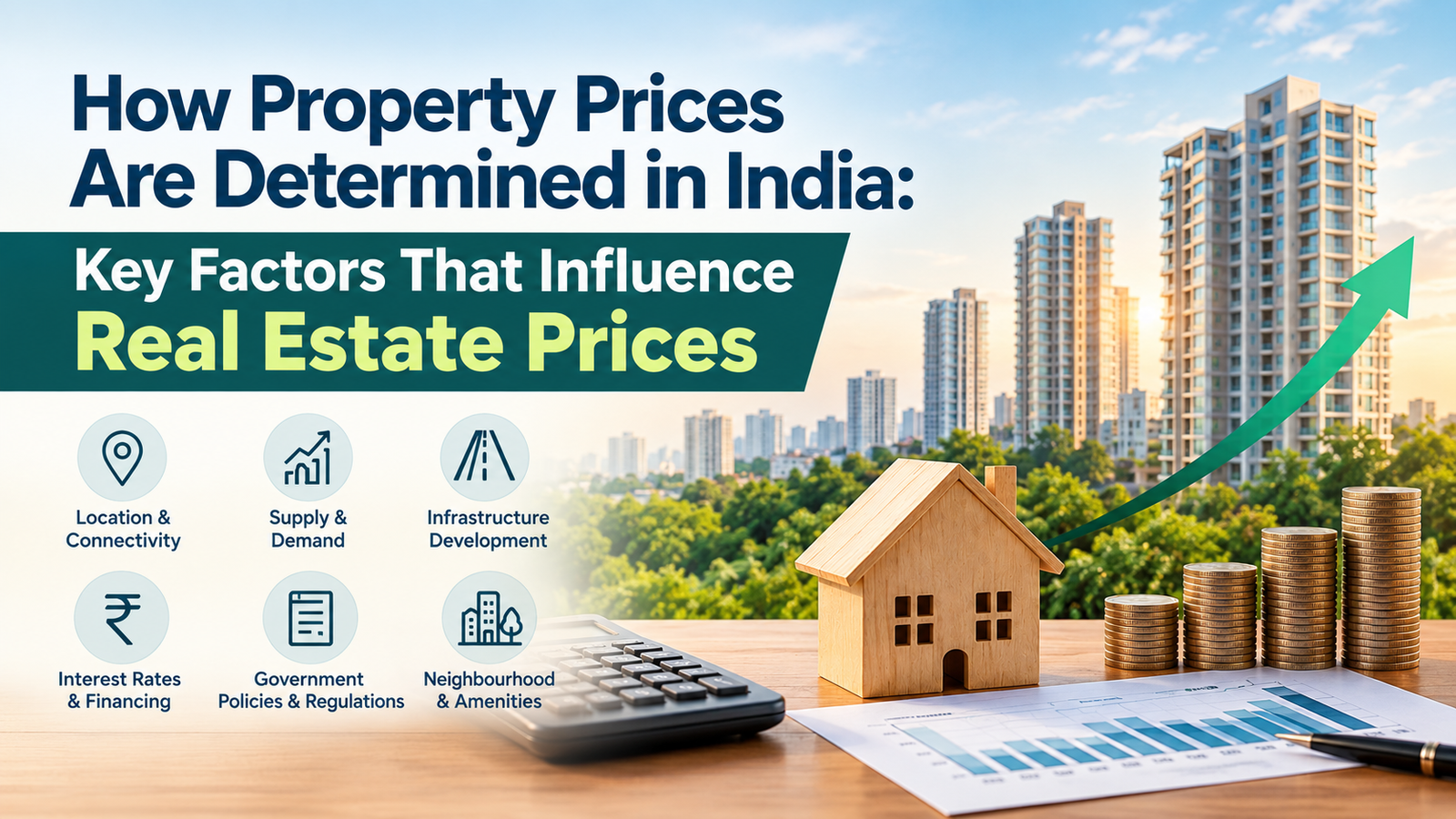
Infrastructure development often leads to higher property prices.
When new highways, metro stations, airports, and commercial centers are developed:
- Residential demand increases.
- Rental demand improves.
- Commercial activity expands.
- Land values appreciate.
This benefits homeowners and investors who purchased property before large-scale infrastructure projects were completed.
The Role of Integrated Townships in Urban Growth
Integrated townships are redefining urban living in India.
Unlike traditional housing developments, integrated townships combine multiple facilities within one community.
Typical features include:
- Residential apartments
- Villas
- Commercial complexes
- Schools
- Hospitals
- Shopping centers
- Parks
- Offices
- Entertainment zones
These developments reduce dependency on city centers while creating balanced urban ecosystems.
Examples of such developments can be found across Delhi NCR, Pune, Hyderabad, Bengaluru, Ahmedabad, and Chennai.
Smart Cities and Sustainable Urban Development
India’s Smart Cities Mission has accelerated the adoption of technology-driven urban planning.
Real estate developers increasingly focus on:
- Smart security systems
- Digital infrastructure
- Green buildings
- Energy-efficient construction
- Rainwater harvesting
- Solar energy
- Waste management
- Electric vehicle charging stations
Sustainable developments improve environmental performance while reducing long-term operating costs for residents.
Green certifications such as IGBC and GRIHA are becoming important considerations for both developers and homebuyers.
How Real Estate Supports Local Economies
Every new residential or commercial project stimulates economic activity in the surrounding region.
New developments increase demand for:
- Retail stores
- Restaurants
- Schools
- Hospitals
- Banks
- Public transport
- Entertainment venues
- Service providers
Small businesses often flourish around large residential communities, creating a multiplier effect that benefits the broader economy.
Additionally, governments generate revenue through:
- Stamp duty
- Registration fees
- Property taxes
- GST on applicable projects
- Development charges
These funds can be reinvested into improving urban infrastructure and public services.
Challenges in Urban Real Estate Development
Despite its many benefits, real estate development also presents challenges that require careful planning.
Infrastructure Gaps
Rapid construction without corresponding infrastructure can lead to traffic congestion, inadequate public transport, and pressure on utilities.
Environmental Concerns
Unchecked urban expansion may result in:
- Loss of green cover
- Water scarcity
- Air pollution
- Increased waste generation
Developers are increasingly adopting sustainable construction practices to minimize environmental impact.
Housing Affordability
Property prices in major metropolitan cities continue to rise, making homeownership challenging for many buyers.
Affordable housing initiatives and government incentives aim to address this issue by increasing the supply of reasonably priced homes.
Regulatory Compliance
Developers must comply with:
- RERA regulations
- Environmental approvals
- Building codes
- Local development authorities
- Fire safety norms
Compliance improves transparency and protects homebuyers.
Factors Driving Urban Real Estate Growth in India
Several factors continue to support the expansion of India’s urban real estate market.
Rapid Urbanization
Millions of people migrate to cities every year in search of better employment, education, and healthcare opportunities.
Rising Incomes
Growing disposable incomes encourage homeownership and investment in larger, higher-quality residential properties.
Infrastructure Development
Expressways, airports, metro networks, and industrial corridors continue to unlock new growth corridors across the country.
Government Initiatives
Programs such as:
- Smart Cities Mission
- PMAY (Pradhan Mantri Awas Yojana)
- RERA
- Transit-oriented development policies
have strengthened confidence in India’s housing sector.
Foreign Investment
Institutional investors and foreign direct investment continue to support commercial, residential, and warehousing developments across India.
Indian Real Estate Market Perspective
India’s real estate sector is expected to remain one of the country’s key economic growth drivers over the coming decade. Cities like Delhi NCR, Mumbai Metropolitan Region (MMR), Bengaluru, Hyderabad, Pune, Chennai, Ahmedabad, and Gurugram continue to attract large-scale investments in residential, commercial, and mixed-use developments.
Emerging growth corridors around infrastructure projects—including the Noida International Airport, Delhi-Mumbai Expressway, Mumbai Trans Harbour Link, GIFT City, and various metro rail expansions—are creating new opportunities for developers and investors alike.
Demand is also shifting toward integrated townships, sustainable housing, and mixed-use communities that offer convenience, connectivity, and modern amenities. As urban populations expand and infrastructure improves, real estate will remain instrumental in shaping India’s future cities.
Expert Tips for Homebuyers and Investors
Before investing in developing urban areas, keep these points in mind:
- Verify RERA registration before purchasing.
- Research upcoming infrastructure projects.
- Evaluate the developer’s track record.
- Assess connectivity to employment hubs.
- Compare long-term appreciation potential.
- Review nearby social infrastructure such as schools and hospitals.
- Consider sustainability features in the project.
- Understand maintenance costs and community management.
A well-planned investment in an emerging urban corridor can deliver both lifestyle benefits and long-term financial returns.
Conclusion
Real estate development is much more than constructing buildings—it is the foundation of modern urban growth. By creating homes, offices, commercial centers, and integrated communities, the sector drives infrastructure development, employment, economic activity, and improved living standards. As India continues its rapid urbanization journey, the role of real estate in shaping sustainable, connected, and future-ready cities will only become more important.
For homebuyers and investors, understanding how real estate influences urban development provides valuable insight into identifying high-growth locations and making informed investment decisions. By focusing on infrastructure, connectivity, regulatory compliance, and long-term planning, buyers can benefit from the opportunities created by India’s evolving urban landscape.
Stay updated with the latest real estate news, market trends, and expert buying guides on RealtyNMore.