Pune Steers Toward Low-Carbon Future as IGBC Green Pune Summit 2026 Unveils Masterplan for Climate-Ready City by 2040
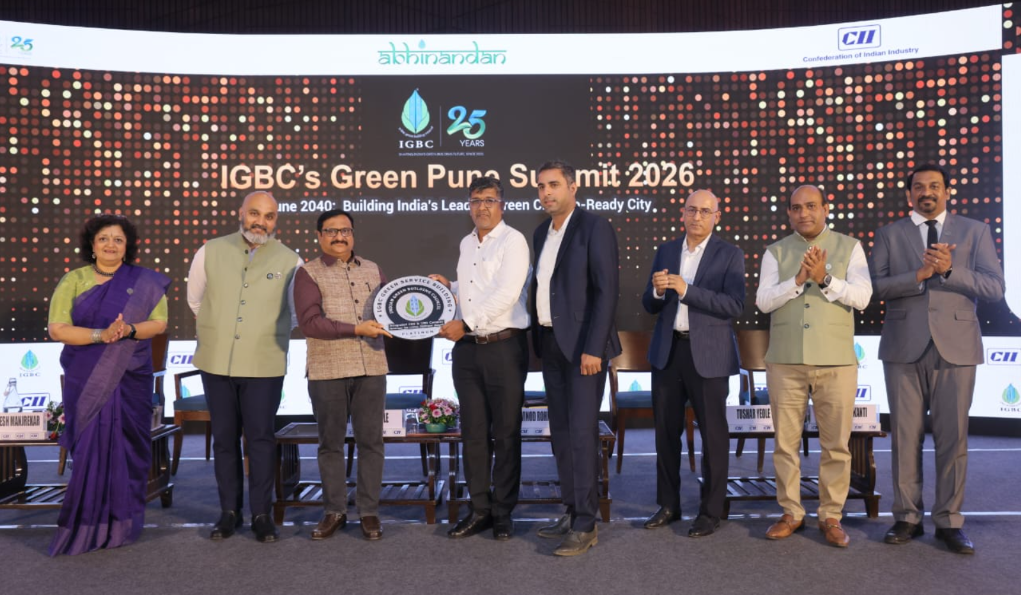
Pune, June 15, 2026: The Confederation of Indian Industry’s (CII) Indian Green Building Council (IGBC) successfully convened policymakers, urban planners, developers, and sustainability professionals today for the IGBC Green Pune Summit 2026. Convening under the central theme “Pune 2040: Building India’s Leading Green, Climate-Ready City,” the high-level summit established a strategic roadmap to integrate ecological resilience with rapid urban expansion. The event served as a major milestone for Pune, which has rapidly emerged as India’s second-ranking city in Maharashtra for sustainable infrastructure development, currently boasting 1,481 registered green building projects covering over 2.34 billion square feet, alongside 450 certified projects accounting for more than 1.09 billion square feet of green built-up area, IGBC said in a press release.
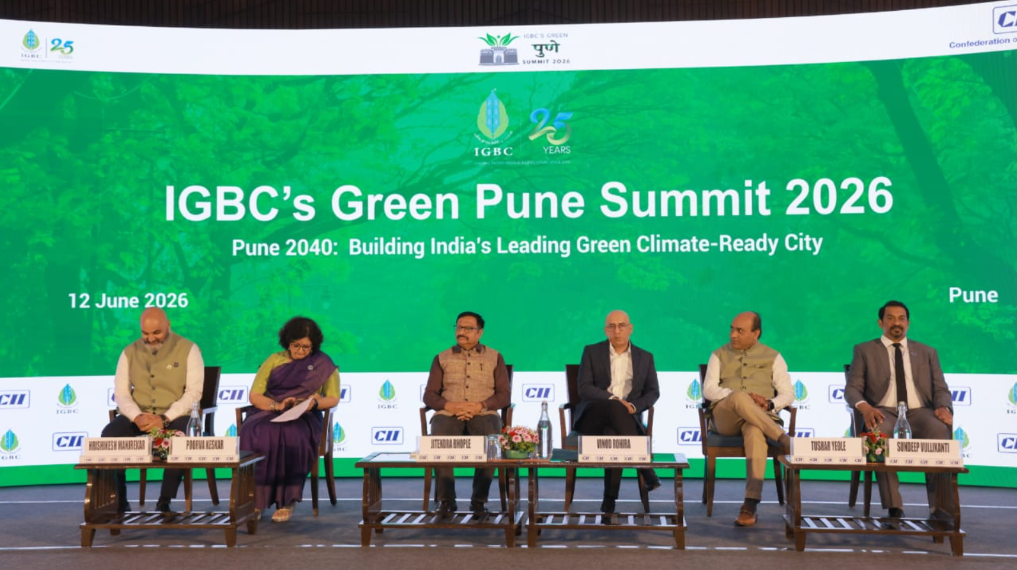
The city’s diverse green portfolio highlights its systemic shift toward sustainable development, encompassing 581 commercial projects, 723 residential projects, 70 industrial and logistics projects, 24 built environment projects, 60 transit infrastructure projects, and 23 cutting-edge Net Zero projects. The inaugural session brought together prominent figures including Jitendra Bhople, Director of Town Planning and Valuation Department, Government of Maharashtra; Vinod Rohira, Managing Director and CEO of Commercial Real Estate at K Raheja Corp; Dr. Poorva Keskar, National Chair of IGBC Green Education; Hrishikesh Manjrekar, Chairman of the IGBC Pune Chapter; and Tushar Yeole, Co-Chair of the IGBC Pune Chapter. In addition to hosting intensive policy dialogues, the summit featured the formal felicitation of exemplary green building projects, celebrating their measurable contributions to reducing urban carbon footprints and accelerating multi-sectoral green partnerships.
Jitendra Bhople, Director of Town Planning, Government of Maharashtra, said, “Maharashtra is one of India’s most progressive and industrially advanced states. As our cities continue to grow, we must ensure that development and sustainability move forward together. The decisions we make today will define the livability, resilience and environmental health of our urban centres for generations to come. Sustainability cannot be limited to individual buildings or projects; it must be embedded across cities, regions and the ecosystems that support them. In this regard, IGBC has played a transformative role by providing practical frameworks and measurable pathways for sustainable development. The recognition of Pune Municipal Corporation and Pimpri-Chinchwad Municipal Corporation under the IGBC Green Cities Rating Framework is a testament to how local governments can successfully integrate sustainability into urban planning and governance. Green buildings and sustainable practices are no longer optional—they are fundamental to creating greener, healthier and more livable cities. By prioritizing water management, sustainable mobility, green cover and citizen well-being, we can build a future where sustainability becomes the foundation of urban development.”
C. Shekar Reddy, National Chairman, CII Indian Green Building Council (IGBC), virtually addressing the Green Pune Summit said, “India’s transition towards a low-carbon future will be significantly shaped by the built environment. Pune has consistently demonstrated leadership in adopting green building practices and can play a pivotal role in advancing India’s sustainability agenda. Through initiatives such as the Green Pune Summit, IGBC seeks to foster partnerships, accelerate innovation and drive the adoption of high-performance green buildings and sustainable infrastructure. Together, we can create cities that are environmentally responsible, economically vibrant and socially inclusive.”

Addressing the session, Poorva Keskar, National Chairperson, IGBC Green Education, said, “India’s green building movement has evolved from a niche concept to a national priority, and the progress achieved over the past two decades is truly remarkable. With over 15.9 billion sq. ft. of registered green building footprint and a rapidly growing Net Zero movement, India is demonstrating global leadership in sustainable development. Maharashtra continues to lead this transformation, with Pune emerging as one of the key contributors across commercial, residential and industrial developments. As we look towards 2030, the imperative before us is not just to sustain this momentum but to accelerate it. By bringing together the power of technology, innovative financing, and enabling policies, we can create meaningful impact for businesses, communities and the environment while building a resilient and future-ready built ecosystem.”
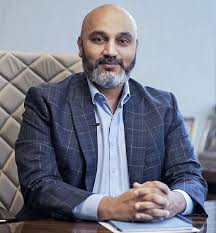
Highlighting Pune’s achievements, Hrishikesh Manjrekar, Chairman, IGBC Pune Chapter, said, “Pune has emerged as one of India’s most progressive cities in embracing sustainability and green development. The city’s strong ecosystem of industry, academia, developers and policymakers provides a unique foundation for accelerating climate action. The Green Pune Summit is designed to bring these stakeholders together to exchange ideas, share best practices and develop actionable strategies that can help position Pune as India’s leading green and climate-ready city by 2040. The collective commitment demonstrated today reinforces our confidence in achieving that vision.”
The summit featured a thought-provoking fireside chat titled “The Green Dialogue: Breaking Barriers and Building Solutions,” which paired Dr. Poorva Keskar with Vinod Rohira to critically evaluate the evolving landscape of Indian sustainable development. The discussion underscored the absolute necessity of cohesive cooperation between corporate entities, the real estate market, and state regulators to dismantle financial, technical, and bureaucratic barriers. The leaders collectively noted that scaling up climate-responsive infrastructure relies heavily on continuous innovation, intense stakeholder engagement, and a shared commitment to long-term sustainability metrics.
Technical sessions later shifted the focus toward practical execution and advanced technology adoption. The first segment, “Green Building Practices and Technologies,” featured key case studies on integrated green design from Ar. Abhishek Arora, Partner at Morphogenesis; Hrishikesh Kulkarni, Co-Creator of Green Score; alongside IGBC Pune Chapter Core Committee Members Pratik Potnis and Dr. Anshul Gujarathi, and Sundeep Vullikanti, Senior Counsellor at CII-IGBC. A subsequent technical panel titled “The Green Evolution: Smart Practices and Sustainable Building Envelopes” explored intelligent automated building systems and raw green materials, featuring specialized insights from Simmy Malhotra of Kidin Industries Pvt. Ltd.; Cdr. Jayant Konde of Persistent Systems Ltd.; Avinash Gowra of Saint-Gobain Glass India Pvt. Ltd.; Himanshu Manjrekar of Mahindra Lifespace Developers Ltd.; alongside Prathamesh and Ganesh Jadhav.
The summit ultimately concluded with a unified call to action, reinforcing Pune’s position as a premier national hub for eco-conscious real estate and environmental stewardship. The final declarations of the IGBC Green Pune Summit 2026 underscored that achieving the 2040 climate-ready city goal will require a swift escalation of net-zero construction practices, more robust municipal policy frameworks, and the continuous deployment of resilient, resource-efficient engineering solutions across the entirety of the regional built environment.