News
Beyond the Gurugram Model: Jewar Emerges as Integrated Economic Engine with 2026 Airport Launch
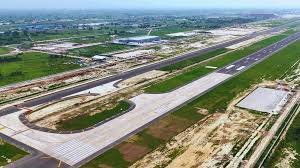
Greater Noida, March 27, 2026: As the Noida International Airport at Jewar prepares to begin operations on March 28, 2026, industry experts suggest the region is carving out a development identity distinct from the private-sector-led rise of Gurugram. While Gurugram evolved over two decades into a corporate powerhouse fueled by its proximity to Delhi’s airport, the emerging Yamuna Expressway corridor is being framed as a more integrated, multi-layered urban evolution driven by state-led infrastructure and industrial clusters.
The project is being viewed as a broader economic catalyst for Uttar Pradesh rather than a traditional residential expansion.
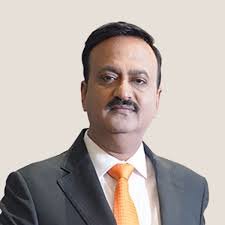
Manoj Gaur, CMD of Gaurs Group, emphasized the transformative nature of the hub, stating, “The Noida International Airport is set to emerge as a powerful gateway for the state, significantly enhancing global connectivity and attracting investments across sectors. We anticipate a strong ripple effect on the real estate market, with property values witnessing a steady upward trajectory in the coming years. The development of this world-class airport will not be limited to Noida or Greater Noida but will serve as a strong gateway for the entire state of Uttar Pradesh. As a result, the region will evolve into a major hub for industrial and logistics activities. This will generate large-scale employment opportunities, leading to increased demand for quality housing and planned urban developments. As jobs grow, so will the need for residential ecosystems, making this region one of the most promising destinations for both end-users and investors. Noida International Airport is truly a catalyst that will redefine the economic landscape of Uttar Pradesh.”
Market data reflects a structural shift in the region’s economy, with nearly Rs 19,877 crore in investment commitments already secured for data centers, logistics, and townships. Between 2020 and 2025, apartment prices surged by approximately 158%, while plot values rose by over 500%. Recent activity indicates a move toward operational stability, with the execution of over 700 lease deeds and the addition of 54 new industrial plots in the last year alone.

Sahil Agarwal, CEO of Nimbus Group, noted that the market is moving away from pure speculation toward a self-sustaining ecosystem. “The Yamuna Expressway region is ready to take a new flight. The convergence of key growth drivers that includes the imminent operationalisation of the Noida International Airport, rapid progress in industrial and logistics hubs, the upcoming Film City, and the emergence of data centre clusters, is creating a more stable and diversified demand ecosystem. At present, the market is no longer driven purely by early investors, but there is an increase in participation from end-users and long-term stakeholders. Formats such as low-rise projects and integrated townships are gaining traction. At the same time, as industries and institutions begin to operationalise, they have added to the demand for well-planned residential projects. Affordability also continues to be a strong advantage for the Yamuna Expressway when compared to established micro-markets like Noida and Gurugram. In short, the region is on the path to becoming a self-sustaining city, with residential, commercial, and industrial growth complementing each other,” Agarwal said.
The transition from an investment play to a lifestyle destination marks the next phase of the corridor’s maturity.

Yukti Nagpal, Director of Gulshan Group, highlighted the importance of livability over mere appreciation. “Every new corridor sees that initial excitement where prices move faster than the ecosystem,” Nagpal observed. “But what sustains a market is how it evolves as a place to live, not just invest. We’re already seeing a shift where buyers are looking beyond land appreciation to lifestyle, quality of living and future-ready infrastructure. As the airport-led ecosystem develops, this region will start attracting a more premium buyer profile. That’s when you see the transition from plotted growth to more curated, lifestyle-driven developments, and that’s where long-term value really builds.”
This sentiment is echoed by
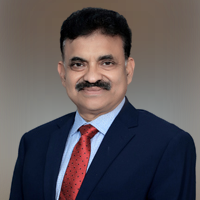
Salil Kumar, Director of Marketing & Business Management at CRC Group, who sees the area evolving into a planned urban ecosystem. “What we are witnessing is the evolution of a corridor from an investment destination to a planned urban ecosystem. As infrastructure and economic activity pick up pace, there is a clear shift towards organised, well-designed developments. Buyers today are more discerning, and demand is increasingly moving towards projects that offer not just connectivity, but a complete living environment,” Kumar added.
The rise of the Jewar corridor is also decentralizing the National Capital Region’s (NCR) growth, which was historically concentrated in a few dominant nodes. Mohit Batra, Regional Director at Realistic Realtors, noted, “NCR is no longer a single-centre market. What we are seeing now is the emergence of multiple growth nodes. Jewar has the potential to become an independent economic centre rather than just an extension of Noida.”
Unlike Gurugram’s incremental, reactive growth, the Jewar corridor is being developed with an integrated vision where infrastructure and industry progress in tandem, potentially offering a more balanced model for future urban expansion in India.






SKA Orion Inaugurates Shri Ram Temple with Grand Two-Day Community Festival
Noida, March 27, 2026: The residential community of SKA Orion in Sector 143B was transformed into a hub of spiritual...


L&T Construction’s B&F Vertical Secures Multiple Industrial Orders Across Gujarat and Andhra Pradesh
New Delhi, March 27, 2026: The Buildings & Factories (B&F) vertical of Larsen & Toubro (L&T) has announced the acquisition...


ICCPL Foundation Promotes Menstrual Health and Hygiene Across NCR Through Navratri Outreach
Noida, March 27, 2026: The ICCPL Foundation, the corporate social responsibility arm of the ICCPL Group, has concluded a comprehensive...
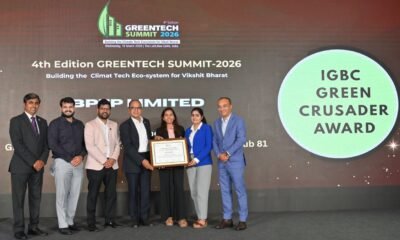

BPTP Recognised as ‘IGBC Green Crusader’ at IGBC Greentech Summit 2026
New Delhi, March 27, 2026: BPTP Limited was formally recognized as an “IGBC Green Crusader” by the Indian Green Building Council...

Beyond the Gurugram Model: Jewar Emerges as Integrated Economic Engine with 2026 Airport Launch
Greater Noida, March 27, 2026: As the Noida International Airport at Jewar prepares to begin operations on March 28, 2026,...


ArisInfra Approves Merger of ArisUnitern Subsidiary to Create Unified Construction Platform with 10x Scaling Target
Mumbai, March 27, 2026: ArisInfra Solutions Limited (ARIS), a tech-enabled service provider for the construction and real estate sectors, has...
-
 Guest Column3 weeks ago
Retail Trends to Watch Out for in 2026
-
News4 weeks ago
Strategic Partnership between Brigade Group, Primus Senior Living to Develop Senior Living Communities
-
 News4 weeks ago
FY27 Outlook Residential Real Estate: High Base and Affordability Challenges; Tier I Mid-Premium Segment Resilient
-

 News1 week ago
FractoProp Receives SEBI Registration for Ridhama Real Estate Fund
-
News4 weeks ago
TARC Marks New Milestone at TARC Kailasa with Grand Tower Launch, New Experience Gallery Reveal
-
Guest Column4 weeks ago
Trust-Led, Lifestyle-Focused, Infrastructure-Driven: Punjab’s Real Estate Evolution
-
News4 weeks ago
Mumbai Real Estate Hits 14-Year High with Over 13,000 Property Registrations in February 2026
-
News1 week ago
Rise of Airport-Linked Real Estate: Opportunities Emerging Around Jewar