Nearly Half of NRIs Plan to Diversify Property Investments in India, According to Remittor Wealth Report
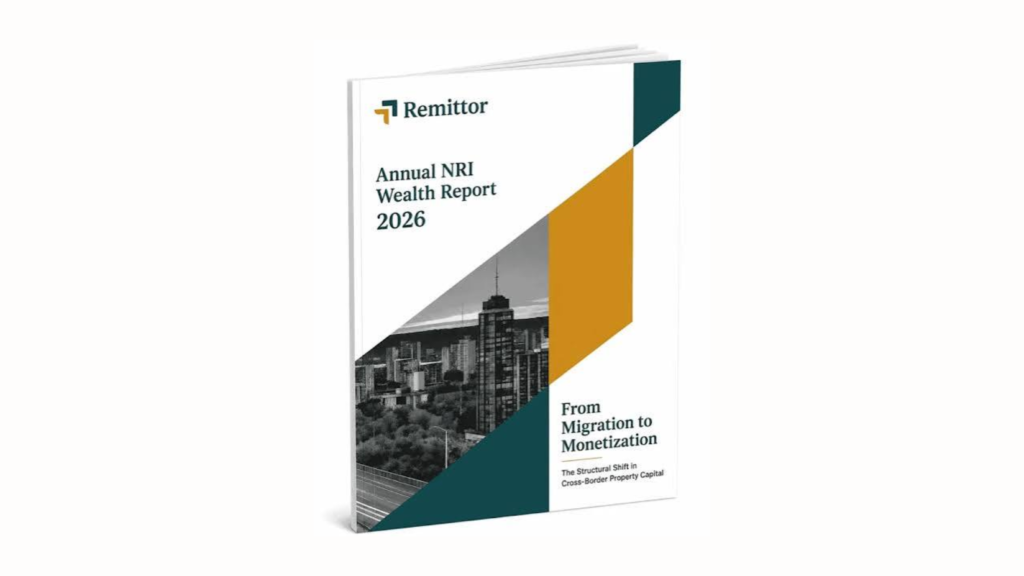
New Delhi, July 29, 2026: Nearly half of non-resident Indian (NRI) property owners are actively looking to diversify their Indian real estate holdings, marking a structural shift from emotional homeownership to strategic global wealth management, according to the Remittor Annual NRI Wealth Report 2026 released by Vancouver-based wealth tech startup Remittor.
The report, derived from proprietary data across approximately 150 NRI client engagements based primarily in North America, reveals that assets acquired during India’s major NRI investment wave between 2010 and 2022 are entering a liquidity phase. The data indicates that residential assets account for nearly 89% of the properties entering the sale pipeline—with over 60% acquired between 2010 and 2019—while more than half of respondents intend to transfer their sale proceeds overseas to optimize their long-term financial portfolios.

“Properties acquired during India’s major NRI investment wave between 2010 and 2022 are now entering a liquidity phase, as owners evaluate them against mortgages abroad, retirement planning needs, education spends, portfolio diversification goals, and evolving tax obligations,” said Sanu Nair, Founder and CEO of Remittor. “The trend reflects a more deliberate approach to wealth allocation rather than panic selling. Indian property has historically served NRIs as both an investment and a fallback asset, but its role is changing as many settle long term abroad. For NRIs, buying property in India was never just a real estate investment, it was a fallback plan, a retirement option, a family asset, and a link to home. As migration matures into long-term settlement, that role is shifting: these assets now help NRIs optimise their wealth portfolios back home.”
Geographically, the properties entering the market are concentrated in major urban growth corridors across India, led by Maharashtra, followed by Delhi-NCR, Kerala, Gujarat, and Karnataka. Key micro-markets such as Mumbai, Thane, Pune, Noida, Greater Noida, Gurugram, and Bengaluru are witnessing heightened liquidation activity, as these regions previously absorbed significant overseas capital during India’s rapid urban expansion phase.
The report highlights that cross-border property sales are evolving into complex financial and regulatory events rather than basic real estate transactions, documenting an early-stage structural wealth realignment among the diaspora. It also identifies a noticeable expectation gap between seller price perceptions—often influenced by peak-cycle narratives or historical purchase costs—and professionally assessed market values, noting that properties launched with realistic valuations experience faster transaction timelines and stronger buyer engagement.
Intended as a directional benchmark for policymakers, financial institutions, and wealth managers, the inaugural edition focuses on client workflows across Canada and the United States. Remittor plans to publish the report annually to track longitudinal shifts in NRI property ownership, capital flows, and cross-border portfolio management as diaspora priorities continue to evolve.