NH-8 to Dwarka Expressway: How Gurgaon’s Connectivity and Infrastructure Are Creating New Luxury Hubs

By Kushagra Ansal, Director, Ansal Housing
Infrastructure and connectivity have consistently shaped the growth of India’s major real estate markets, influencing where businesses expand, residential demand emerges and how new urban centres take form. Importantly, Delhi-NCR offers a vivid case in point of this infrastructure-led evolution. As highways, expressways and transport networks have expanded the region’s accessibility, real estate development has increasingly moved towards emerging corridors, creating new residential destinations beyond established city centres.
The Delhi-NCR residential market continues to indicate this expansion. According to JLL, the region recorded 13,631 residential launches in Q1 2026 with a 64% year-on-year increase, showing the scale of development taking place across both established and emerging markets. Increasingly, expanding activity across peripheral locations is particularly vital as improved connectivity is enabling developers and homebuyers to look beyond traditional residential clusters.
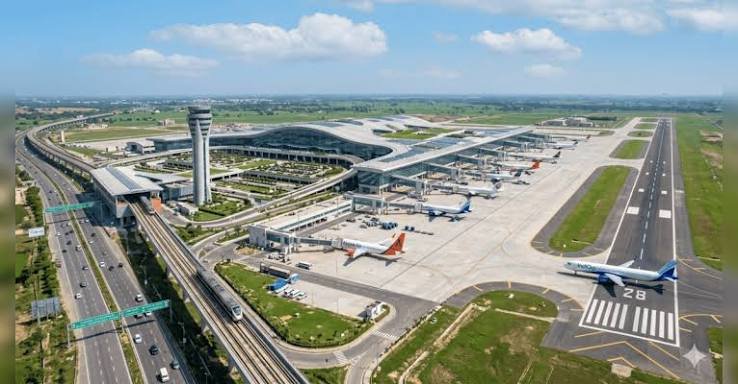
Within NCR, Gurgaon has been one of the strongest examples of how infrastructure can transform a real estate market. NH-8 played a pivotal role in the city’s early development by strengthening its connection with Delhi, Jaipur and Indira Gandhi International Airport. As accessibility improved, businesses established large employment centres such as Cyber City and Udyog Vihar, followed by residential, retail and social infrastructure. What was once a peripheral location gradually evolved into one of NCR’s most important corporate and residential destinations.
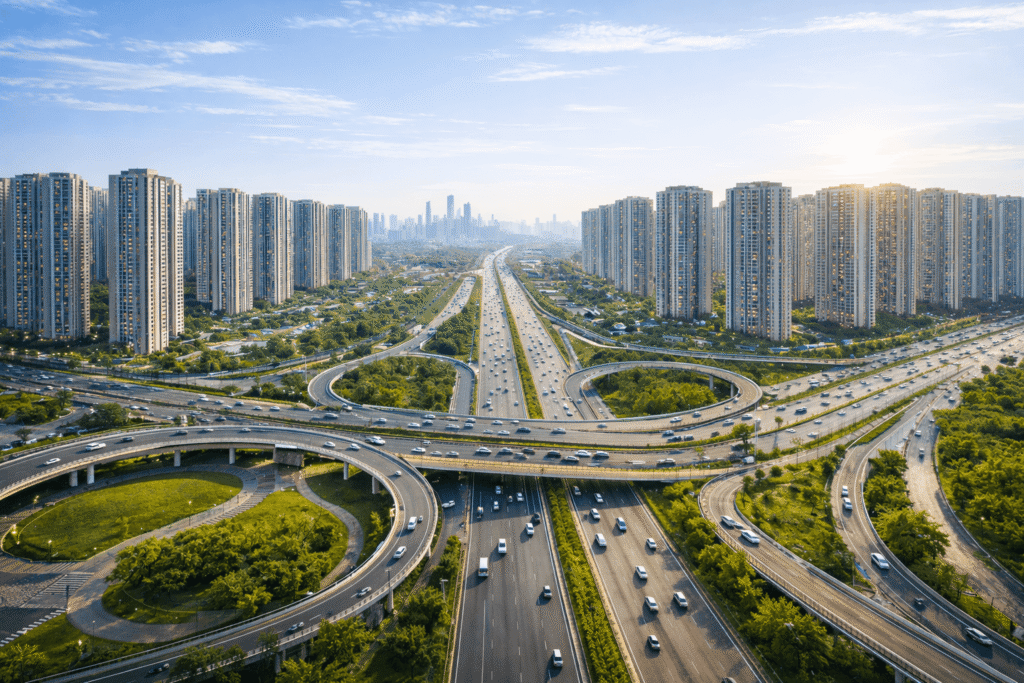
However, Gurgaon’s growth is expanding beyond NH-8 alone. As the city has expanded, newer infrastructure corridors have begun influencing the next phase of its development. Among these, Dwarka Expressway has emerged as a prime growth spine by connecting Gurgaon with Delhi, Dwarka and the airport while opening up large tracts of land for residential and commercial development.
The scale of this transition is already visible in the residential supply pipeline. Dwarka Expressway accounted for 36% of Gurugram’s residential launches in Q1 2026 with around 2,500 units added between January and March, making it one of the leading contributors to new residential supply in the city. The concentration of launches indicates that the corridor is becoming a foremost part of Gurgaon’s mainstream residential market.
Moreover, the nature of development along the corridor is increasingly aligned with the preferences of premium homebuyers. As Gurgaon’s buyer base becomes more affluent, factors such as larger living spaces, privacy, integrated amenities and access to key destinations are gaining importance. Connectivity to Delhi and IGI Airport further strengthens the proposition for HNIs, senior corporate professionals, entrepreneurs and NRIs, for whom accessibility is an important part of premium living.
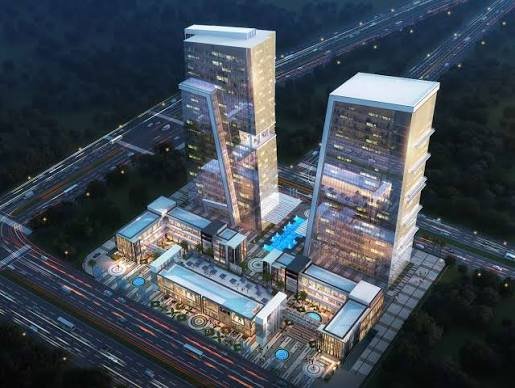
This is also where these corridors differ from Gurgaon’s earlier development model. The availability of larger development parcels around Dwarka Expressway gives developers greater scope to create expansive residential communities rather than standalone projects. High-end clubhouses, landscaped open spaces, wellness and fitness facilities, sports amenities and technology-enabled services are increasingly becoming part of these developments, reflecting a shift towards experience-led luxury housing.
At the same time, residential development is creating demand for a wider urban ecosystem. Retail centres, hospitality projects, healthcare facilities, schools and commercial developments can strengthen the liveability of emerging sectors and reduce dependence on established parts of the city. As these supporting amenities develop, the distinction between a peripheral residential location and a self-sustained urban neighbourhood becomes increasingly blurred.
The emergence of Dwarka Expressway does not necessarily challenge Gurgaon’s established luxury markets. Locations such as Golf Course Road continue to benefit from mature infrastructure, established communities and proximity to commercial hubs. Instead, the new corridor is expanding the city’s luxury geography, offering a different proposition based on newer infrastructure, larger developments and the potential for integrated communities.
The larger infrastructure network will remain critical to this evolution. For emerging luxury hubs to mature sustainably, road connectivity needs to be supported by public transport, healthcare, education, drainage, retail and other civic infrastructure. The quality and availability of these services will ultimately determine whether infrastructure-led development translates into complete, liveable neighbourhoods.
Therefore, the journey from NH-8 to Dwarka Expressway represents more than the evolution of Gurgaon’s road network. It reflects the changing geography of the city itself. NH-8 helped create Gurgaon’s first generation of commercial and residential hubs; the infrastructure now emerging around Dwarka Expressway is helping create the next. As developers follow new connectivity corridors and affluent buyers increasingly seek spacious, amenity-rich homes in well-connected locations, Dwarka Expressway is emerging as a key part of Gurgaon’s next luxury residential landscape.
Disclaimer: Views expressed in this article are those of the author, and not necessarily of Realtynmore.com.