Modern Workspaces Must Prioritize Acoustic Balance and Adaptability: Featherlite Executives
By Ronit Sabharwal
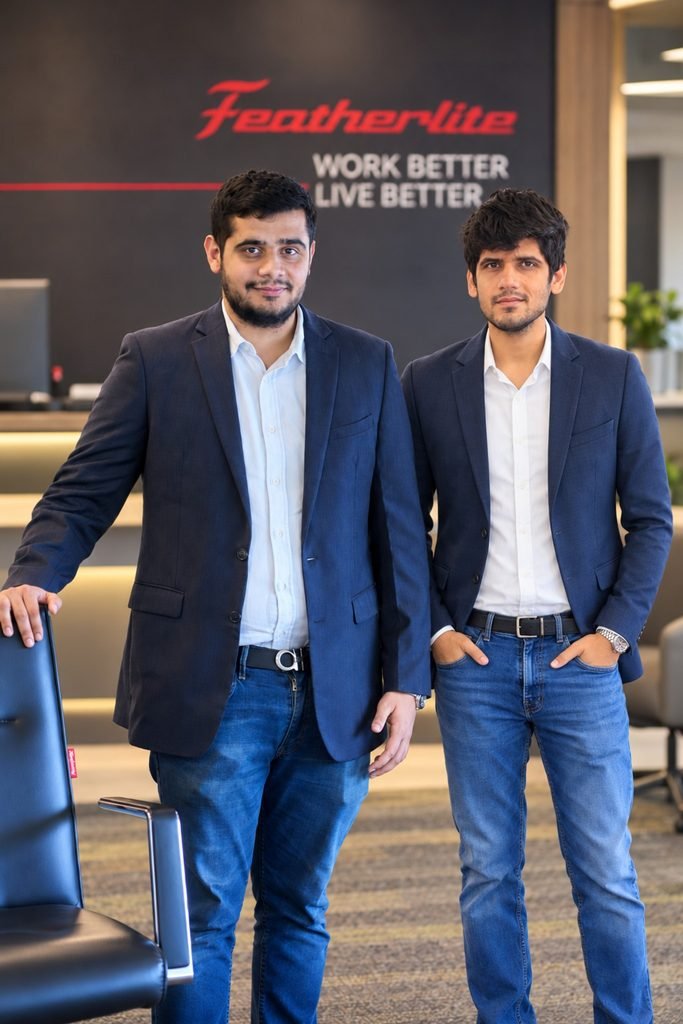
With a legacy spanning six decades, Featherlite Furniture has grown from a pioneer in lightweight aluminum products into one of India’s largest workplace solutions providers. In an exclusive interaction with Realty&More, Arune Chellaram and Kiran Chellaram, Executive Directors at Featherlite Furniture, share insights into the company’s evolution, the post-pandemic shifts in office design, the impact of Global Capability Centers (GCCs), and their strategic roadmap for smart furniture and sustainable manufacturing.
The Journey & Operations
Ronit Sabharwal: Featherlite has been a part of India’s furniture industry since 1965, evolving from aluminum furniture to a large-scale workplace solutions company. What were the biggest turning points in this six-decade journey?
Arune Chellaram: Six decades is a long time, so there have been several major pivots. In the early 1960s, my grandfather went to the U.S. on a Rotary exchange trip and saw folding aluminum garden furniture. He realized this didn’t exist at scale in India, which was primarily driven by local carpentry and cottage industries. In 1965, along with his brother, he set up Featherlite to manufacture lightweight aluminum garden furniture- hence the name.
Through the 1970s and 1980s, the company experimented with loungers, recliners, and early office products. By the 1990s, as the IT boom began in India, my father and his two brothers joined the business, and the team recognized that the IT sector was the future. We pivoted sharply toward office solutions, starting with chairs. By the early 2000s, we expanded into modular workstations and desks, establishing a dedicated manufacturing plant in 2006. While commercial offices remained our core focus for years, the last three to four years have seen us build a major new vertical in educational furniture.
Ronit Sabharwal: Featherlite has manufactured over 10 million chairs, installed more than 2 million workstations, and fitted out over 80 million square feet of space. What capabilities have been most critical to building this scale while maintaining consistency?
Arune Chellaram: We invest heavily in both our manufacturing infrastructure and our people. Over the past three years, we expanded our production footprint from 3 lakh square feet to 6.50 lakh square feet. We introduced extensive automation alongside workforce upskilling, ensuring we retained our core team throughout the expansion. Additionally, our design methodology relies on “Design for Manufacturing”- ensuring every product is built for quality, scalability, and sustainability. When COVID hit and remote work normalized sofa and bed settings, offices had to transform into destinations where people actually wanted to return. We adapted our line to support varied working styles, including focus zones, collaborative hubs, and breakout spaces.
Ronit Sabharwal: You manufacture over 75,000 chairs every month while corporate clients often demand customized solutions. How do you balance mass production efficiency with custom orders?
Arune Chellaram: It isn’t easy, but our strength lies in modularity. We design our broad portfolio of components like “Lego blocks” that can connect seamlessly in various configurations. This component standardization allows us to offer extensive customization while keeping the production line efficient. We also invest in adaptable machinery that accepts rapid reconfigurations on the shop floor.
Workspace Trends & GCC Dynamics
Ronit Sabharwal: With over 100,000 corporate clients across technology, GCCs, BFSI, and consulting, what key structural shifts are you seeing in workspace design?
Kiran Chellaram: To understand today’s office, you have to look at its evolutionary phases:
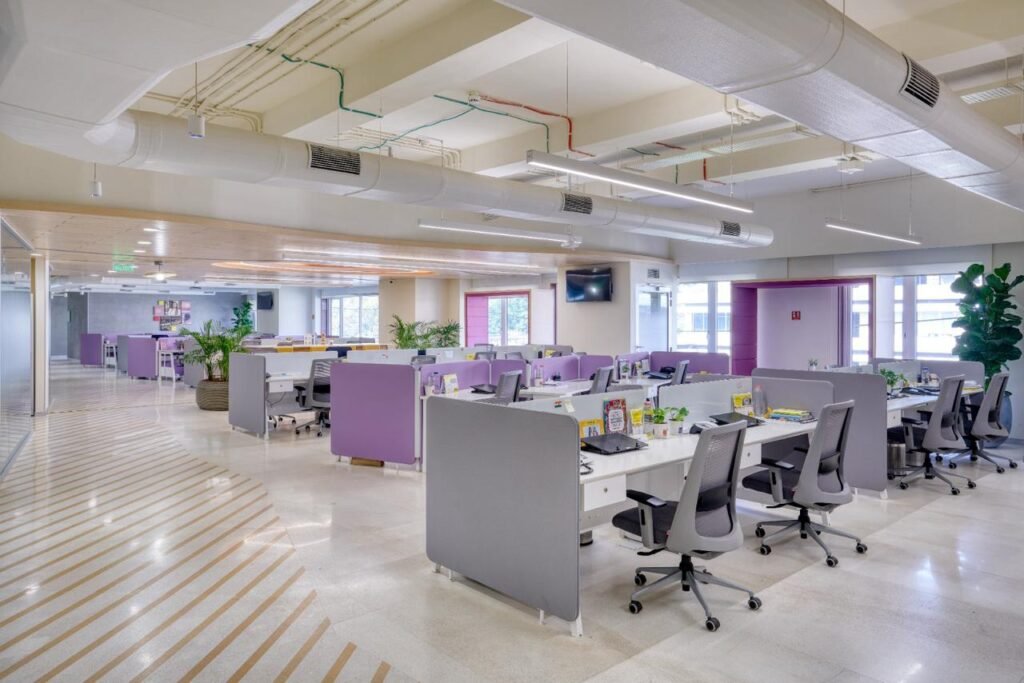
● 1990s–2000s (Siloed Cubicles): Offices were dominated by high cubicle walls. Employees worked in silos without distractions, but it lacked collaboration and teamwork.
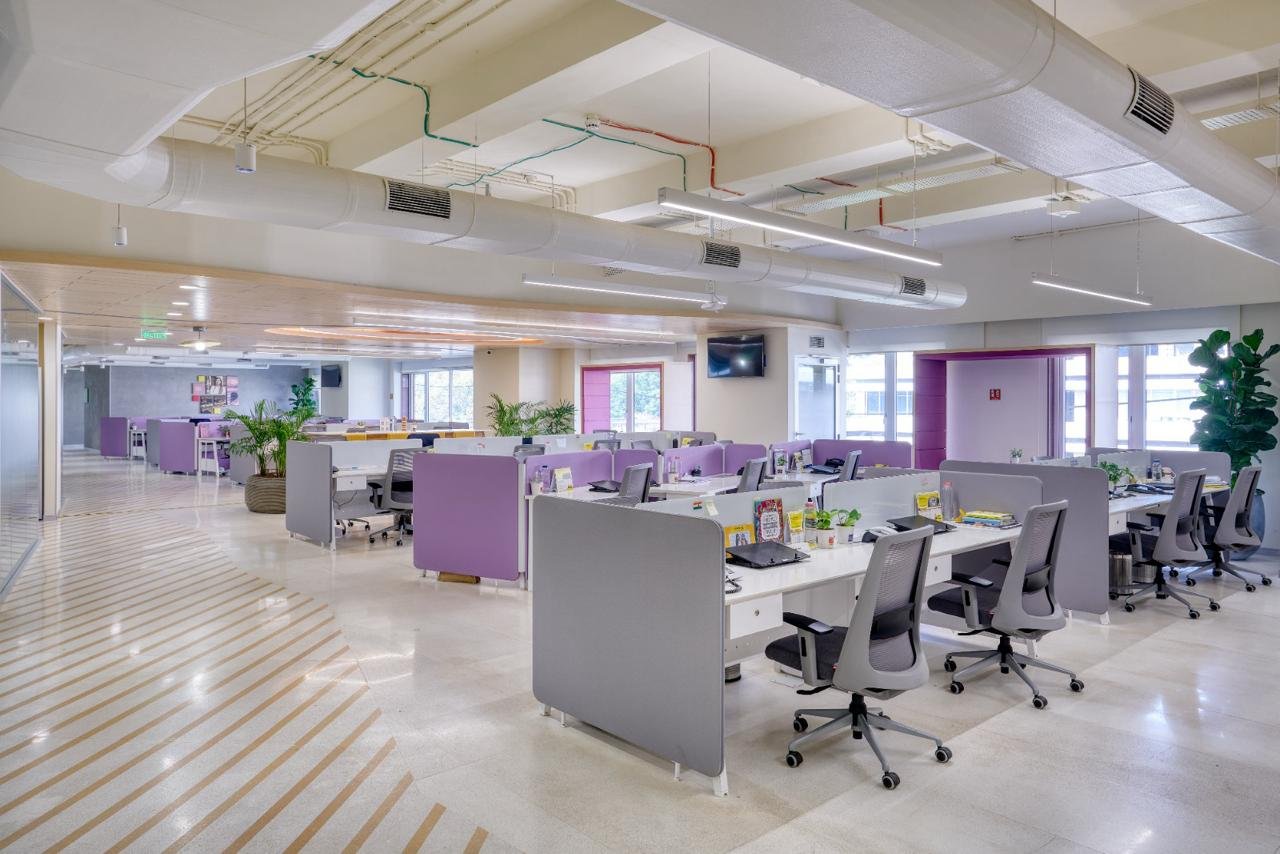
● Mid-2000s to Pre-COVID (Open Floor Plans): Cubicle walls were torn down to encourage team interaction. However, this introduced a massive new problem: acoustic noise and constant distraction.
● Post-COVID to Present (Acoustic & Adaptable Spaces): Returning employees realized they were often more productive at home due to fewer office distractions. Consequently, demand surged for acoustic balance.
To address this, we launched our hu series, which incorporates acoustic paneling systems directly into furniture elements rather than just relying on wall treatments. We also introduced self-contained glass pods, which eliminate the need for permanent drywall meeting rooms.
These pods optimize real estate by providing compact, plug-and-play spaces for short, multi-person meetings.
Another major trend is employee health and movement. With sitting being labeled “the new smoking,” we see rising demand for height-adjustable desks, cycle-integrated work tables, and dynamic “hot zones” where employees alternate between focus desks, meeting arenas, and collaborative lounges throughout the day.
Ronit Sabharwal: Global Capability Centers (GCCs) are expanding rapidly across India. How does their presence impact the workplace solutions market?
Kiran Chellaram: GCCs- set up by multinational entities like Target or Walmart to run global operations- are driving significant commercial leasing demand. They prioritize high-spec, modern commercial spaces.
While foreign MNCs often enter with global architectural mandates, local regulations such as Bureau of Indian Standards (BIS) norms have increasingly incentivized sourcing “Made in India” products. This regulatory environment helps Indian manufacturers compete effectively against imports when GCCs fit out large-scale facilities.
Ronit Sabharwal: What factors actually convince employees to return to physical offices today?
Kiran Chellaram: Human beings are inherently social. While work-from-home offers convenience, long-term isolation leads to fatigue and reduced creative collaboration. The primary draw back to the office is face-to-face interaction and access to specialized environments that a home setup cannot offer- such as amphitheater-style arena seating, acoustic pods, and collaborative hot-desking zones. The main friction point remains the daily commute, so the physical office must offer an engaging, superior working experience to justify the travel.
Smart Furniture, Verticals & Sustainability
Ronit Sabharwal: How is commercial real estate planning becoming interconnected with furniture design, and where is the market heading over the next five years?
Arune Chellaram: Furniture is no longer an afterthought added at the end of a real estate transaction; spaces are planned around how people sit and interact. Traditional fixed meeting rooms require dedicated HVAC, lighting, and rigid walls, making future space reconfigurations expensive and rigid. Modular pods and flexible seating allow real estate to adapt quickly without structural overhaul.
Kiran Chellaram: Looking ahead, the biggest shift will be Smart Furniture integrated with IoT sensors and AI tracking. Building owners and facility managers need to monitor real estate utilization- such as tracking occupancy rates of an 8-person meeting room to see if it is routinely underutilized by just two people. Data from smart furniture allows companies to sweat their real estate assets efficiently and reconfigure layouts based on actual usage patterns.
Beyond offices, we are expanding into:
● Education: Moving away from unorganized, carpenter-led furniture to modular systems. Products like our Xenon chair allow 360-degree rotation to foster peer-to-peer learning and include backbenchers in classroom discussions.
● Healthcare & Hospitality: Applying our manufacturing capabilities to specialized hospital furniture, co-living setups, and hotels.
Ronit Sabharwal: What steps is Featherlite taking toward sustainability and corporate social responsibility?
Arune Chellaram: Sustainability is core to our operations. We have been steadily reducing our operational emissions and increasing our reliance on renewable energy, while working towards our broader carbon-reduction and net-zero goals. Our manufacturing operations are increasingly supported by green power, backed by 5.6 megawatts of solar generation and offshore wind investments within the Featherlite Group.
We also practise a cradle-to-cradle approach. In one instance, when a corporate client was replacing its old workstations, we took back the decommissioned furniture and re-engineered the materials into school desks for underprivileged children. This helped extend the life of the materials, reduce landfill waste and support the client’s CSR initiatives.
On the social side, we partner with the National Association for the Blind and employ 11 visually impaired individuals on our chair assembly lines. Women also constitute up to 30% of the workforce across specific manufacturing lines.