Interviews
Real Estate Not About Selling Flats, It’s About Selling Dreams: Prateek Group CMD Prashant Tiwari
Noida, February 1, 2026
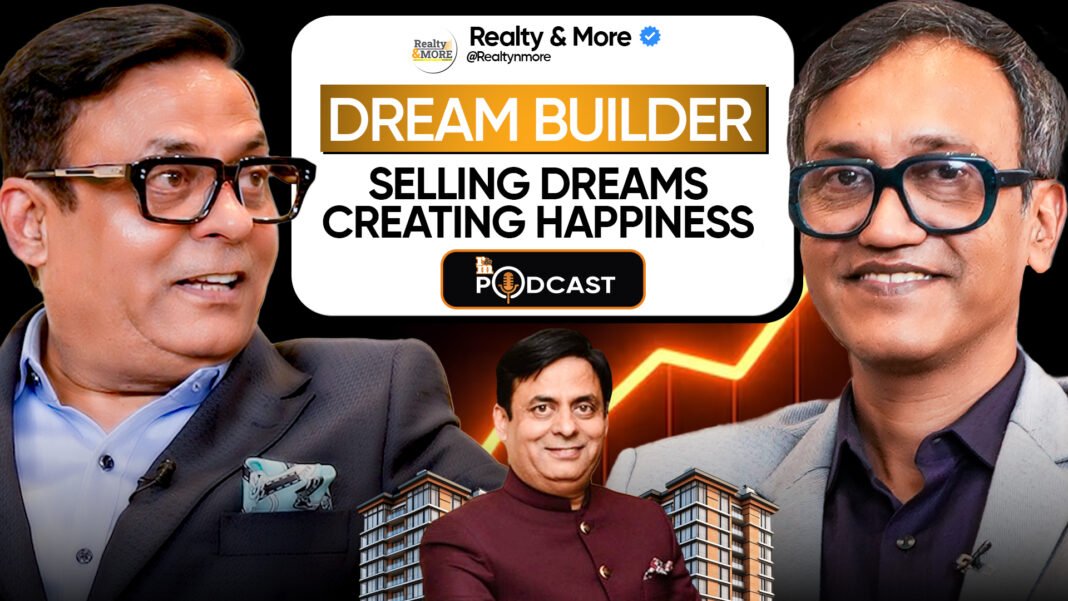
From a seasoned civil engineer in government service to the visionary founder of Prateek Group, Prashant Tiwari’s journey is a masterclass in calculated risk and unwavering grit. After two decades of overseeing regional development with the Uttar Pradesh Vikas Pradhikaran, Tiwari traded the ultimate security of a government post for the volatile world of real estate in 2005. His transition wasn’t just a career shift; it was a mission to bridge the gap between technical excellence and the emotional gravity of homeownership.
In an insightful interview with Realty & More Editor Palash Roy, the Prateek Group CMD reflects on the early days of personal door-to-door sales and the daunting task of building a brand from scratch against established giants. He discusses navigating tectonic industry shifts while maintaining a “customer-first” philosophy.
Excerpts:
You started Prateek Group from scratch. What challenges did you face in the beginning, and what challenges do you see today?
Whenever someone starts something new, challenges are inevitable. It’s our duty to fight through them and achieve success.
I graduated in civil engineering in 1986 from Motilal Nehru Regional Engineering College, Allahabad. At that time, civil engineering was the most sought-after branch—roads, bridges, visible infrastructure projects made civil engineers highly respected. Coming from a middle-class family, my initial plan was to secure a government job.
Soon after graduation, I joined Uttar Pradesh Vikas Pradhikaran (Development Authority). I worked in Ghaziabad, Meerut, and Hapur for nearly 20 years. Back then, private developers were rare; housing was largely built by government authorities. I supervised construction of multi-storey buildings in Kaushambi in the late 1980s and later worked on Indirapuram, which was then farmland. I learned everything—from surveying land, supervising concrete work, verifying contractors’ bills, to handing over flats to allottees.
By the mid-1990s, I moved into the planning department, approving layouts and ensuring compliance with by-laws. Over two decades, I gained deep knowledge of both construction and planning. But by 2005, I felt unsatisfied. I wanted to do more, to create something of my own. So, I resigned and founded Prateek Group on 5th September 2005.
Leaving a secure government job for the uncertainties of real estate was a big risk.
Absolutely. A government engineering job is very secure—no one wants to leave it. But I felt a hunger inside me. I had learned construction and planning thoroughly, and I saw private developers succeeding without technical backgrounds. I thought, “If they can do it, why can’t I?”
The only missing piece was capital. Fortunately, at that time the UP government allowed employees to take unpaid leave for three years to try business ventures. I used that window, but within a year I formally resigned.
My first project was a small building in Ramprastha. Then came our first multi-storey project, Prateek Royal Estate, in Crossing Republic township. Competing against established developers like Supertech, Mahagun, and Gaur was tough. Convincing buyers to trust a new name was the biggest challenge.
I remember sitting late at night in the sales office, personally meeting customers. One family booked after I explained everything myself. They asked, “Will you still meet us personally five or ten years later?” I promised I would—and I still maintain personal relationships with many early buyers. That personal touch built trust.
Real estate is not just about selling flats; it’s about selling dreams. Whether someone buys a INR 5 lakh flat or a INR 100 crore villa, the emotions are the same—it’s their home. Buyers imagine their children studying there, their family cooking in the kitchen, their life unfolding in that space.
We developers don’t sell houses; we sell the dream of a home. Brochures are essentially promises to turn those dreams into reality. That emotional connection makes this business unique.
Did you face moments of doubt or major problems?
Of course. In Crossing Republic, we had no credentials. Convincing buyers was extremely difficult. But through personal involvement, we built trust and delivered.
Later projects included Prateek Fedora, Laurel, Wisteria, Stylome, and Edifice—each raising our profile. Our 40-acre township in Siddharth Vihar was a huge undertaking, with 4,500 flats. Delivering during demonetization, GST rollout, RERA implementation, and then COVID was extremely challenging.
During COVID, I promised lenders that Prateek Group would be the first in NCR to deliver after the pandemic. And we did—handing over thousands of homes in 2021. Today, 4,000 families live happily in Siddharth Vihar. That satisfaction—seeing people respect you because you fulfilled their dreams—is priceless.
How do you differentiate Prateek from other brands?
Our philosophy is simple: customer first. We remind every employee—whether in engineering, sales, or CRM—to put themselves in the buyer’s shoes. Deliver quality construction, honor commitments, resolve queries sincerely.
Mistakes may happen, but we correct them. The key is never to let the customer’s dream break. When a building is completed and families move in, the joy is immense. That philosophy runs through the company.
What changes have you seen in the industry over the past 20 years?
India has seen massive migration from villages to towns and cities. In the 1990s, buying a home was difficult—home loans were scarce. Economic reforms introduced easy loans, making ownership possible for the middle class.
Earlier, people preferred independent houses. Now, gated communities are the norm—offering security, amenities, and convenience. Families want safe environments for children, with schools, parks, and facilities nearby.
Technology has also transformed construction. From wooden shuttering we moved to aluminum and Mivan shuttering, which speeds up construction and strengthens buildings. Our Edifice project in Noida was among the first in NCR to use Mivan technology. Now AI and digital tools are entering design and planning. Every new project is better than the last.
You recently launched Grand Begonia. How do you see the township concept evolving?
Townships are not just a trend; they are a necessity. By-laws require facilities like police stations, schools, and hospitals once population crosses certain thresholds. A township provides all these within one area, making life convenient.
Our Siddharth Vihar township, launched in 2016, delivered 4,500 flats with all amenities, including EWS and LIG housing as per norms. Recently, we launched Prateek Grand Begonia there, offering high-end flats priced between INR 1.5 crore and INR 3 crore. The location is excellent—close to Akshardham, metro connectivity, and within 45 minutes of Delhi airport.
Developers today focus more on luxury than affordable housing.
True. Prices have risen sharply, pushing mid-segment buyers out. For example, flats that cost INR 50 lakh a few years ago now cost INR 1.5 crore.
Our definition of luxury is different. Luxury is not just a bigger flat—it’s about what lies outside: fast lifts, landscaped greenery, pollution control, club facilities, swimming pools, impressive lobbies. That’s what enhances lifestyle.
With Grand Begonia, we are catering to the mid-segment, offering flats from INR 1.5 to INR 3 crore. At the same time, we build ultra-luxury projects like Prateek Canary in Noida, priced up to INR 10 crore. We aim to serve all segments.
Prices in NCR have risen sharply in the past two years. Is this sustainable?
Noida was underpriced for a decade compared to Gurgaon, despite better infrastructure. Now Noida is getting its due. Rates have reached fair levels.
Of course, if prices rise beyond a limit, buyer volumes will shrink. That’s why we design projects carefully, keeping affordability in mind.
At Prateek Group, we don’t artificially raise prices. Market demand drives rates. But we guarantee that when we launch a project, by the time possession is given, its value will have multiplied—because we know the quality we deliver.

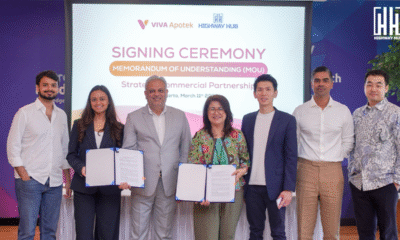

Highway Hub Signs MoU With Viva Apotek to Develop Retail Network
Highway Hub, a venture by the Pragati Group, has signed an MoU to form a Joint Venture with Viva Apotek...


How Technology is Changing Real Estate
A complete, human-style deep dive into the future of property, investment, and living Introduction: A Digital Revolution in Real Estate...
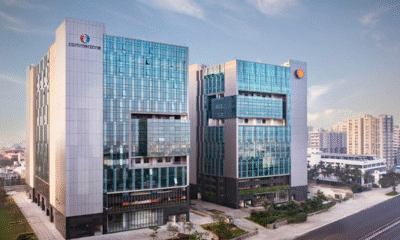

Mindspace REIT Expands Chennai Footprint with ₹2,541 Crore Acquisition of Commerzone Pallikaranai
Mumbai, April 2, 2026: Mindspace Business Parks REIT has announced a major expansion of its southern India footprint with the...


Abhee Ventures Brings a Scotland-Inspired Living Concept to Bengaluru
Bengaluru: Abhee Ventures is preparing to bring a residential development in Bengaluru,inspired by the enduring architectural charm and pastoral serenity...
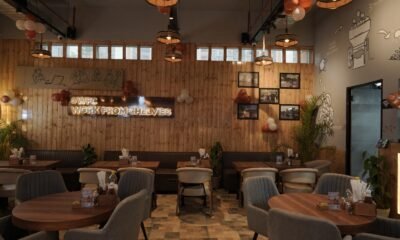

Chelvies Coffee Company Opens at Spectrum@Metro, Noida
Noida, April 3, 2026: Strengthening its vibrant retail and F&B mix, Spectrum@Metro haswelcomed the launch of Chelvies Coffee Company, a...


Record Sales, Production Propel SAIL’s Strongest-ever Performance in FY2025-26
New Delhi, April 2, 2026: The largest steelmaking public sector company, SteelAuthority of India Limited (SAIL), has achieved its highest-ever...
-
 Guest Column4 weeks ago
Retail Trends to Watch Out for in 2026
-

 News3 weeks ago
FractoProp Receives SEBI Registration for Ridhama Real Estate Fund
-
News1 week ago
How Noida International Airport Will Impact Property Prices
-
News5 days ago
Noida International Airport Inauguration Sparks New Real Estate Boom For NCR
-
News2 weeks ago
Rise of Airport-Linked Real Estate: Opportunities Emerging Around Jewar
-
News3 weeks ago
Enviro Infra Engineers Secures ₹411 Crore Bihar Sewerage Project Under AMRUT 2.0
-
News3 weeks ago
Greenlands Global Private Limited Appointed as Managing Partner for Big FM Realty’s ₹1,200 Crore Mixed-Use Development
-

 News3 weeks ago
India Maintains Competitive Edge as Asia-Pacific Office Fit-Out Hub, Reports Knight Frank