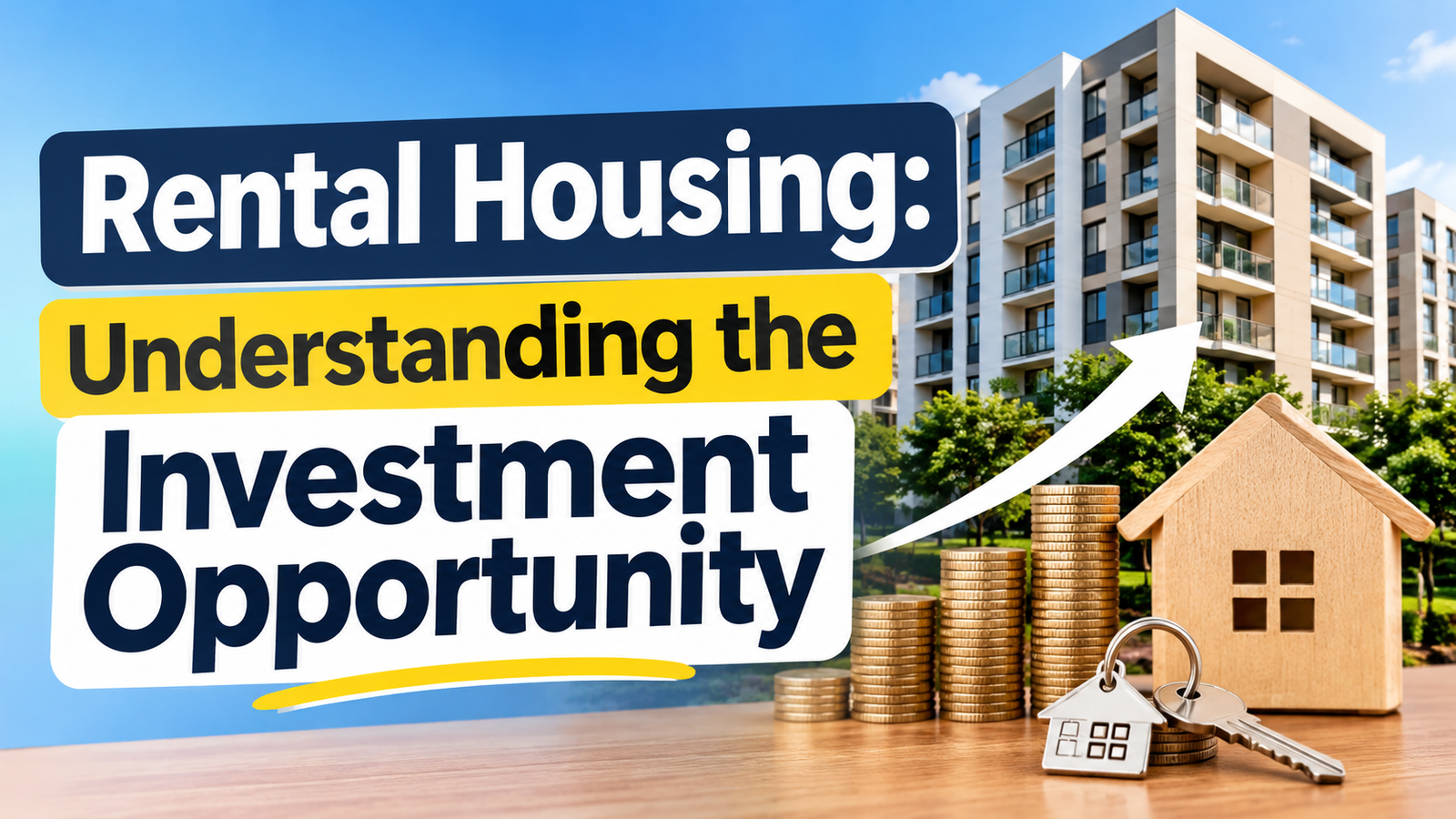
Rental Housing: Understanding the Investment Opportunity
India’s real estate market has traditionally been driven by homeownership, with residential property viewed as a long-term asset and a symbol of financial security. However, changing lifestyles, urban migration, rising property prices and evolving housing preferences are gradually reshaping the residential real estate landscape. Rental housing is emerging as an important segment, offering opportunities for both property investors and developers.
With an increasing number of professionals, students, young couples and migrant workers seeking flexible accommodation in urban centres, the demand for rental housing continues to create opportunities across India’s major cities. For investors, this segment offers the potential to generate regular rental income while benefiting from long-term property appreciation.
Understanding the dynamics of rental housing, its investment potential and associated risks is essential before entering this market.
What Is Rental Housing?
Rental housing refers to residential properties that are leased to individuals or families in exchange for periodic rental payments. These properties may include apartments, independent houses, studio units, co-living spaces and purpose-built rental developments.
Unlike traditional homebuyers, tenants generally prioritise affordability, accessibility, connectivity and convenience over long-term ownership. This creates demand for housing options across different price segments and locations.
Rental housing also includes professionally managed accommodation, where property owners or operators provide furnished homes, maintenance services and other facilities to tenants. Such models are gaining relevance in urban markets where convenience and flexibility influence housing decisions.
Why Is Rental Housing Gaining Importance in India?
Several economic and demographic factors are contributing to the growing relevance of rental housing in India.
1. Increasing Urbanisation
India’s expanding urban population is creating sustained demand for residential accommodation. Employment opportunities in cities such as Delhi-NCR, Mumbai, Bengaluru, Hyderabad, Pune and Chennai attract professionals from different parts of the country.
Many people relocating for work prefer renting a home rather than purchasing property immediately. This creates a consistent tenant base, particularly in locations close to employment hubs, business districts and educational institutions.
2. Changing Lifestyle Preferences
Younger professionals and working couples increasingly value flexibility when choosing accommodation. Career mobility, changing job locations and evolving family structures have made renting a practical option for many households.
Rental housing allows individuals to live closer to workplaces and access better residential facilities without making a substantial upfront investment in property ownership.
3. Rising Property Prices
In several major Indian cities, residential property prices and associated ownership costs can make purchasing a home financially challenging, particularly for first-time buyers.
Renting provides an alternative by allowing households to access residential accommodation without committing a large amount of capital towards a down payment, registration and home loan repayments.
This affordability gap can support rental demand across established residential markets as well as emerging urban locations.
4. Growth of Education and Employment Hubs
The expansion of IT parks, corporate offices, industrial corridors, universities and commercial centres is influencing rental housing demand.
Areas surrounding these developments often attract working professionals, students and temporary residents. Investors who identify locations with strong employment and educational ecosystems may benefit from a wider pool of potential tenants.
Rental Housing as an Investment Opportunity
Rental housing offers investors an opportunity to generate recurring income from residential real estate. Unlike properties purchased solely for capital appreciation, rental assets can provide periodic cash flow while remaining part of a long-term investment portfolio.
However, the financial attractiveness of a rental property depends on several factors, including its purchase price, rental demand, location, maintenance expenses and vacancy levels.
1. Regular Rental Income
The most direct financial benefit of rental housing is the possibility of generating monthly income.
Investors purchase residential properties and lease them to tenants under agreed rental terms. This income can help offset property-related expenses, including maintenance charges, property taxes and loan repayments.
Properties located near employment centres, metro stations, educational institutions and commercial hubs may have better tenant accessibility, although actual rental performance varies by location and property type.
2. Long-Term Capital Appreciation
Rental income is not the only potential financial benefit. Residential properties may also appreciate in value over time, depending on infrastructure development, economic activity, demand and overall market conditions.
Investors who select properties in developing residential corridors may benefit from both rental income and potential capital appreciation. However, appreciation is not guaranteed and should not be assumed when evaluating investment returns.
3. Portfolio Diversification
Rental properties can form part of a diversified investment portfolio. Investors who already hold financial assets such as stocks, bonds and mutual funds may consider residential real estate as an additional asset class.
However, property investment requires significant capital and is relatively illiquid compared with many financial instruments. Investors should evaluate their financial capacity before committing to a rental property.
4. Growing Interest in Managed Rental Housing
The rental housing market is gradually moving beyond traditional landlord-tenant arrangements.
Professionally managed rental accommodation, co-living developments and furnished apartments are creating additional possibilities for property owners and real estate operators.
These models can offer tenants standardised services, maintenance support and flexible accommodation arrangements. For investors, professional management may help streamline property operations, although service charges and operating expenses need to be considered.
Key Factors to Consider Before Investing in Rental Property
A property’s investment potential cannot be determined by its purchase price or expected monthly rent alone. Investors need to evaluate the following factors before making a decision.
1. Location and Connectivity
Location remains one of the most important factors influencing rental demand.
Properties situated near metro stations, public transport networks, office complexes, hospitals, educational institutions and shopping centres may attract a larger tenant pool.
For example, residential locations across Delhi-NCR with access to established commercial hubs and expanding metro connectivity may offer rental opportunities. However, investors should assess the actual demand and rental levels of individual micro-markets rather than relying only on broader infrastructure announcements.
2. Rental Yield
Rental yield helps investors understand the income generated by a property relative to its purchase price.
It is generally calculated as:
Gross Rental Yield = (Annual Rental Income ÷ Property Purchase Price) × 100
For example, consider a residential property purchased for Rs 80 lakh that generates a monthly rent of Rs 25,000.
- Annual rental income: Rs 3 lakh
- Property purchase price: Rs 80 lakh
- Gross rental yield: 3.75%
This calculation provides an initial understanding of the property’s rental performance.
However, gross rental yield does not account for maintenance charges, property taxes, insurance, vacancy periods, brokerage, repairs or financing costs. Investors should also calculate net rental yield to understand the actual income generated.
3. Tenant Demand
Investors should identify the primary tenant segment before purchasing a property.
A compact furnished apartment near an IT park may attract young professionals, while a larger residential unit in a family-oriented neighbourhood may appeal to households seeking long-term accommodation.
Understanding the target tenant’s preferences can help investors select the appropriate property configuration, furnishing level and location.
4. Property Maintenance and Management
Maintaining a rental property involves regular expenses and responsibilities. These may include repairs, painting, plumbing, electrical maintenance, society charges and tenant-related services.
Investors who live in another city may also need to engage property management agencies to handle tenant communication, rent collection and maintenance.
These expenses should be included in the overall investment calculation.
5. Legal Documentation and Compliance
A well-documented rental arrangement is essential for protecting both property owners and tenants.
Investors should verify property ownership, applicable approvals, society regulations and relevant local requirements. Rental agreements should clearly specify the lease duration, rent, security deposit, maintenance responsibilities, notice period and other applicable conditions.
Registration and stamp duty requirements should be checked under the relevant state laws.
Popular Rental Housing Investment Markets in India
India’s major employment and education centres continue to create opportunities for residential rental housing. However, investment prospects vary across cities and micro-markets.
Delhi-NCR: Delhi, Gurugram, Noida and Greater Noida attract professionals working in corporate offices, IT parks, industrial clusters and commercial developments. Metro connectivity and access to employment hubs are important considerations for rental investors.
Bengaluru: The city’s technology and startup ecosystem supports demand for rental accommodation, particularly around major IT corridors and business districts.
Mumbai Metropolitan Region: Mumbai and its surrounding areas have diverse rental markets catering to corporate professionals, students and families. Connectivity, proximity to business districts and housing affordability influence tenant preferences.
Hyderabad: The growth of IT, pharmaceutical and business sectors has supported residential demand in areas surrounding major employment hubs.
Pune: Its IT parks, manufacturing facilities and educational institutions contribute to demand for rental accommodation among professionals and students.
While these cities offer different investment opportunities, investors should compare property prices, prevailing rents, vacancy levels and future supply before selecting a location.
Challenges Associated with Rental Housing Investment
Despite its potential, rental housing is not a risk-free investment. Property owners need to account for several operational and financial challenges.
1. Vacancy Risk: A property may remain unoccupied between tenants, resulting in a temporary loss of rental income.
2. Maintenance Expenses: Unexpected repairs, renovation requirements and regular upkeep can reduce the overall returns.
3. Tenant Management: Delayed payments, disputes and tenant turnover may create additional responsibilities for property owners.
4. Market Fluctuations: Rental demand and property values can change depending on local economic conditions, employment trends and housing supply.
5. Limited Liquidity: Selling a residential property can take considerable time, making it less suitable for investors who may need immediate access to their capital.
6. Regulatory Considerations: Rental agreements, tenancy rules, taxation and property-related compliance requirements vary and must be understood before investing.
A realistic assessment of these challenges can help investors avoid overestimating potential returns.
Traditional Rental Housing vs Managed Rental Housing
The rental housing sector offers different investment and operational models.
Traditional rental housing involves property owners leasing residential units directly to tenants. Owners generally manage tenant selection, agreements, rent collection and maintenance themselves or through brokers.
Managed rental housing involves professional operators overseeing property-related services. Depending on the model, these services may include furnishing, tenant management, maintenance and common facilities.
Co-living developments represent another segment, particularly for students and working professionals who prefer shared accommodation and access to common amenities.
Each model has different cost structures, management requirements and income potential. Investors should assess the operating expenses and contractual arrangements before choosing a model.
The Role of Technology in the Rental Housing Market
Technology is gradually changing how rental properties are marketed, managed and occupied.
Digital property platforms allow landlords and tenants to discover available homes, compare rents and connect with potential occupants. Online rent payments, digital agreements and tenant verification tools are also simplifying several aspects of rental transactions.
Property management technology can help owners monitor maintenance requests, rental payments and lease renewals.
As the sector becomes more organised, technology-driven solutions may improve transparency and operational efficiency across the rental housing ecosystem.
What Is the Future of Rental Housing in India?
The future of rental housing will be influenced by urbanisation, employment mobility, affordability and changing residential preferences.
As India’s cities expand and new employment centres emerge, demand for accessible and well-maintained rental accommodation is likely to remain an important part of the residential real estate market.
The sector may also see greater participation from organised developers, institutional investors and professional property management companies. Purpose-built rental developments, co-living spaces and managed residential communities could contribute to the evolution of the market.
Policy initiatives that improve the availability and formalisation of rental accommodation may further support the sector. However, long-term growth will depend on affordability, tenant protection, regulatory clarity and the financial viability of rental housing projects.
For investors, the focus will increasingly need to shift towards selecting properties based on actual rental demand, sustainable yields and long-term asset quality rather than relying solely on expectations of property price appreciation.
Conclusion
Rental housing is emerging as an important investment segment within India’s evolving residential real estate market. Urban migration, changing lifestyles, employment opportunities and rising homeownership costs are contributing to the demand for flexible accommodation.
For property investors, rental housing offers the possibility of recurring income, portfolio diversification and long-term capital appreciation. However, successful investment requires careful evaluation of location, rental yield, tenant demand, maintenance costs and market conditions.
As the Indian real estate sector continues to evolve, rental housing could play a larger role in shaping the country’s residential property landscape, creating opportunities for both investors and organised real estate players.
Ultimately, the strength of a rental housing investment lies not just in owning a property, but in its ability to generate sustainable income and meet the changing accommodation needs of urban India.
Disclaimer
The information provided in this article is for educational and informational purposes only and should not be construed as financial, legal, tax, or real estate investment advice. The contents do not constitute an offer, solicitation, or recommendation to buy, sell, or lease any real estate property or financial asset.
Real estate investments, including rental properties, carry inherent financial and operational risks. Rental yields, capital appreciation, tenant occupancy rates, and market conditions are subject to change and cannot be guaranteed. Historical performance or market trends mentioned in this article are not indicative of future results.
Prospective investors and property buyers are strongly advised to conduct their own independent research, perform necessary due diligence, verify local market dynamics and legal compliances, and consult with qualified legal, tax, and financial advisors before making any investment decisions.
The publisher, author, and associated entities disclaim any liability for any direct, indirect, or consequential loss or damage suffered by any person relying on the information, estimates, or calculations contained within this article.