Tamil Nadu Accelerates Green Transformation as IGBC Signs MoUs With GCC and PWD
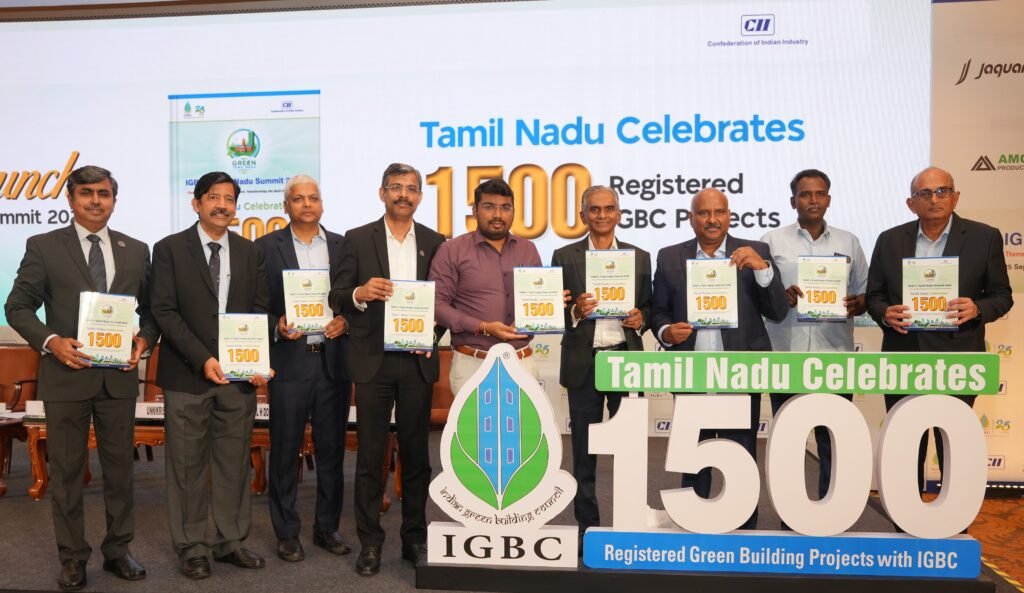
Chennai, September 25, 2026: The CII Indian Green Building Council (IGBC), a part of the Confederation of Indian Industry (CII), has strengthened its partnership with the Government of Tamil Nadu by signing Memorandums of Understanding (MoUs) with the Greater Chennai Corporation (GCC) and the Public Works Department (PWD) at the IGBC Green Tamil Nadu Summit 2026. The MoUs aim to advance sustainable infrastructure and support the state’s net-zero transition, while the summit marked the unveiling of 1,500 IGBC-rated projects across Tamil Nadu, IGBC said in a press release.
The agreement between GCC and IGBC establishes a framework for technical guidance, capacity building, green assessments, certification support, and knowledge sharing for public infrastructure in Chennai. Tamil Nadu currently leads in green building adoption with 1,509 IGBC-registered projects covering over 1.03 billion square feet and 670 certified projects spanning 338.61 million square feet. The portfolio includes 875 commercial, 271 residential, 166 industrial and logistics, 154 transit infrastructure, and 26 Net Zero projects.
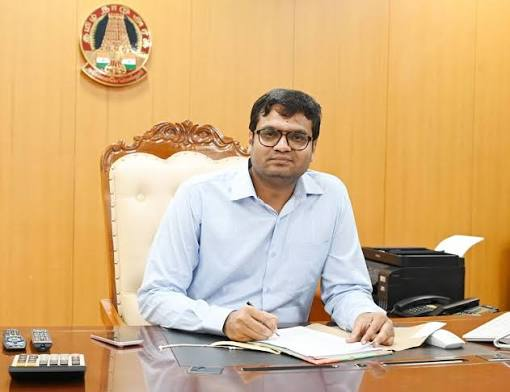
Speaking at the summit, S Saravanan, IAS, Joint Commissioner (Works), Greater Chennai Corporation, Govt. of Tamil Nadu, said, “Sustainability needs to be incorporated at the design stage. Whether we design a park, a road, a pathway, or a building, adopting sustainable principles at the design level is much easier than making modifications later, which can involve significant cost and challenges.”
Highlighting the state’s development record, K Mathimani, Joint Chief Engineer, PWD, Govt. of Tamil Nadu, said, “Tamil Nadu has always been a frontrunner, not only in economic development but also in social development. The State has taken many initiatives towards greening and sustainability, from rainwater harvesting at the policy level to increasing green cover, green schools, coastal and wetland conservation. But government agencies alone cannot make these initiatives successful. We need collaboration and cooperation from the private sector and other stakeholders to take sustainable development forward.”
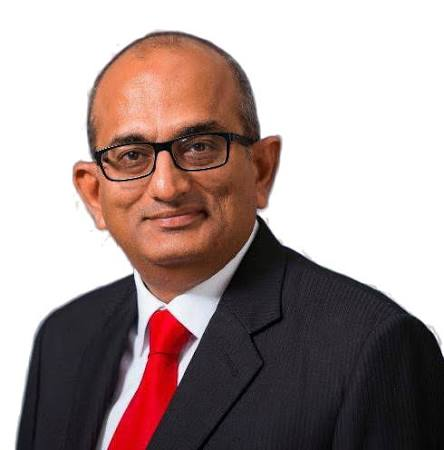
Underlining the broader regional focus, P. Ravichandran Purushothaman, Chairman, CII Southern Region, said, “Green Tamil Nadu is not limited to buildings; it must also address the state’s water and waste challenges. Chennai and Tamil Nadu have already set excellent examples through IGBC-certified government buildings, corporate facilities, and industrial establishments that have achieved significant savings in energy and water while enhancing the health and well-being of their occupants. The priority now is to create greater awareness, undertake appropriate audits, and ensure effective implementation. By replicating and scaling these successful practices across all sectors and among stakeholders throughout the state, Tamil Nadu can accelerate its green transformation. This transformation is not only environmental but also social.”
Focusing on resource efficiency, Unnikrishnan AR, National Vice Chairman, IGBC, and Managing Director, Saint-Gobain India Pvt. Ltd., said, “Tamil Nadu’s rapid urbanisation presents a significant opportunity to advance sustainable growth. Drawing on my personal and professional experience, I believe that both individuals and corporates have an important role to play in this transformation. By adopting responsible practices, using resources efficiently, and making sustainability an integral part of decision-making, each of us can contribute to a greener future.”
The summit convened policymakers, developers, engineers, and sustainability experts through panel sessions on green building design, industrial decarbonization, and net-zero roadmaps, concluding with the felicitation of IGBC Green Crusaders for their contributions to sustainable development.