Tourism Demand Expands Beyond Leisure and Heritage, Reports ASSOCHAM-CBRE
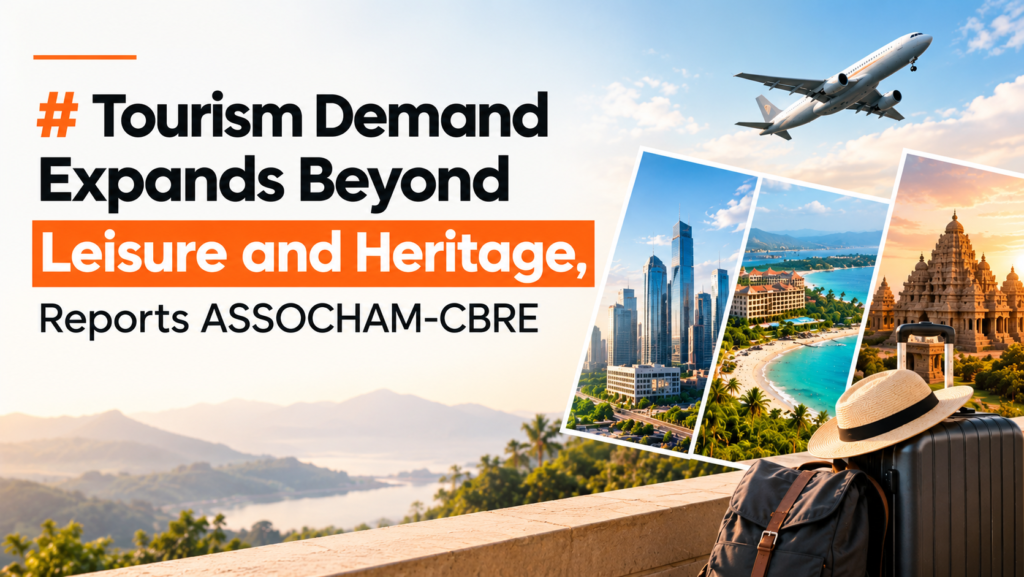
New Delhi, October 1, 2026: India’s tourism sector is being influenced by two simultaneous shifts: a connectivity build-out bringing destinations into wider circuits and a broadening of demand beyond leisure and heritage travel, according to CBRE South Asia Pvt. Ltd.’s latest report, “Reimagining Indian Tourism: Unlocking the Next Wave of Growth.” The report was released at the ASSOCHAM National Tourism Conclave in New Delhi by Gajendra Singh Shekhawat, Union Minister for Tourism and Culture, alongside Arvind Kumar Sharma, Haryana Minister for Co-operation, Jails, Elections, Heritage & Tourism, Saurabh Sanyal, Secretary General of ASSOCHAM, Anshuman Magazine, Chairman & CEO – India, South-East Asia, Middle East & Africa at CBRE, and Nirmal Kumar Minda, President of ASSOCHAM.
The report highlights that India’s expressway network, alongside high-speed rail, ropeways, and river cruises, now functions as key tourism corridors linking heritage, wildlife, and spiritual circuits like the Delhi-Mumbai Expressway and Samruddhi Mahamarg. Furthermore, travel demand has broadened into specialized segments, including spiritual, MICE, wellness, cruise, rural, and wildlife tourism. Across the organised hotel sector, occupancy rose to 64.1% in 2025 from 42.0% in 2021, with Average Daily Rate growth lifting Revenue Per Available Room above pre-pandemic levels.
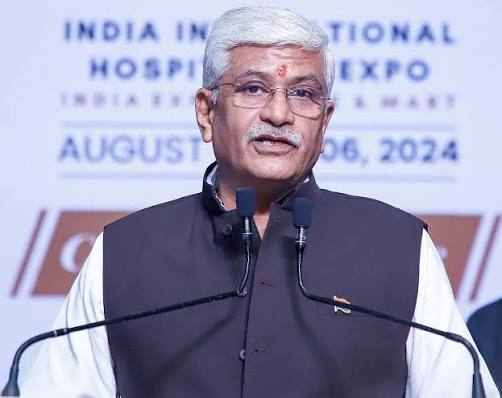
Gajendra Singh Shekhawat, Union Minister for Tourism and Culture, said, “Tourism is emerging as an important driver of economic growth and employment, with the potential to play a much larger role in India’s journey towards Viksit Bharat 2047. As the economy grows and connectivity improves through highways, airports, railways and new transport corridors, the demand for tourism and travel experiences will also expand significantly. This will require greater investment and stronger participation from the private sector.”
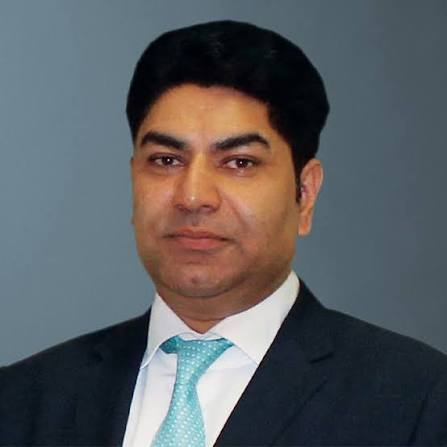
Anshuman Magazine, Chairman and CEO – India, South-East Asia, Middle East and Africa at CBRE, said, “Connectivity has done a lot of the heavy lifting. Expressways, new rail routes and regional airports have put destinations within reach that weren’t five years ago. The harder part sits at the destination itself — rooms, trained people, and the kind of assets each type of traveller actually needs.”

Nirmal K. Minda, President of ASSOCHAM, added, “India’s tourism sector is at a defining juncture, evolving beyond leisure into a powerful engine of economic growth, employment, investment and regional development. As we move towards Viksit Bharat 2047, we must build a tourism ecosystem that is globally competitive, inclusive and sustainable.”