News
Union Minister Tokhan Sahu Bats For Public Transport at NAREDCO’s Delhi Developers Meet 3.0

New Delhi, December 19, 2025: Amid concerns of worsening air quality in the national capital, Union Minister of State for Housing and Urban Affairs Tokhan Sahu said that public transport should be the primary mode of mobility for people residing in cities, rather than private vehicles.
Addressing the Delhi Developers Meet 3.0, organized by the Delhi Chapter of the National Real Estate Development Council (NAREDCO) with JLL as Knowledge Partner, the minister stressed on multi-modal transportation.
“We need a city where people can easily use public mobility rather than relying on private vehicles. We need to come up with ways to bring homes of people near their workplaces,” said the minister, emphasizing the need for enhancement of public transport and last-mile mobility.
Stressing on the need to take care of environmental concerns, the minister said that development doesn’t only mean economic growth, rather it also engulfs environment protection under its ambit.
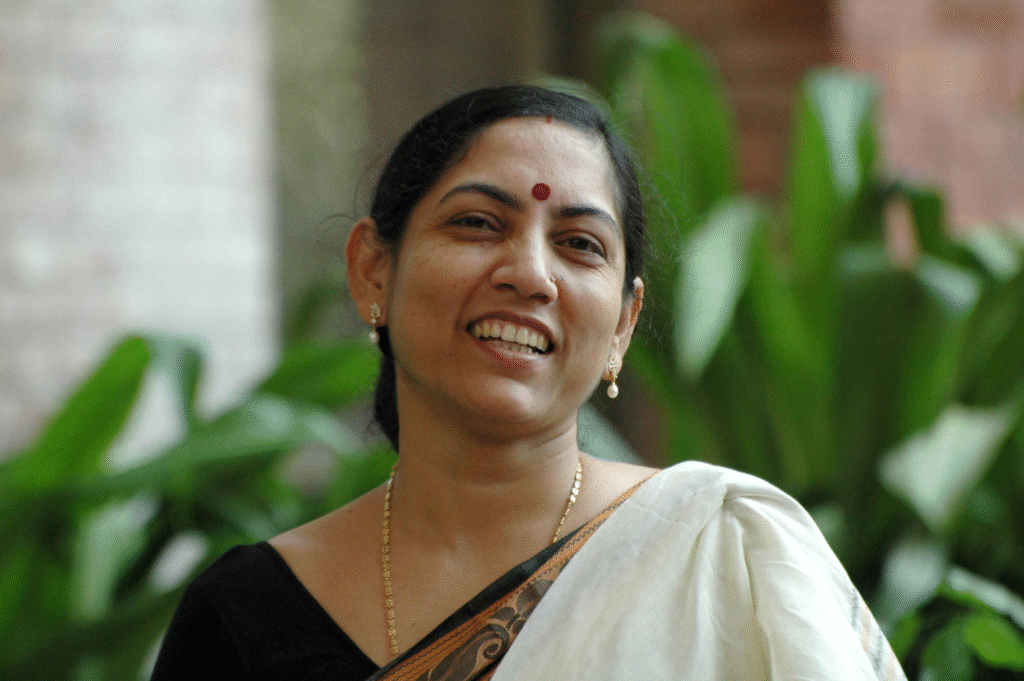
Addressing the seminar on ‘Sustainable Redevelopment in Delhi/TOD’, Dr. Debolina Kundu, Director at the National Institute of Urban Affairs (NIUA), said that enhancing first-mile and last-mile connectivity in cities would play a major role in the redevelopment of cities, including the national capital, and bring in ease of living for the residents.
The NIUA Director said that with the rapid growth rate, Delhi would emerge as the largest urban centre by 2035, surpassing Tokyo, the capital city of Japan.
Speaking on the need for sustainable redevelopment and transit-oriented development (TOD), she said: “It will facilitate cities as growth hubs, ease of doing business, ease of living, also facilitate creative redevelopment and promote affordable housing. I think it is very important to integrate various components of sustainable community for planning a holistic framework.”
TOD integrates land use and transport planning and aims to develop planned sustainable urban growth centers, having walkable and livable communes with high-density mixed land-use. Citizens have access to open green and public spaces, and at the same time transit facilities are efficiently utilized.
On the rapid growth of the national capital, the NIUA Director said that Delhi has been the fastest growing city in terms of built-up area in the country.
“Among the other metropolitan cities Delhi is obviously growing very rapidly in terms of its built-up area. If you look at Delhi, it is the fastest growing – 48.1 per cent compared to 30 per cent in Kolkata, 40 per cent in Chennai and around 16 per cent in Mumbai during 2000 to 2025. The built-up area growth has been extremely high,” she said.
Reshma Dudani, Sr. Executive Director (Engg.), NBCC (India) Ltd, said that for a city like Delhi, key challenges are the number of platforms engaged in municipal or development work and the divergence in policies. She said that there is a need for single-window clearance for projects, rather than multiple approvals, which would help in accelerated development of the city.

Addressing the event, Harsh Vardhan Bansal, President, NAREDCO Delhi, noted that the potential of Delhi in terms of creating business hubs and office spaces is yet to be harnessed adequately. He emphasized that with multiple authorities and overlapping jurisdictions, Delhi’s growth has often been constrained, and better coordination can unlock its true potential.
He also suggested that in a bid to encourage green buildings, the government can provide incentives, which would go a long way in allaying environmental concerns.
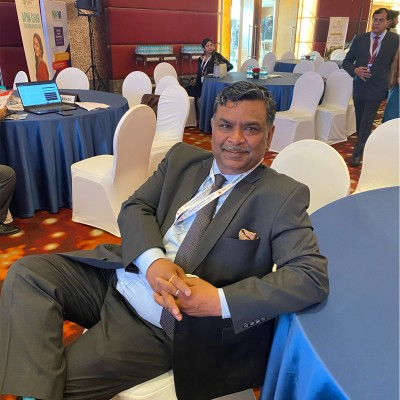
Commenting on affordable housing, Gaurav Jain, President Elect, NAREDCO Delhi, said, “The 20 per cent affordable housing provision is a good and necessary policy, but its success lies in timely implementation. Delhi is ready for redevelopment, and policies must be applied across all areas. The challenge is not policy making, but execution. With consistent implementation, Delhi can set a benchmark for inclusive urban growth.”
The seminar comes at a crucial time when the country is witnessing rapid growth and urbanization. India is urbanizing at a fast pace, with the urban population rising much faster than its total population. The level of urbanisation has increased from about 17 per cent in 1951 to over 31.6 per cent in 2011. The urban population in India, which is nearly 377 million, is projected to grow to 600 million by 2030.


Hyderabad to Become South Asia’s Most Integrated Medical Value Tourism Destination
Hyderabad, February 21, 2026: A roundtable aimed at positioning Telangana as a leading destination for structured and coordinated medical tourism...

Cushman & Wakefield Launches Model Designed to Quantify AI Momentum Across the Built Environment
New York, February 21, 2026: Cushman & Wakefield has announced the launch of its AI Impact Barometer, by Cushman &...


74 Storeys, ₹2800 Crore GDV: YM Infra, Ashwin Sheth Group Expand South Mumbai Portfolio
Mumbai, February 21, 2026: YM Infra, in strategic association with Ashwin Sheth Group, has announced the launch of One Marina,...


Superco Launches Community-Driven Coworking Centre Focused on Energy-Driven Productivity
Greater Noida, February 21, 2026: Superco has announced the launch of its community-driven coworking centre built around a simple idea:...

Sunteck Realty Strengthens Sustainability Credentials, Scores 78 in 2025 S&P Global ESG Assessment
Mumbai, February 20, 2026: Luxury real estate developer Sunteck Realty Limited has achieved a significant milestone in its sustainability journey...


Danube Properties Launches Exclusive 0.5% Monthly Payment Plan As Special Ramadan Offer
Dubai (United Arab Emirates), February 20, 2026: In celebration of the holy month of Ramadan, Danube Properties has unveiled an...
-
 News3 weeks ago
Mumbai’s Largest Trimandir Opens in Thane with Grand Three-Day Pran-Pratistha Ceremony
-
News3 weeks ago
Budget 2026: Real Estate Sector Awaits Real Reform, Targeted Relaxations For Boost
-
News3 weeks ago
Union Budget 2026: Infrastructure-Led Growth Sets Stage for Real Estate Expansion Beyond Metros
-
News4 weeks ago
Housing.com Expands Footprint to 15 Tier II Cities, Strengthening Presence in Emerging Residential Markets
-
News3 weeks ago
NCDRC Directs District Magistrate to Take Over Control of Much Delayed Greater Noida Project
-
News4 weeks ago
Luxury Housing in 2026: Experience, Exclusivity & Design-Led Living
-
News2 weeks ago
Jewar Airport ‘Ready’, Likely to Be Inaugurated by PM Modi By Late Next Month
-
News3 weeks ago
Budget 2026 Positions Tourism & Hospitality as Economic Multiplier, Not Support Sector