Why ‘Quality of Life’ Will Become the Biggest Luxury in Indian Real Estate
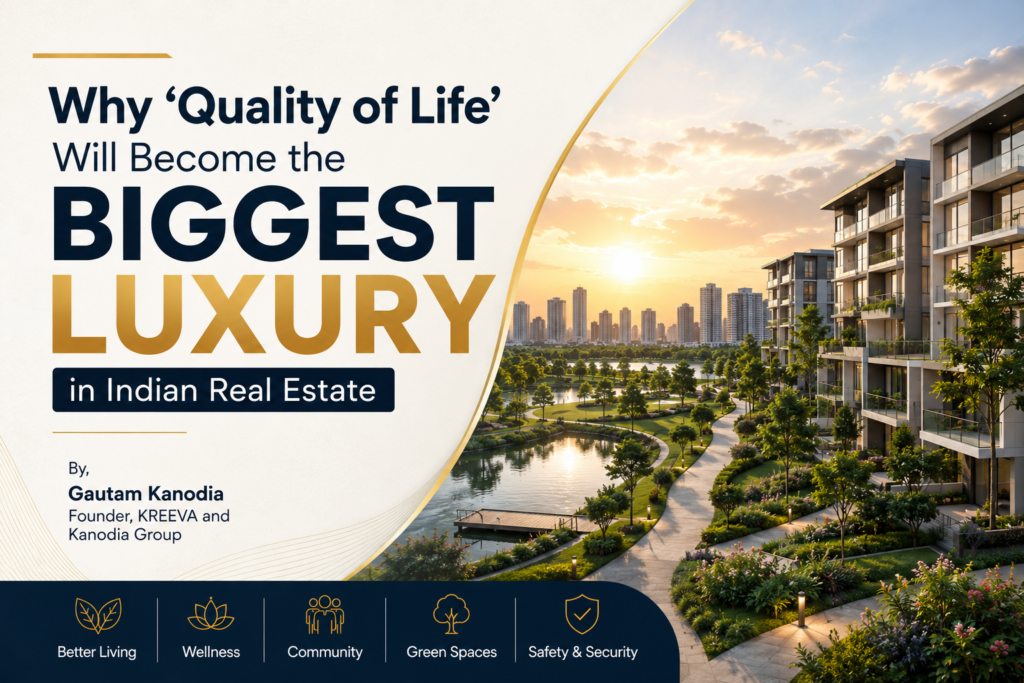
By, Gautam Kanodia, Founder, KREEVA and Kanodia Group
For a luxury homebuyer, some of the most valuable things cannot be bought inside the home: an easier morning, less time spent in traffic, a quieter evening, access to greenery, good healthcare nearby, and the ability to step away from the pace of the city without actually leaving it.
This is gradually changing what luxury means in Indian real estate. The residence remains important, but its value is increasingly being assessed alongside the environment in which it sits and the way that environment shapes everyday life.
The strength of the luxury housing market gives some context to this shift. According to the CBRE-ASSOCHAM joint report, luxury housing sales across the top seven Indian cities grew 85% year-on-year in the first six months of last year, with Delhi-NCR accounting for nearly 57% of sales. However, more than anything, the numbers also point to a buyer who is willing to spend significantly on housing, but expects the purchase to deliver more than a larger floor plate or a longer list of specifications.
CBRE’s India Residential Market Outlook 2026 identifies a strengthening ‘flight-to-quality’ across major cities, with larger homes, rising household incomes and sustained HNI and NRI interest supporting the high-end segment. It also highlights growing preference for professionally managed residential formats and branded residences. Gurugram illustrates this particularly well.
The scale of those homes makes one thing clear: space continues to matter. But at this level of housing, the question is increasingly what that space enables.
A large residence provides privacy. A well-planned project can extend that privacy beyond the apartment through lower density, landscaped areas, controlled access and carefully considered common spaces. Furthermore, a well-connected address can reduce the amount of time spent commuting. Proximity to healthcare, schools, workplaces, retail, dining, and leisure means more of the city is accessible without excessive travel. In Gurugram, this is one reason locations around established employment and lifestyle corridors continue to command attention. In South Delhi, the equation is different but equally relevant.
This gives established locations an advantage that cannot simply be recreated through amenities. In established neighbourhoods, the opportunity is not to create an entirely new ecosystem but to bring contemporary living into an existing one. Older residential developments can be replaced with larger and more efficiently planned homes, while residents continue to benefit from the location, connectivity and social infrastructure already around them. In that sense, new-age development can add significantly to the quality of life without requiring a move away from the city’s established neighbourhoods.
Gurugram presents another interpretation of the same shift. Luxury projects can plan the residence, landscape, amenities and community environment together from the beginning. That allows larger homes to be complemented by spaces for fitness, recreation, social interaction and everyday convenience.
This is also why professional management is becoming more relevant to the luxury housing proposition. A residence may be privately owned, but much of the living experience takes place outside it. The upkeep of common spaces, landscape, amenities and community infrastructure influences how the home feels over years, not just on the day of possession.
The definition of luxury is therefore becoming broader without necessarily becoming more complicated.
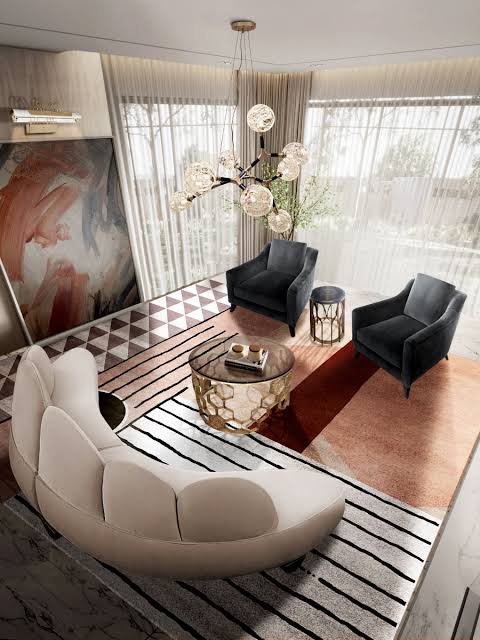
It can mean waking up to more open space. It can mean having a fitness facility downstairs instead of crossing a busy road to reach one. It can mean children having places to play, older family members having comfortable social spaces, or simply being able to spend an evening outdoors within a secure and well-maintained environment.
For developers, this changes the design brief. The apartment can no longer be considered separately from the landscape, the community, the neighbourhood and the infrastructure around it. The most valuable luxury may ultimately be something much less visible than a marble finish or imported fitting: having more control over how everyday life is lived.