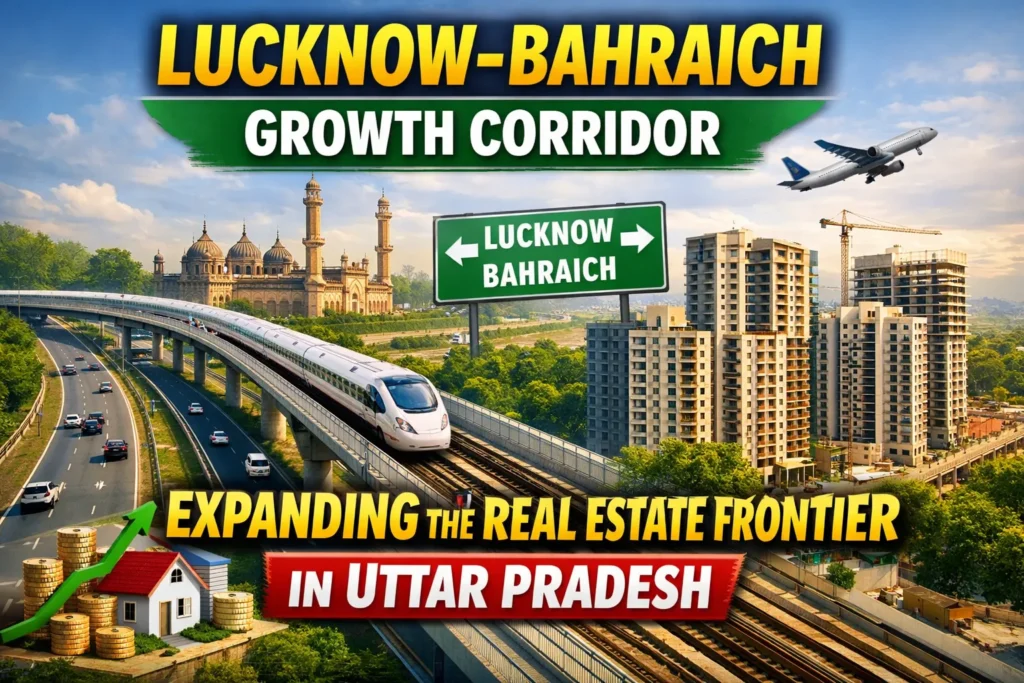
Lucknow–Bahraich Growth Corridor: How Infrastructure is Expanding the Real Estate Frontier in Uttar Pradesh
By Jai Gupta, Managing Partner, BIG FM Realty
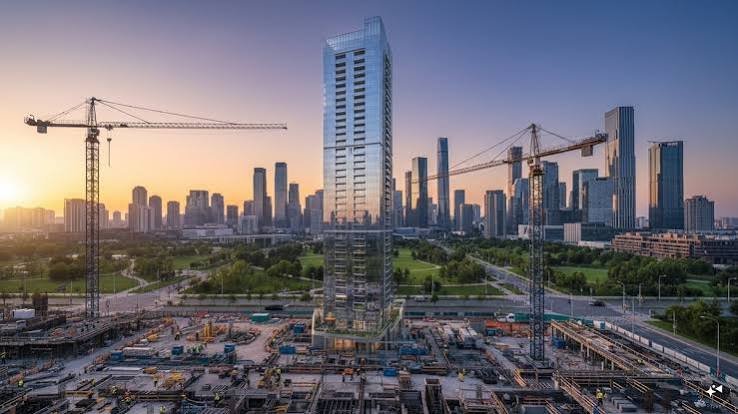
Uttar Pradesh’s real estate landscape is undergoing a significant shift, with emerging corridors redefining how growth is distributed across the state. Among these, the Lucknow–Bahraich belt is steadily gaining prominence, transitioning from a largely overlooked stretch into a corridor of opportunity driven by infrastructure-led development.
For long, real estate growth in and around Lucknow remained concentrated within established micro-markets. However, this is now evolving into a more expansive, corridor-led development model. The strengthening of road infrastructure, improved regional connectivity, and the state’s focus on enhancing accessibility to border districts like Bahraich are collectively reshaping the demand dynamics across this belt.
At the core of this transformation is the growing emphasis on seamless connectivity between Lucknow and adjoining Tier-2 and Tier-3 regions. Highway upgrades and road-widening projects are significantly reducing travel time, bringing locations like Bahraich closer to the state capital’s economic ecosystem. What were once perceived as distant or purely transit-driven regions are now emerging as viable extensions of Lucknow’s real estate market.
This improved accessibility is beginning to unlock new development potential. Land parcels along the Lucknow–Bahraich corridor, which earlier saw limited traction, are now witnessing increased interest from developers and investors alike. The shift is being driven not just by affordability, but by the anticipation of long-term appreciation as infrastructure continues to mature.
Moreover, the ripple effects of Lucknow’s ongoing infrastructure push—including expressways, ring roads, and urban expansion—are extending outward, creating a wider catchment for residential and commercial demand. As the city expands, the need for new, well-connected growth zones is becoming more pronounced, and corridors like Lucknow–Bahraich are well-positioned to absorb this spillover demand.
Another key driver is the gradual evolution of buyer sentiment. Today’s homebuyers and investors are increasingly open to exploring emerging locations, provided they offer connectivity, infrastructure visibility, and future growth potential. In this context, the Lucknow–Bahraich corridor is gaining traction among both end-users seeking affordable housing options and investors looking at early-stage opportunities.
In parallel, there is also growing potential for allied sectors such as hospitality, retail, and logistics to develop along this stretch. Improved connectivity often acts as a catalyst for economic activity, and as movement between Lucknow and Bahraich becomes more efficient, it is expected to drive demand for supporting infrastructure and services. This, in turn, further strengthens the case for real estate development in the region.
What is unfolding is not just linear growth, but the emergence of a new real estate corridor anchored by infrastructure. The Lucknow–Bahraich stretch is gradually transitioning into a zone where connectivity, affordability, and future potential intersect, creating a compelling proposition for developers, investors, and homebuyers alike.
As Uttar Pradesh continues to invest in expanding its infrastructure network, corridors like these will play a critical role in decentralising growth and creating new urban nodes. In this evolving landscape, real estate is no longer confined to city limits—it is increasingly following the path of connectivity, and the Lucknow–Bahraich corridor stands as a testament to this transformation.
Disclaimer: Views expressed in this article are those of the author and not of Realty & More