Carpet Area vs Saleable Area in Real Estate: Complete Guide for Homebuyers 2026
Introduction
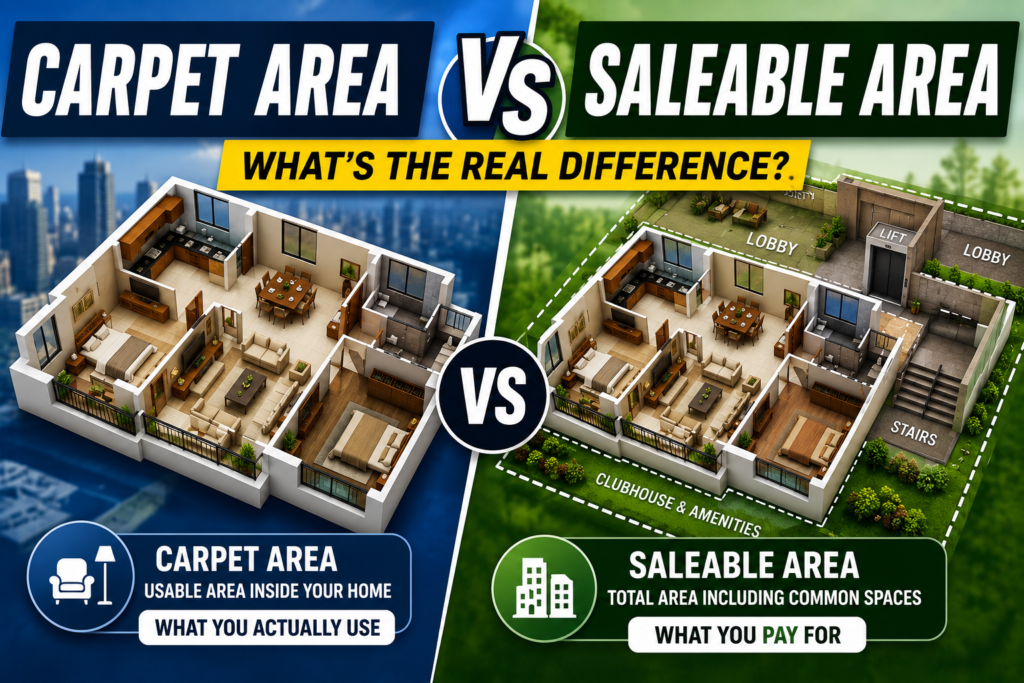
When buying a property, one of the most confusing aspects for homebuyers is understanding how space is measured. Terms like carpet area, built-up area, and saleable area are often used interchangeably by developers, but they represent very different things. This confusion can lead to misunderstandings, incorrect expectations, and even financial losses.
Imagine paying for a 1500 sq. ft. apartment, only to realize that the usable space inside your home is significantly less. This is where understanding carpet area and saleable area becomes crucial.
In this blog, we will break down these concepts in detail, explain their differences, and help you make informed real estate decisions.
What is Carpet Area?
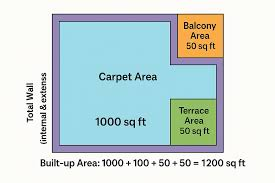
Carpet area is the actual usable area inside your apartment where you can lay a carpet. It includes the space within the walls but excludes external walls, balconies, terraces, shafts, and common areas.
Key Features of Carpet Area:
- Includes bedrooms, living room, kitchen, and bathrooms
- Excludes walls, balconies, terraces
- Represents actual usable living space
- Defined clearly under RERA regulations
RERA Definition of Carpet Area
According to RERA (Real Estate Regulatory Authority), carpet area is:
“The net usable floor area of an apartment, excluding the area covered by external walls, areas under service shafts, exclusive balcony or verandah area, and exclusive open terrace area.”
This standardization ensures transparency and protects buyers from misleading property sizes.
What is Saleable Area?
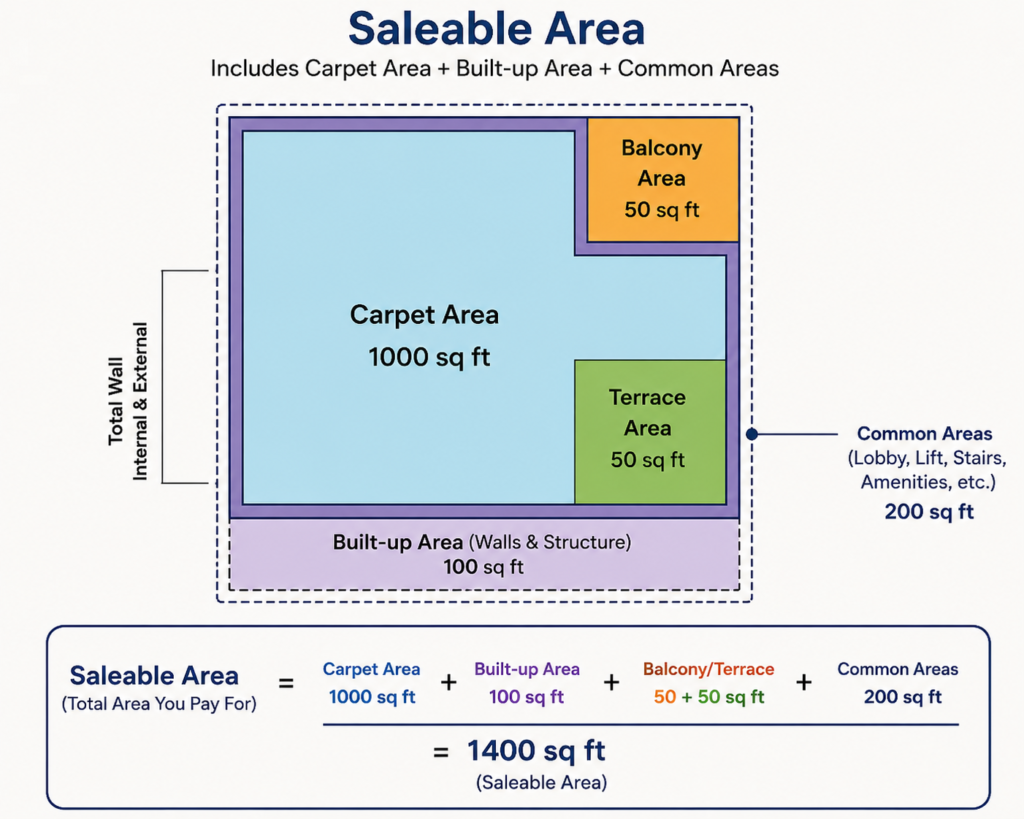
Saleable area is the total area that a builder sells to a buyer. It includes not only the carpet area but also a proportionate share of common areas such as lobbies, lifts, staircases, clubhouse, and amenities.
Key Features of Saleable Area:
- Includes carpet area + built-up area + common areas
- Used for pricing the property
- Larger than carpet area
- Not always standardized
In simple terms, saleable area is what you pay for, while carpet area is what you actually use.
Components of Saleable Area
To understand saleable area better, let’s break it down:
1. Carpet Area
The usable internal space.
2. Built-up Area
Carpet area + thickness of internal and external walls + balconies.
3. Super Built-up Area (Saleable Area)
Built-up area + proportionate share of common spaces.
Carpet Area vs Saleable Area: Key Differences
| Aspect | Carpet Area | Saleable Area |
|---|---|---|
| Meaning | Usable area inside home | Total area sold by builder |
| Includes | Rooms, kitchen, bathrooms | Carpet + walls + common areas |
| Excludes | Walls, balconies, common areas | Nothing (includes all) |
| Usage | Actual living space | Pricing calculation |
| Transparency | Clearly defined under RERA | Can vary by builder |
Why This Difference Matters
1. Financial Impact
You pay based on saleable area, but you use only carpet area. The difference can be 25%–50%, which significantly affects cost per square foot.
2. Space Expectations
A 1500 sq. ft. saleable apartment may offer only 1000–1100 sq. ft. carpet area.
3. Comparison Between Projects
Two properties with the same saleable area can have very different carpet areas, affecting actual livability.
Example to Understand Better
Let’s say you are buying an apartment with:
- Saleable Area: 1500 sq. ft.
- Loading Factor: 40%
Calculation:
Carpet Area = Saleable Area ÷ (1 + Loading Factor)
Carpet Area = 1500 ÷ 1.4 ≈ 1071 sq. ft.
So, even though you pay for 1500 sq. ft., you actually use around 1071 sq. ft.
What is Loading Factor?
Loading factor is the percentage difference between carpet area and saleable area.
Formula:
Loading Factor = (Saleable Area – Carpet Area) ÷ Carpet Area
Typical Loading:
- 20%–30%: Considered good
- 30%–40%: Common in modern projects
- Above 40%: High loading, less efficient
Higher loading means you are paying more for non-usable space.
Importance of RERA in Area Calculation
Before RERA, builders often used super built-up area to market properties, leading to confusion and lack of transparency.
After RERA:
- Builders must disclose carpet area
- Pricing is often based on carpet area
- Buyers can compare properties more easily
- Reduces misleading practices
This has made the real estate market more buyer-friendly.
Carpet Area vs Built-Up Area vs Saleable Area
Understanding all three is important:
Carpet Area
Actual usable space.
Built-Up Area
Carpet area + walls + balcony.
Saleable Area
Built-up area + common areas.
Which Area Should You Focus On?
Always prioritize Carpet Area
Why?
- It defines your actual living comfort
- Helps compare properties accurately
- Reflects true value of your investment
While saleable area affects pricing, carpet area determines usability.
Tips for Homebuyers
1. Always Ask for Carpet Area
Ensure the builder clearly mentions carpet area in documents.
2. Compare Price per Carpet Sq. Ft.
Instead of saleable area pricing, calculate cost based on carpet area.
3. Check Loading Factor
Lower loading means better value.
4. Understand Floor Plans
Study layout to evaluate usable space efficiency.
5. Verify RERA Details
Check project registration and area details on the RERA website.
Common Misconceptions
“Bigger Saleable Area Means Bigger Home”
Not necessarily. A higher loading factor can reduce usable space.
“All Builders Follow Same Calculation”
No. Saleable area calculation can vary between developers.
“Carpet Area is Too Small to Matter”
Carpet area is the most important metric—it defines your lifestyle inside the home.
Impact on Investment Decisions
Understanding these concepts is not just important for end-users but also for investors.
Rental Yield
Tenants care about usable space, not saleable area.
Resale Value
Properties with higher carpet efficiency attract better resale demand.
Luxury vs Affordable Housing
Luxury projects often have higher loading due to amenities, while affordable housing focuses on efficiency.
Modern Trends in Real Estate
Shift Toward Transparency
Developers are increasingly highlighting carpet area due to RERA compliance.
Smart Space Design
Builders are optimizing layouts to maximize usable space.
Buyer Awareness
Today’s buyers are more informed and demand clarity in measurements.
Final Thoughts
Understanding the difference between carpet area and saleable area is essential for making smart real estate decisions. While saleable area determines how much you pay, carpet area defines how you live.
Always remember:
- Carpet area = Your real home
- Saleable area = What you are charged for
A well-informed buyer can avoid costly mistakes, compare properties effectively, and ensure better value for money.
FAQs
1. Is carpet area the same as usable area?
Yes, carpet area represents the usable internal space of your home.
2. Why is saleable area higher than carpet area?
Because it includes walls and a share of common areas.
3. What is a good loading factor?
20%–30% is considered efficient.
4. Does RERA mandate carpet area disclosure?
Yes, builders must disclose carpet area under RERA.
Conclusion
In the world of real estate, knowledge is power. Understanding terms like carpet area and saleable area can save you from overpaying and help you choose a home that truly fits your needs. Before making your next property investment, take a closer look at the numbers behind the space—you’ll thank yourself later.