Industry Leaders Call for Cooling Security to Become National Priority

Coimbatore, August 26, 2026: Industry leaders, policymakers, urban planners, utilities, developers, academics, and sustainability experts convened at ISHRAE CoOL Conclave 3.0 in Coimbatore to discuss securing India’s cooling future while supporting sustainable growth and the Viksit Bharat 2047 vision.
The roundtable, hosted and moderated by Grundfos under the theme ‘Accelerating Net Zero Cities of the Future: The Role of District Cooling in India’, highlighted district cooling as a key element of future urban infrastructure strategy. Participants agreed that cooling must be recognized as essential infrastructure underpinning economic productivity, public health, urban resilience, and energy security, Grundfos said in a press release.
India’s cooling demand is expanding rapidly due to economic development, urbanisation, rising living standards, and the growth of new cities and industrial corridors. Attendees noted that this demand is expected to rise for decades, placing significant pressure on electricity infrastructure and peak power requirements. While renewable energy capacity, particularly solar power, has expanded, meeting cooling demand during evening and nighttime periods remains a growing challenge.
The discussion positioned district cooling as an effective tool to reduce peak electricity demand while improving system efficiency. Industry experts highlighted that these systems improve energy efficiency by leveraging load diversity, centralized operations, optimized equipment utilization, and thermal energy storage. They also noted economic advantages such as reduced electrical infrastructure requirements, lower operating costs, decreased maintenance burdens, and extended equipment lifecycles.
Beyond energy, the roundtable addressed the integration of cooling and water management. Participants discussed using treated wastewater and recycled water in district cooling systems to reduce pressure on freshwater resources. As cities face water stress alongside rising cooling demand, integrated planning across water, energy, and cooling infrastructure was identified as essential.
Despite technical and economic benefits, adoption in India remains limited. Stakeholders attributed this to the need for policy alignment, institutional coordination, awareness, and long-term planning, noting that district cooling currently lacks utility status and consistent regulatory frameworks.
Participants called for district cooling feasibility assessments to become standard in early-stage planning for greenfield cities, large mixed-use developments, industrial townships, campuses, and major infrastructure projects. Proposed policy actions included recognizing district cooling as a public utility, integrating it into urban planning frameworks, providing rights-of-way for distribution infrastructure, clarifying tariff structures, and offering incentives for domestic manufacturing of equipment.
The discussion also emphasized the need for high-quality Indian case studies demonstrating energy savings, infrastructure optimization, water benefits, operational performance, and economic value to guide decision-makers, investors, and developers.
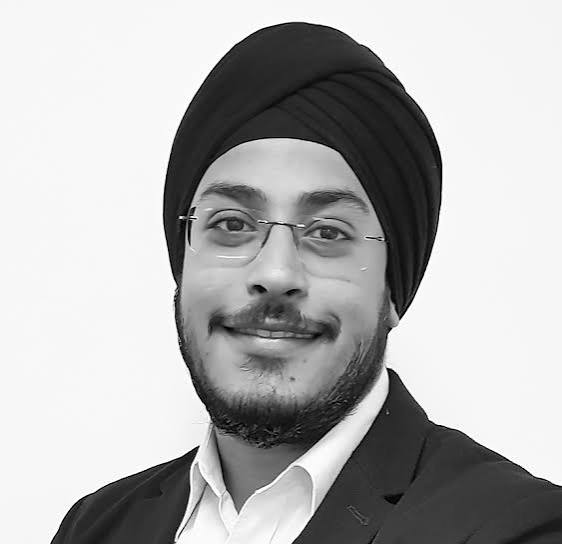
Commenting on the discussion, Ronak Monga, Global Sales Development Director, District Energy, Grundfos, said, “India’s cooling challenge is also one of India’s greatest opportunities. Throughout this discussion, what stood out was the strong alignment across stakeholders that cooling security must become a national priority. District cooling is not simply a cooling solution. It is a strategic infrastructure investment that can strengthen energy security, improve resource efficiency, support sustainable urban growth, and help India progress towards its Viksit Bharat 2047 vision. The solutions exist. What is needed now is greater collaboration, stronger planning, and collective action to move from isolated projects to large-scale implementation.”
The roundtable concluded with a shared commitment to advance the dialogue into action through policy support, industry collaboration, data generation, innovative business models, and long-term urban planning.