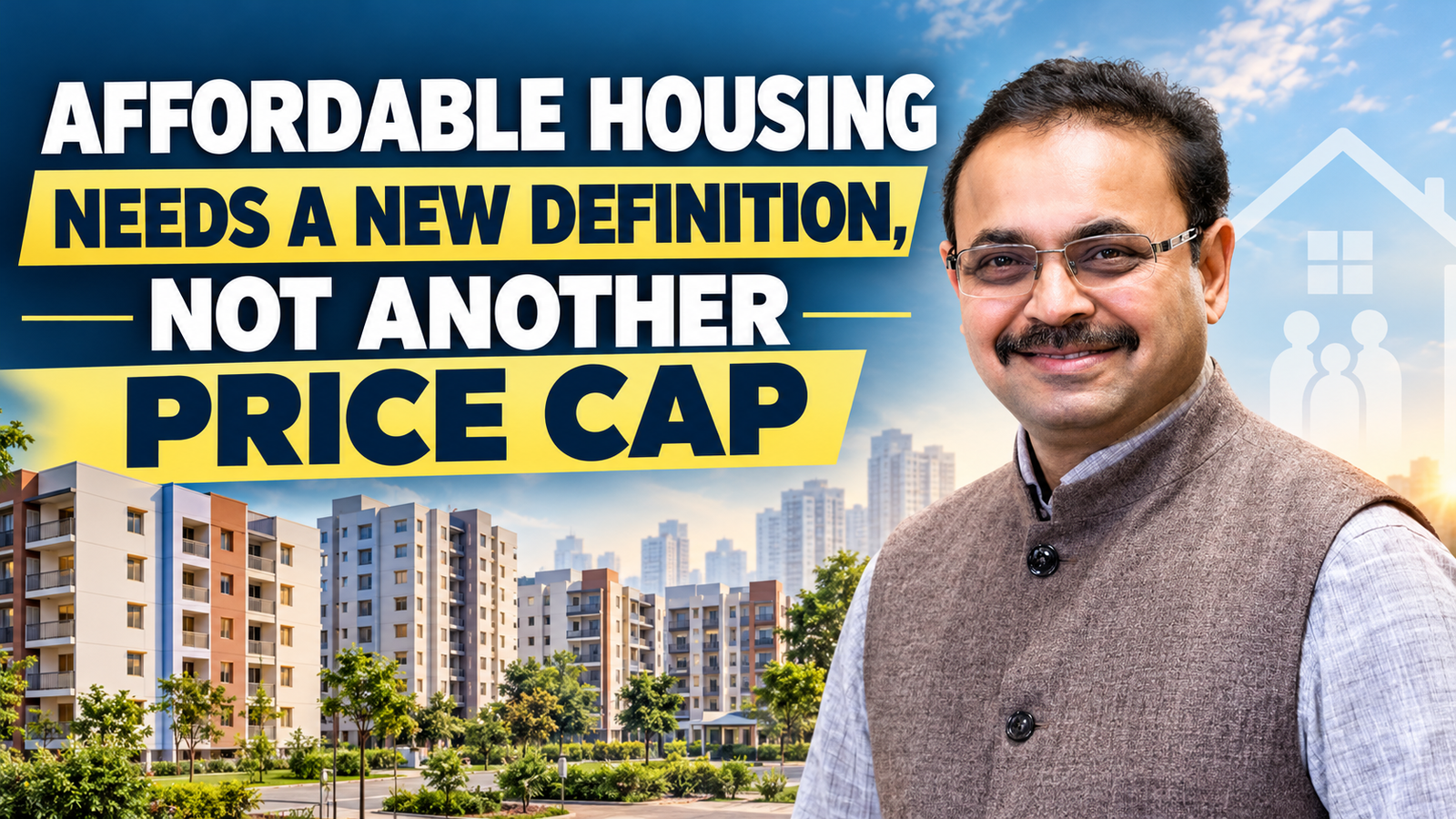
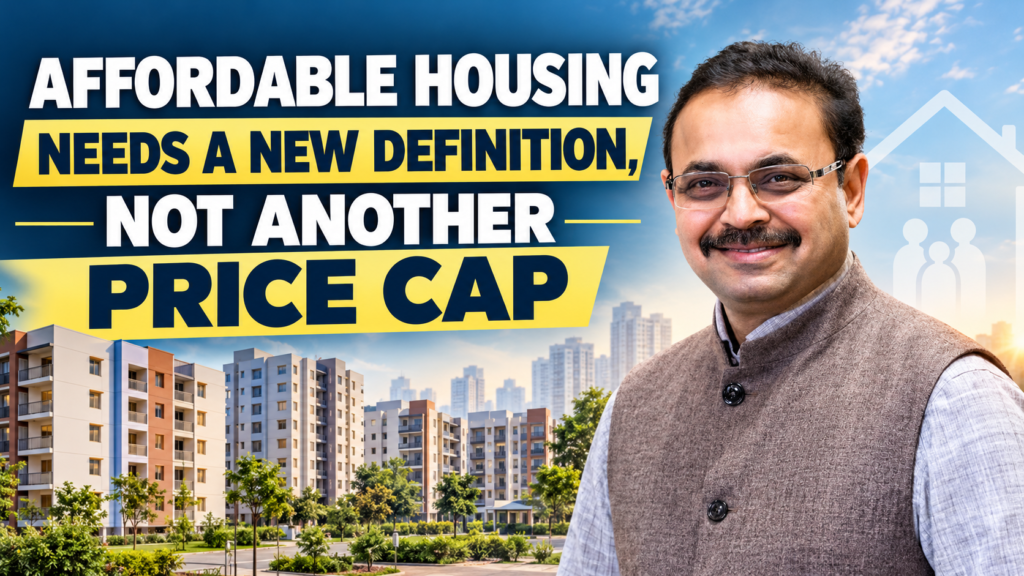
Affordable Housing Needs a New Definition, Not Another Price Cap: CREDAI President Shekhar Patel

In an exclusive interview with Palash Roy, Founder and Editor of RealtyNMore, Shekhar Patel, President of CREDAI (Confederation of Real Estate Developers’ Associations of India), shares key insights following CREDAI’s 24th NATCON. Originally scheduled to take place in Europe, the national convention was shifted to Kolkata to support domestic growth.
In this discussion, Patel elaborates on Kolkata’s emerging real estate landscape, the proactive stance of state leadership on urban policy, and why CREDAI is urging the government to scrap price caps in favor of a size-based framework for affordable housing.
Q: What is the primary purpose of NATCON, and why was Kolkata chosen as the host city for this edition?
A: NATCON is now in its 24th edition. For the last 23 years, we have generally held the convention at international venues to give Indian developers exposure to global infrastructure, modern building designs, and international growth models.
This year, we had almost finalized hosting NATCON in Amsterdam. However, following the West Asia crisis, the Prime Minister appealed to citizens to limit overseas spending. Aligning with that association-wide commitment, we decided to hold NATCON in India.
While considering various domestic venues—including Mumbai, Delhi, Chennai, and Goa—Kolkata stood out due to its rapid progress and positive momentum over the past year. We are extremely pleased with the decision to bring NATCON here.
Q: What key outcomes and government responses have emerged from the convention so far?
A: Prior to the event, I visited Kolkata to invite the Chief Minister of West Bengal. The government’s openness and welcoming stance were encouraging. They expressed a clear commitment to supporting whatever reforms are necessary for the development of the city and state.
The state government is actively planning land and urban reforms, which provides the positive climate every business needs before expanding. Both the Finance Minister and Health Minister attended our sessions. This proactive administrative push boosts the confidence of local developers and encourages developers from other regions to invest here.
Q: On housing policy, what structural changes are required to make affordable housing genuinely accessible?
A: The primary issue is how we define “affordable housing.” Historically, affordability has been measured strictly by unit size. For citizens, too, affordability is tied to space requirements.
A 60-square-metre home in a major metro like Mumbai or Delhi qualifies as an affordable 2BHK for nuclear families. However, across the rest of India, a compact 3BHK of roughly 90 square metres is often the minimum requirement because extended family or parents live together.
Therefore, CREDAI recommends that the definition of affordable housing be based strictly on size criteria—60 square metres in metropolitan cities and 90 square metres in non-metropolitan regions—rather than imposing a price ceiling.
Q: What is the fundamental issue with the current ₹45 lakh price cap?
A: The combination of size criteria (60/90 sq. m.) and a strict ₹45 lakh price cap simply does not work in today’s market.
In 2019, affordable housing made up around 50% of market activity. Last year that dropped to 18%, and recent figures indicate it has fallen further to 14%.
While the supply of 60 and 90-square-metre homes exists and continues to sell, these homes no longer qualify for affordable housing benefits due to the price ceiling. A home that was priced at ₹45 lakh in 2019 may cost ₹80 lakh today due to rising input costs. Though it serves the same segment, it is excluded from affordable classification solely because of an outdated price threshold.
Q: Would raising the ₹45 lakh price cap solve the problem?
A: Simply raising the cap is a temporary fix. If a new price ceiling is introduced today, the same structural issue will resurface in three years. We strongly recommend removing the price cap altogether and keeping the 60 sq. m. (metro) and 90 sq. m. (non-metro) size benchmarks as the sole criteria.
Q: Is a single national price cap feasible given India’s market diversity?
A: India is a vast and varied market. Land values, construction costs, statutory approval costs, and local authority charges vary significantly across regions. A single, uniform price cap cannot function effectively across the entire country.