What Today’s Homebuyer Is Really Looking for in a property

By Ashwani Kumar, Pyramid Infratech
The choice of a home begins with its location, but the decision rarely rests on an address alone. Buyers consider the journey to work, access to schools and healthcare, and the ease of managing everyday needs. Price remains important, yet the larger question is what the property offers in return: greater comfort, more usable space and a living environment that suits the household.
The luxury market provides one perspective on this shift. CBRE’s Q2 2026 assessment recorded an increasing share of high-end apartment sales. ANAROCK reported that Mumbai Metropolitan Region and Bengaluru accounted for 48% of total housing sales, while Cushman & Wakefield attributed 73% of NCR’s residential launches to Gurugram. The latter measures supply rather than sales, but underlines Gurugram’s prominence in Delhi-NCR’s aspirational housing landscape.
Across budgets, however, the buyer’s assessment is personal. An additional room may accommodate visiting parents, provide a quiet workplace or give a growing child more privacy. A comfortable living area allows the family to spend time together without feeling constrained. These advantages often carry more weight than elaborate interiors because they influence how the home functions every day.
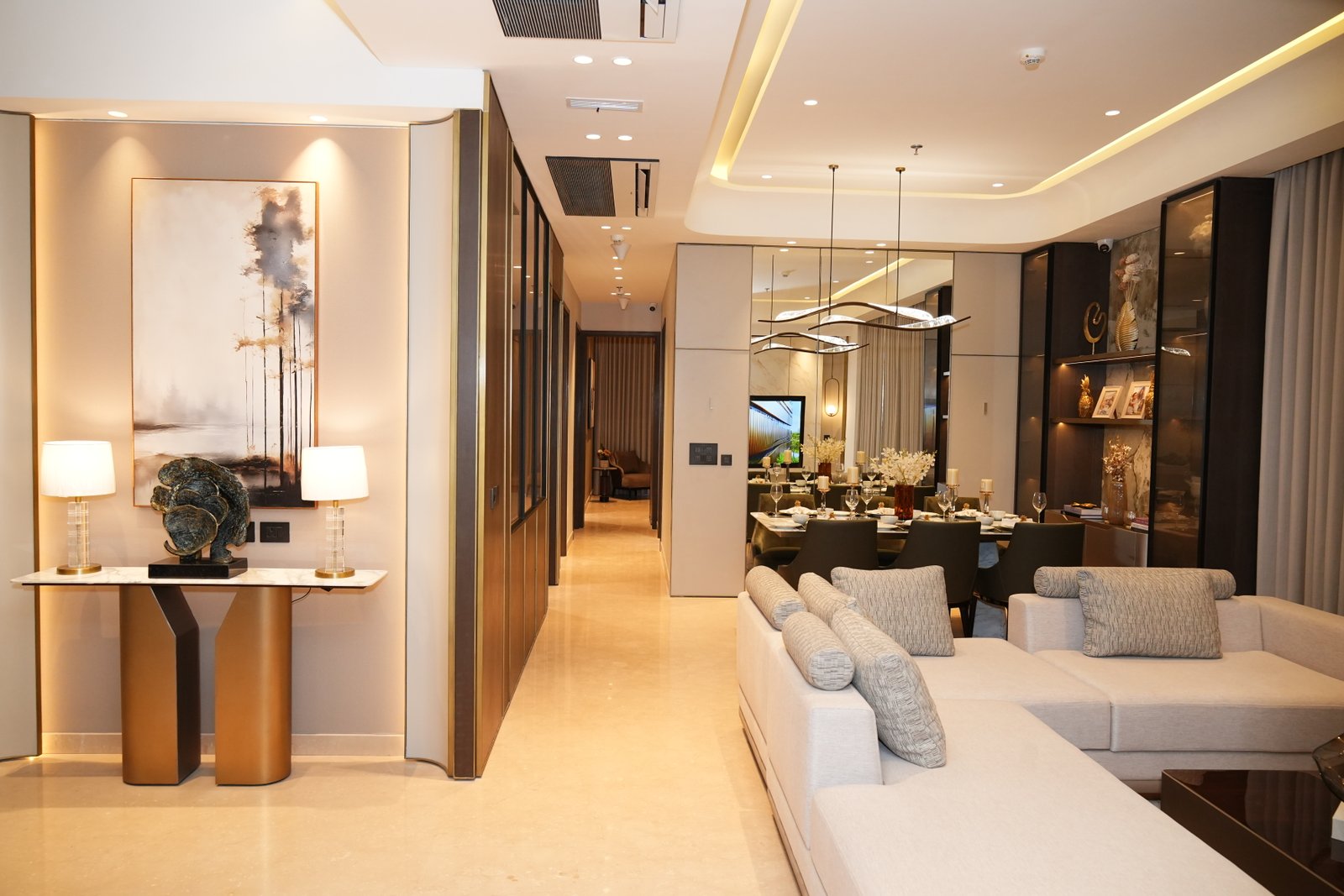
More space is welcome, but its usefulness depends on planning. Well-proportioned rooms, adequate storage and layouts that are easy to furnish make a tangible difference. Natural light, ventilation and a practical balcony can improve the experience of even a modest-sized apartment. In larger homes, generous terraces and separate entertaining areas extend these possibilities. The scale differs; the need for thoughtfully designed space remains.
That thoughtfulness also shapes privacy. Within the apartment, a sensible separation between shared and personal areas helps different family members follow their routines comfortably. Across the development, building placement, density and the arrangement of common spaces determine whether residents can enjoy community life without feeling overlooked or crowded.
The facilities outside the home deserve the same scrutiny. Buyers are looking for amenities they will use, whether for fitness, recreation, children’s activities or social gatherings. In luxury developments, these may include specialist wellness spaces, private dining rooms and concierge services. Elsewhere, fewer facilities, planned well and maintained consistently, may serve residents better than an extensive offering that adds little to daily life.
Convenience increasingly includes technology, although its value lies in simplicity. Lighting and climate controls, digital visitor management and responsive service systems are worthwhile when they save effort. A home need not be technologically elaborate to be future-ready; adaptable rooms and efficient resource use can be equally relevant.
Financial considerations bring these expectations together. Buyers assess recurring expenses alongside the purchase price and seek confidence in construction quality, delivery commitments and maintenance arrangements. Attractive presentation cannot make up for shortcomings that become expensive or inconvenient after possession.
Long-term appreciation remains part of the decision, but it is not assured. Connectivity, neighbourhood development and responsible upkeep can support a property’s appeal. Its lasting usefulness is equally important: a home that accommodates changing needs has reasons to remain desirable beyond its initial sale.
Today’s homebuyer is seeking value in this broader sense. Whether choosing a luxury residence or a more moderately priced apartment, the expectation is for space, convenience and facilities that justify the commitment.
Disclaimer: Views expressed in this article are those of the author, and not necessarily of Realtynmore.com.