CC vs OC: Legal Documents You Must Check Before Buying a Home in 2026
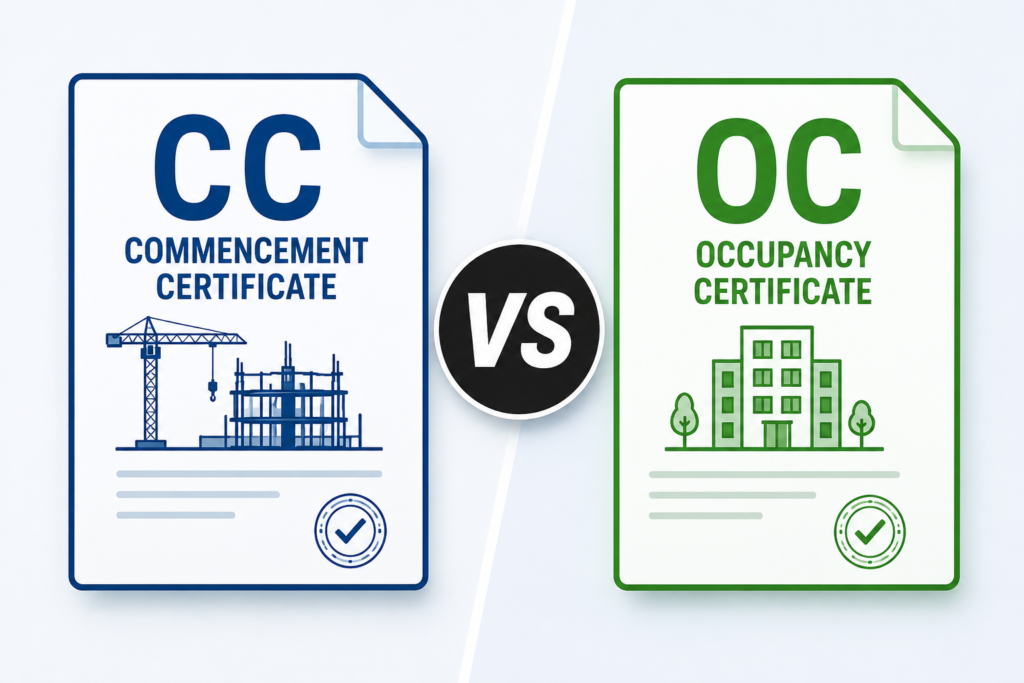
Understand the CC vs OC in real estate. Learn their importance, legal implications, and why every homebuyer must verify them before investing.
When it comes to buying property in India, legal documentation plays a crucial role in ensuring a safe and secure investment. Among the most important documents that every homebuyer must understand are the Commencement Certificate (CC) and the Occupancy Certificate (OC). While both are essential approvals issued by local authorities, they serve very different purposes in the lifecycle of a real estate project.
Unfortunately, many buyers are either unaware of these terms or confuse one with the other, which can lead to serious legal and financial risks. In this blog, we will break down the difference between CC and OC, explain their significance, and help you make an informed real estate decision.

What is a Commencement Certificate (CC)?
A Commencement Certificate (CC) is a legal document issued by the local municipal authority that allows a developer to begin construction on a project. It is granted only after the builder has obtained all necessary approvals and verified that the project complies with local building laws and regulations.
In simple terms, the CC is the green signal for construction.
Key Features of CC:
- Issued before construction begins
- Confirms that the project layout and plans are approved
- Ensures compliance with zoning laws and regulations
- Mandatory for starting any construction activity
Without a CC, any construction activity is considered illegal and can be stopped or even demolished by authorities.

What is an Occupancy Certificate (OC)?
An Occupancy Certificate (OC) is issued by the local authority after the construction of a building is completed. It certifies that the building has been constructed according to the approved plans and is safe for occupancy.
In simple words, the OC is the green signal to live in the property.
Key Features of OC:
- Issued after construction is completed
- Confirms the building is safe for occupancy
- Ensures compliance with approved plans
- Required for getting utilities like water, electricity, and sewage
Without an OC, the building is technically not fit for living, even if construction is complete.
CC vs OC: Key Differences
Understanding the difference between CC and OC is critical for every homebuyer. Here’s a clear comparison:
1. Stage of Issuance
- CC: Issued before construction begins
- OC: Issued after construction is completed
2. Purpose
- CC: Grants permission to start construction
- OC: Certifies that the building is safe for occupancy
3. Authority Approval
- CC: Confirms approval of building plans
- OC: Confirms construction is done as per approved plans
4. Importance for Buyers
- CC: Ensures project legality from the start
- OC: Ensures property is legally habitable
5. Utility Connections
- CC: Not required for utilities
- OC: Mandatory for water, electricity, and sewage connections
Why CC is Important for Homebuyers
Many buyers invest in under-construction properties without checking whether the project has received a Commencement Certificate. This can be risky.
Risks of Buying Without CC:
- Project may be illegal
- Construction may be halted
- Financial loss due to project delays
- Legal complications
A valid CC ensures that the project has been approved and construction is legally permitted.
Why OC is Crucial Before Possession
Even if a building looks complete, you should never take possession without an Occupancy Certificate.
Risks of Buying Without OC:
- Property is not legally fit for living
- Difficulty in getting home loans
- No legal water or electricity connection
- Risk of penalties or eviction
In many cases, developers delay OC approvals, but buyers should insist on it before moving in.
Legal Perspective: CC and OC in India
Under Indian real estate laws, both CC and OC are mandatory approvals. Regulatory bodies like RERA (Real Estate Regulatory Authority) have made it more transparent for buyers to verify these documents.
Important Points:
- Builders must disclose CC and OC status on RERA portals
- Buyers can legally demand these documents
- Projects without proper approvals can face penalties
This has improved accountability in the real estate sector and protected buyer interests.
Common Misconceptions About CC and OC
Myth 1: CC and OC are the same
Reality: They serve completely different purposes.
Myth 2: OC is not necessary if construction is complete
Reality: Without OC, the building is not legally habitable.
Myth 3: Builders will manage all approvals
Reality: Buyers must verify documents themselves.
How to Verify CC and OC
Before investing in any property, follow these steps:
- Ask the builder for copies of CC and OC
- Check the local municipal authority website
- Verify details on the RERA portal
- Consult a legal expert if needed
Doing proper due diligence can save you from major risks.
Final Thoughts
In the complex world of real estate, understanding legal documents like the Commencement Certificate (CC) and Occupancy Certificate (OC) is essential. While CC ensures that construction starts legally, OC guarantees that the building is safe and ready for occupancy.
For homebuyers and investors, both documents act as safeguards against fraud, delays, and legal complications. Ignoring them can lead to serious consequences, including financial losses and legal troubles.
As the Indian real estate market continues to grow, awareness among buyers is becoming increasingly important. Always verify CC before investing in under-construction properties and insist on OC before taking possession.
A smart buyer is an informed buyer—and knowing the difference between CC and OC is a crucial step toward making the right property decision.