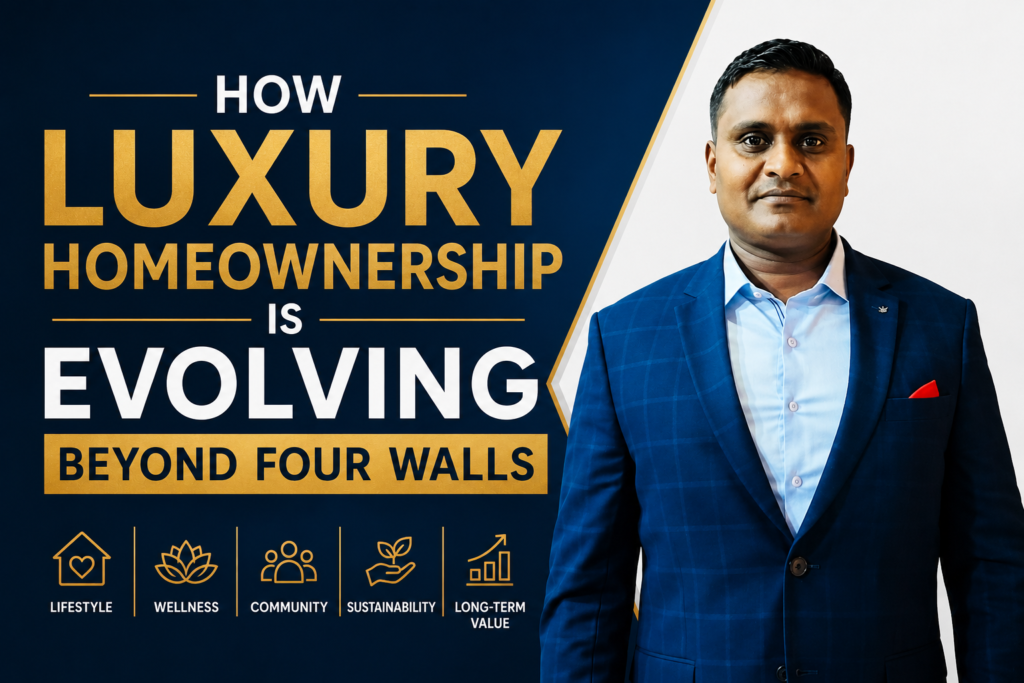
How Luxury Homeownership is Evolving Beyond Four Walls
As India’s luxury real estate landscape moves away from vertical concrete towers, modern buyers are seeking a different kind of opulence—one grounded in space, nature, and effortless ownership. Pioneering this shift toward Commercial & Experiential Legacy Living, Vibez Estates blends clear-title land ownership with sustainable architecture, high-yield agriculture, and 5-star hospitality management.
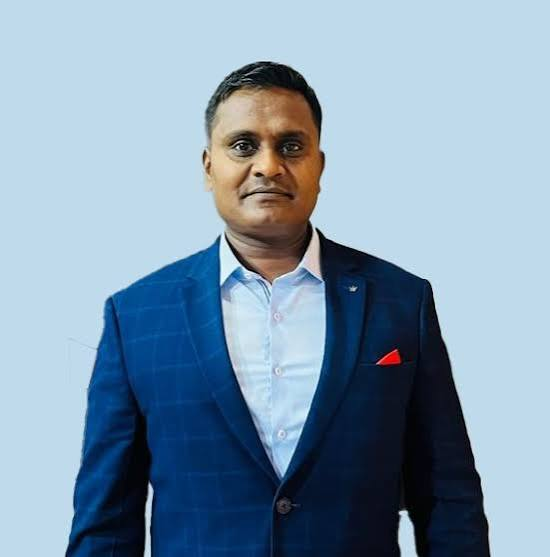
In this candid interview, Ashwin, Founder & Managing Director of Vibez Estates, shares how evolving consumer preferences, biophilic design, and managed farmlands are redefining generational wealth and setting a new benchmark for nature-centric living in India.
Q1. What inspired the vision behind Vibez Estates, and how do you see the brand redefining luxury real estate in India?
The vision for Vibez Estates stemmed from a fundamental realization: the traditional definition of luxury in Indian real estate was broken. For decades, luxury was quantified by square footage in vertical concrete towers. However, as cities expanded and noise intensified, true luxury evolved from mere “opulence” to “space, silence, and nature.”
I wanted to bridge the gap between urban ambition and nature’s tranquility. Our inspiration was to create titled, managed legacy assets—whether a coffee plantation in the Western Ghats or a private micro-estate in North Bangalore—where urban buyers could own land without the traditional burdens of maintenance, security, and legal friction.
We are redefining luxury real estate by shifting the focus from per-square-foot concrete value to generational estate value. By combining clear-title land ownership with turnkey design, sustainable agricultural production, and 5-star managed hospitality, Vibez Estates is pioneering a new asset class: Commercial & Experiential Legacy Living.
Q2. Today’s luxury homebuyers are looking beyond premium residences. What evolving consumer preferences are shaping the way Vibez Estates designs its developments?
Today’s luxury buyer is discerning, well-travelled, and wellness-conscious. They aren’t looking for a “second home” that sits dark 300 days a year; they are seeking active sanctuaries.
Three key preferences are driving our architectural and master-planning choices:
● Low-Density Living over High-Volume Plotting: Buyers demand extreme privacy. For instance, at Vibez Sirivana in Chikballapur, we allocated 44 acres to just 35 private estates, each ranging from 1 to 2 acres, rather than carving out hundreds of small plots.
● Biophilic & Nordic Architecture: There is a strong preference for continuous light, high ceilings, and raw natural materials. Our Scandinavian A-frame cottages at Vibez Manor are designed with floor-to-ceiling glass facades so nature remains the primary backdrop.
● Productive Landscapes: HNI buyers want their open spaces to serve a purpose. Instead of manicured lawns that consume water, our buyers prefer private fruit orchards, coffee plantations, or teakwood borders that yield both emotional and financial returns.
Q3. Branded villa residences are gaining significant traction across India. What, in your opinion, is driving this shift, and how is Vibez Estates responding to this demand?
The boom in branded villa residences is fuelled by two things: trust and effortless ownership. Historically, buying land or a standalone villa outside major cities meant dealing with property management headaches, security concerns, and unpredictable upkeep.
A branded residence solves this by offering a standardized, hotel-grade ecosystem. At Vibez Estates, our response to this demand is encapsulated in our core operational principle: “Ownership is Yours. Workmanship is Ours.”
When an investor purchases a villa or plot with us, they aren’t just buying physical real estate; they are buying into a managed ecosystem. We handle complete site security, landscape maintenance, organic farming operations, and hospitality management. Furthermore, our developments offer integrated rental management models, allowing owners to monetise their villa through luxury resort pooling when they aren’t in residence.
Q4. With wellness and nature becoming central to homebuying decisions, how do you integrate these elements across your luxury villa and resort developments?
Wellness at Vibez Estates is not an afterthought or a gym in the basement—it is the foundational geography of every project we acquire.
● Location-First Selection: We deliberately situate our developments near permanent ecological green belts. Vibez Bluehills is nestled amidst breathtaking 360-degree panoramic views of majestic mountains and lush teak plantations, offering uninterrupted vistas, pristine air, and an unparalleled connection with nature. Vibez Manor is thoughtfully integrated within a thriving 12-acre coffee estate in the picturesque hills of Sakleshpur, delivering an authentic plantation living experience.
● Architectural Integration: We believe architecture should blend with nature, not compete with it. Inspired by vernacular design, we create spaces that are rooted in the land and local heritage. Natural courtyards, local stone, timber, and open verandahs bring the outdoors in, while yoga decks beneath tree canopies and open-air living spaces encourage peace and well-being. Every structure is designed to preserve the beauty of its surroundings and embrace the natural landscape—the result is a timeless sanctuary where people reconnect with nature, simplicity, and themselves.
● Sensory Architecture: From the sound of mountain rain on sloping roofs to the smell of blooming Arabica coffee blossoms, our estates are designed to engage all five senses in a way urban homes never can.
Q5. Managed farmlands are emerging as a niche investment category. What opportunities do you see in this segment, and why do you believe it resonates with today’s investors?
Managed farmland has transitioned from an alternative asset to a mainstream wealth diversification strategy. It resonates so strongly today because it offers a triple-income engine:
● Capital Appreciation: Land in primary corridors (like North Bangalore or major hill corridors) continues to outperform traditional asset classes over 5–10 year horizons.
● Agro-Yield / Green Wealth: Timber (teakwood, mahogany) and high-value crops (Arabica coffee, pomegranate plantations, and exotic fruits) offer long-term, tax-free agricultural income.
● Rental / Hospitality Yield: By converting managed farm plots into boutique resort stays, owners generate passive rental income year-round.
For today’s busy CXOs, CEOs, tech founders, and doctors, owning premium land is an aspiration. Managing it shouldn’t be a burden. By providing 100% legal clarity, clear title deeds, and professional agrarian management, we turn what was once a complex endeavour into a seamless, high-yield asset.
Q6. Experiential living has become a defining trend in both hospitality and residential real estate. How does Vibez Estates bring together luxury, hospitality, and community to create differentiated experiences?
Experiential living means moving from “possessing a space” to “living a narrative.”
We bring this to life by curating experiences around the land itself. For example, in our Sakleshpur projects, an owner doesn’t just look at coffee plants; they participate in the seasonal harvest, roast their own single-origin Arabica, and serve it to guests.
From a hospitality standpoint, our resorts (like the Ashvana Clubhouse) act as intimate social sanctuaries for like-minded families rather than commercial event venues. We also pioneer concepts like our “Nordic Night” / “Test Drive Your Estate” previews—inviting prospective buyers to stay overnight, experience the microclimate, sleep in the architecture, and feel the energy of the land before making an investment decision.
Q7. Sustainability is increasingly influencing both investor and consumer decisions. How is Vibez Estates embedding environmentally responsible practices into its projects while delivering premium experiences?
For us, sustainability isn’t a marketing brochure—it is our primary operational requirement. When you develop in ecologically sensitive zones like our hilly farms in Channapatna or Niharika in the Western Ghats, you must build with the land, not on top of it.
Our sustainable practices include:
● Minimal-Footprint Construction: Utilizing elevated foundations, Scandinavian timber framing, and lightweight structural steel (A-frames) that minimize soil excavation and tree cutting.
● Water & Soil Conservation: 100% rainwater harvesting, natural swales, and organic soil regeneration across our agricultural plots.
● Micro-Ecosystem Preservation: We prioritize planting native shade trees, fruit orchards, and flora that support local bird and pollinator populations rather than non-native decorative lawns.
Luxury and sustainability do not have to be at war. A natural wood villa shaded by mature native trees is infinitely more luxurious—and cooler—than a glass box relying on heavy air conditioning.
Q8. Looking ahead, what is your long-term vision for Vibez Estates, and which key trends do you believe will shape the future of luxury real estate and experiential living in India?
Our long-term vision is to establish Vibez Estates as South India’s most trusted brand for managed, nature-centric estates and experiential hospitality. We aim to expand our footprint across prime hill sanctuaries, coastal belts, and high-growth peri-urban corridors in Karnataka and Tamil Nadu.
Looking at the industry, three key trends will shape the next decade:
● The “Space-First” Arbitrage: As metro apartments cross ₹30,000–₹40,000 per sq. ft., investors will increasingly route capital toward 10,000+ sq. ft. private estates situated within 60–90 minutes of international airports or transit hubs.
● Hybrid / Wellness Primary Living: The future of living is hybrid. With seamless connectivity via the Bengaluru–Mangaluru Highway, weekend homes are evolving into nature-centric residences where families can spend more time living, working, and reconnecting with what truly matters.
● Institutionalization of Farmlands: The managed farmland sector will see greater professionalization, digitized property management, and institutional interest as ESG-compliant assets gain priority.
I would just add that wealth philosophy in India is undergoing a beautiful generational shift. The younger generation of wealth creators isn’t interested in accumulating passive bank balances or concrete towers alone. They want living assets—places where their children can run barefoot, where family legacies are built over bonfires, and where their capital actively works through sustainable agriculture and hospitality.
At Vibez Estates, we are privileged to be the custodians of that shift.