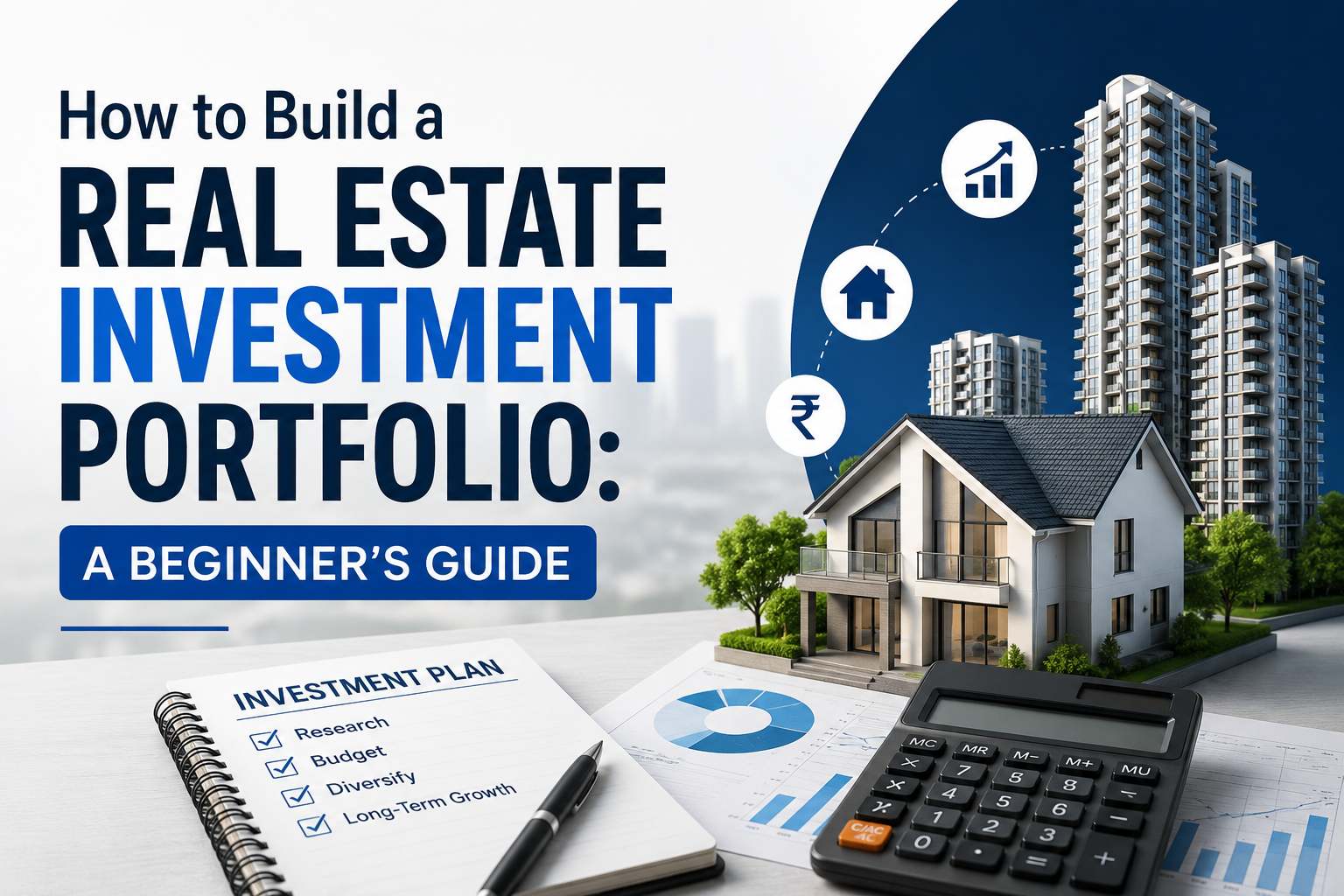
How to Build a Real Estate Investment Portfolio: A Practical Guide for Beginners
For many people, buying a property is one of the biggest financial decisions they will ever make. But real estate investing does not necessarily have to stop at owning one home or one investment property.
Over time, investors can build a real estate investment portfolio by adding different properties that generate rental income, appreciate in value or serve different investment goals.
The challenge is knowing where to start.
A successful property portfolio is not simply about owning more properties. It is about choosing the right assets, understanding the numbers, managing debt and making sure each investment fits into a larger financial plan.
Here is what investors should consider before building a real estate portfolio.
What Is a Real Estate Investment Portfolio?
Simply put, a real estate investment portfolio is a collection of properties owned by an individual or an investment entity.
It could include residential apartments, commercial spaces, retail properties, warehouses, plots of land or other real estate assets.
An investor may build a portfolio with different objectives. Some may want a steady rental income, while others may be more interested in long-term appreciation. Many investors try to achieve a combination of both.
For example, someone might own a residential apartment that generates monthly rent, while holding a commercial property for its long-term income potential and a plot of land as a longer-term investment.
There is no single formula for building a portfolio. The right mix depends on your budget, risk appetite, investment horizon and financial goals.
Why Build a Property Portfolio?
Real estate can play several roles in an investment strategy.
Rental Income
A rental property can provide a regular source of income. However, the rent you receive is not the same as your actual return.
Maintenance costs, property taxes, repairs, vacancies, loan interest and management expenses all need to be considered before calculating how much you are really earning.
Capital Appreciation
Property values can increase over time, particularly in markets supported by better infrastructure, employment opportunities, connectivity and population growth.
But appreciation should never be treated as a certainty. Real estate markets can move slowly, and some locations can underperform for years.
Diversification
Owning more than one property can reduce your dependence on a single asset.
For instance, an investor who owns residential and commercial properties across different locations may be less exposed to a slowdown in one particular market.
Long-Term Wealth Creation
Real estate is generally viewed as a long-term investment. When managed carefully, a portfolio can potentially combine rental income, property appreciation and responsible use of financing to build wealth over time.
How to Build a Real Estate Investment Portfolio
Building a portfolio does not mean rushing to buy several properties. In fact, starting slowly and understanding your first investment can often be more useful than trying to expand too quickly.
1. Start With a Clear Investment Goal
Before looking at properties, decide what you actually want from your investment.
Are you looking for monthly rental income? Are you more interested in long-term appreciation? Or are you hoping to build a combination of both?
Your answer will influence almost every decision that follows.
For example, a property in a high-rental-demand area may make more sense for an income-focused investor, while someone looking for appreciation may be more interested in an emerging location with major infrastructure development.
2. Know How Much You Can Afford
The price of the property is only one part of the investment.
You also need to account for the down payment, registration costs, stamp duty, taxes, brokerage, maintenance and possible renovation expenses.
If you are taking a loan, add the EMI and interest costs to the calculation.
It is also important not to put every available rupee into the property. Keeping an emergency fund and maintaining some liquidity can make a big difference when an unexpected repair or vacancy comes along.
3. Decide on Your Investment Strategy
There are several ways to approach real estate investing.
A buy-and-hold strategy, for example, involves purchasing a property and holding it for several years while potentially earning rental income and benefiting from appreciation.
Another investor may focus mainly on properties that offer strong rental yields. Someone else may look for properties in developing locations where they believe future infrastructure could drive demand.
There is also the value-add approach, where an investor buys a property that needs improvement and attempts to increase its rental income or market value.
The important thing is to have a strategy before buying rather than allowing the property itself to dictate the strategy.
4. Research the Location, Not Just the Property
A good property in the wrong location can still turn into a disappointing investment.
Look beyond the brochure and examine what is happening around the property.
Is the area well connected? Are there offices, schools, hospitals and retail destinations nearby? Is public transport improving? Are new roads, metro lines or other infrastructure projects planned?
Rental demand is equally important.
A location with a growing population and strong employment base may have a larger pool of potential tenants than an isolated area, even if the latter offers cheaper properties.
5. Choose the Right Type of Property
Different types of real estate behave differently.
Residential properties can be relatively straightforward for first-time investors because of the large tenant market.
Commercial properties can offer different rental and lease structures, but they may require more capital and can sometimes remain vacant for longer.
Retail properties depend heavily on location, visibility and footfall.
Land may appeal to investors looking for long-term appreciation, but unlike a rental property, it generally does not provide regular income.
There is no universally “best” property type. What works for one investor may not work for another.
6. Do the Math Before You Buy
This is where emotions should take a back seat.
A property may look attractive, but the numbers need to make sense.
One of the simplest calculations is rental yield:
Rental Yield = Annual Rental Income ÷ Property Purchase Price × 100
For example, if you buy a property for ₹1 crore and receive ₹4 lakh in annual rent, the gross rental yield is 4%.
But that is only the starting point.
You should also account for maintenance, property taxes, repairs, vacancy periods, management fees and loan interest to understand the property’s actual cash flow.
7. Be Careful With Borrowing
Loans can help investors purchase properties without putting up the entire amount themselves. This can accelerate portfolio growth, but it can also increase financial risk.
Before taking a loan, look at the EMI, interest rate, loan tenure and total interest payable.
More importantly, ask yourself whether you could continue paying the EMI if the property remained vacant for several months.
A property should ideally strengthen your finances, not put them under constant pressure.
8. Think About Diversification
Once you start adding properties to your portfolio, avoid putting all your investments in exactly the same place or segment.
Imagine owning four apartments in the same neighbourhood. If rental demand in that locality weakens, all four investments could be affected at the same time.
Diversification could mean investing in different cities, micro-markets or property categories.
That does not mean buying properties simply for the sake of variety. Every investment should still meet your own return and risk criteria.
9. Check the Rental Market
If rental income is an important part of your strategy, study the local rental market before buying.
Look at the rents being charged for comparable properties and ask:
- Who typically rents here?
- How long do properties usually remain vacant?
- Are rents increasing or staying flat?
- What kind of tenants work in the area?
- Are there competing properties nearby?
- How easy is the property to rent?
A property that looks affordable on paper may not be a good investment if finding tenants is difficult.
10. Never Skip Due Diligence
This is one of the least glamorous parts of property investment, but it is also one of the most important.
Before buying, verify the property’s ownership and title documents, approvals, applicable taxes, encumbrances and other relevant records.
For under-construction or developer-led projects, investors should also examine the developer’s track record and project approvals.
Legal and financial professionals can help review documents and identify issues that may not be obvious to a first-time buyer.
11. Think About Property Management
Owning one property is one thing. Managing several properties can become a job in itself.
There are tenants to deal with, rent to collect, repairs to arrange and maintenance issues to resolve.
This becomes even more complicated when properties are located in different cities.
Professional property management may be worth considering as a portfolio grows. The cost should, however, be included when calculating the investment’s overall return.
12. Review Your Portfolio Regularly
Buying a property is not the end of the investment process.
Keep track of how each asset is performing.
Review its rental income, expenses, occupancy, loan balance and market value periodically. Also keep an eye on developments in the surrounding area.
If a property is consistently underperforming and no longer fits your investment strategy, it may be worth reassessing whether you should continue holding it.
Common Mistakes Real Estate Investors Should Avoid
Buying Because a Property Is Cheap
A low price does not automatically make something a good investment.
A cheaper property in a weak rental market may ultimately perform worse than a more expensive property in a location with strong demand.
Taking on Too Much Debt
Borrowing can help build a portfolio, but excessive leverage can leave investors vulnerable to vacancies, higher interest costs or unexpected expenses.
Ignoring the Hidden Costs
The purchase price is only one part of the cost of owning property.
Registration, taxes, maintenance, repairs, brokerage, furnishing and renovation can all affect the final return.
Assuming Property Prices Will Always Rise
Real estate is not a guaranteed appreciation story.
Markets can slow down, supply can increase and demand can change. Investors should consider multiple scenarios instead of relying on a single assumption about future prices.
Concentrating Too Much in One Area
Owning several properties in the same neighbourhood may seem convenient, but it can also create concentration risk.
If demand in that market falls, multiple properties in your portfolio could be affected simultaneously.
Forgetting About Liquidity
Unlike some financial investments, property cannot always be sold quickly.
An investor may need weeks or months to find a buyer and complete a transaction. Maintaining sufficient liquid savings is therefore important.
How Much Money Do You Need to Start a Real Estate Portfolio?
There is no universal minimum amount.
The amount you need will depend on the location, property type, financing options and investment strategy you choose.
For some investors, the journey begins with a single residential property. Others may choose commercial real estate or gain real estate exposure through REITs instead of directly purchasing physical property.
The goal should be to start at a level that you can comfortably afford rather than stretching your finances simply to own a larger property.
Can Beginners Build a Real Estate Investment Portfolio?
Yes, but beginners should avoid treating real estate as a quick-money opportunity.
Starting with one property can help investors understand how financing works, how tenants are managed, what maintenance costs look like and how the local market behaves.
Once you gain experience and your financial position allows it, you can consider adding another asset.
In many cases, a smaller portfolio that is well researched and financially manageable is better than a large portfolio built on excessive debt.
Should You Consider REITs?
Investors who want exposure to real estate without directly buying or managing physical property can also consider Real Estate Investment Trusts (REITs).
REITs provide exposure to income-generating real estate through a different investment structure and can generally be more liquid than owning a physical property.
However, REITs come with their own market risks and should not be treated as identical to owning property directly.
They can nevertheless be worth considering when thinking about overall real estate diversification.
The Bottom Line
Building a real estate investment portfolio is a gradual process.
The objective is not to collect as many properties as possible. It is to build a group of assets that work together and support your financial goals.
Start by understanding your finances. Then research locations, compare property types, study rental demand and calculate the potential returns before making a purchase.
Most importantly, do not underestimate risk.
Property prices can change, tenants can leave, costs can rise and markets can slow down. A portfolio built with realistic assumptions, manageable debt and proper diversification is more likely to withstand those challenges.
For a first-time investor, the best starting point may simply be one well-researched property and a clear plan for what comes next.
Frequently Asked Questions
What is the best way to start a real estate investment portfolio?
Start by defining your investment goals and understanding how much you can comfortably invest. Research the market carefully and consider beginning with one manageable property before expanding.
How many properties should I have in my portfolio?
There is no fixed number. Your portfolio should be based on your financial capacity, investment goals, risk tolerance and ability to manage the properties.
Is real estate a good investment for beginners?
Real estate can be a long-term investment option for beginners who understand the costs and risks involved. Thorough research and financial planning are important before making a purchase.
How can I diversify my real estate portfolio?
Investors can diversify across different locations, property types and tenant segments. Some may also consider REITs to gain exposure to real estate without directly owning physical property.
What is rental yield?
Rental yield shows how much rental income a property generates compared with its purchase price. Gross rental yield is calculated by dividing annual rent by the property’s purchase price and multiplying it by 100.
Is residential or commercial real estate better?
Neither is automatically better. Residential and commercial properties have different costs, tenant profiles, lease structures, risks and return potential. The right choice depends on the investor’s objectives and financial position.
*Disclaimer: This blog is for informational and educational purposes only and should not be considered financial, investment, legal, or tax advice. Every investor’s financial situation is unique. Please consult a qualified financial or real estate expert before making any investment or purchase decisions. Do not buy, sell, or invest in any financial product or property solely based on the information in this blog. RealtyNMore is not responsible for any decisions or losses arising from the use of this content.*